


Sichuan’s Hidden Serpent: A Vibrant Viper Emerges, Exposing Humanity’s Blind Spots Amidst Ecological Peril
POLICY WIRE — Chengdu, China — Even as humanity grapples with the accelerating erosion of its planetary inheritance, a startling reality persists: we’re barely acquainted with its full roster of...

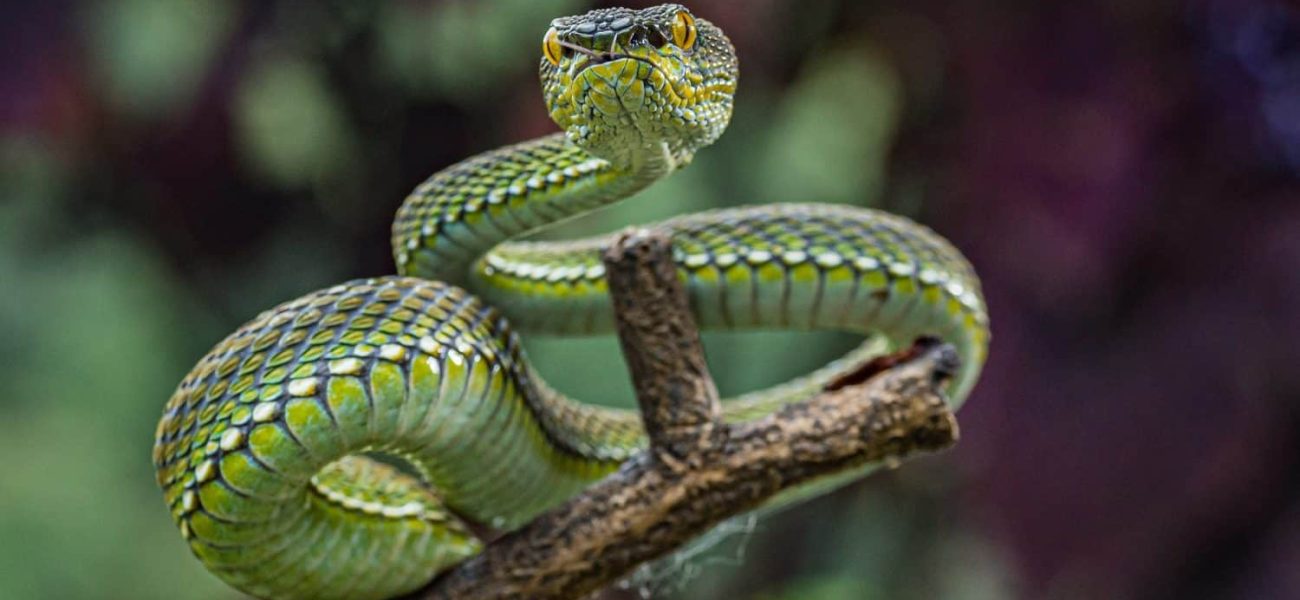
POLICY WIRE — Chengdu, China — Even as humanity grapples with the accelerating erosion of its planetary inheritance, a startling reality persists: we’re barely acquainted with its full roster of residents. A vibrant, heretofore unknown pit viper, sporting an arresting emerald green and ebony, has finally slithered from the dense, misty rainforests of China’s Sichuan Province into the scientific limelight. It’s a creature so striking, so unambiguously new, that its decades-long anonymity feels less like a biological oversight and more like a profound indictment of our anthropocentric gaze.
This isn’t merely another discovery; it’s a stark, glistening counterpoint to the relentless narrative of extinction. The reptile, now formally recognized after being observed by local residents and intermittently glimpsed by field researchers for what’s believed to be generations, underscores the profound depths of uncharted biodiversity still lurking in remote pockets of the globe. And, it challenges our comfortable assumptions about what’s left to find – or, crucially, what we’re losing before we even identify it.
Behind the headlines of industrial expansion and relentless urbanization, China’s vast and varied topography remains an unparalleled ecological treasure trove. Sichuan, in particular, with its dramatic elevation changes and monsoon-fed forests, serves as a veritable biological crucible. This new pit viper, a predator finely tuned to its specific niche, managed to evade scientific classification even as the world outside its arboreal home underwent epochal transformations. It’s an almost poetic defiance of modern man’s pervasive reach.
Still, the very act of its discovery comes freighted with contemporary anxieties. “Such findings aren’t just about cataloging life; they’re urgent pleas for its protection,” observed Dr. Li Wei, Deputy Director of China’s Ministry of Ecology — and Environment, from Beijing. “We’re committed to balancing economic development with our ambitious ‘ecological civilization’ goals, and every new species strengthens that resolve. It’s our solemn duty to safeguard these unique treasures for future generations – and our scientific community is stepping up to that challenge.” Indeed, China’s conservation efforts, though often critiqued, have ramped up significantly in recent years, an acknowledgement of past ecological costs. They’re investing heavily in nature reserves — and species protection programs, knowing full well what’s at stake.
This emerging viper, with its unmistakable pattern — and potent venom (we presume), forces a broader reckoning. The climate crisis and habitat destruction don’t just erase the familiar; they silently obliterate the unknown. The World Economic Forum, for instance, estimates that over half of the world’s total GDP is moderately or highly dependent on nature and its services (World Economic Forum, 2020). That’s a staggering figure, one that frames every uncatalogued species as a potential economic, as well as ecological, asset.
And what of other biodiversity hotspots, less scrutinized than China’s headline-grabbing megaprojects? Consider regions like Pakistan and its neighbors in South Asia, home to an astounding array of ecosystems—from the Himalayan peaks to arid deserts and mangrove coasts. These areas too are brimming with unrecorded life, facing parallel threats from development, urbanization, and climate shifts. The discovery in Sichuan isn’t an isolated incident; it’s a resonant call for intensified biodiversity surveys and conservation strategies across the developing world. We don’t know what we don’t know, — and that ignorance costs us dearly.
📄 POLICY WIRE WHITEPAPER PUBLISHED: PAKISTAN'S NATIONAL SECURITY POLICY PRIORITIES
👉 READ BY CLICKING HERE“Every new species brought into the light is a triumph against the tide of oblivion, but also a haunting reminder of how much we’re losing unceremoniously,” shot back Dr. Anika Sharma, lead conservation biologist at the Global Biodiversity Foundation, speaking from Geneva. “We’re in a race against time, aren’t we? To document, to understand, and crucially, to protect these unique genetic libraries before they simply vanish, unmourned and uncatalogued. This isn’t just about one snake; it’s about the very resilience of Earth’s intricate web of life.” Her words hang heavy.
So, as scientists painstakingly analyze its DNA and document its peculiar habits, the vibrant pit viper of Sichuan isn’t just a new entry in a biological ledger. It’s a silent, scaly envoy from the wild, demanding we look harder, listen closer, and act with greater urgency before the mist clears and reveals only an empty space where something truly extraordinary once coiled.
What This Means
The discovery of a striking new pit viper species in China, far from being a mere biological curio, carries substantial political and economic implications. Politically, it allows Beijing to project an image of scientific prowess and environmental stewardship, bolstering its ‘ecological civilization’ narrative on the global stage. As a rising superpower, China’s capacity for scientific discovery and commitment to biodiversity conservation (despite its ongoing industrial footprint) contributes to its soft power, potentially influencing international environmental policy discussions and collaborations. It also highlights the strategic importance of protecting diverse ecosystems, which can be leveraged in diplomatic relations, especially with nations reliant on China’s environmental commitments or expertise.
Economically, the implications are equally profound. Undiscovered species represent untapped genetic resources, with potential applications in medicine, agriculture, and biotechnology – a form of natural capital that’s impossible to quantify until discovered. The snake itself might hold unique compounds in its venom or physiology. the broader presence of rich biodiversity fuels ecotourism, research funding, and regional development initiatives, attracting a different kind of investment than traditional manufacturing. The continued emergence of ‘new’ life forms reinforces the argument that robust environmental protections aren’t just an expense; they’re an investment in future prosperity and global resilience, underscoring the intrinsic value of nature that often goes uncounted in conventional GDP metrics.