


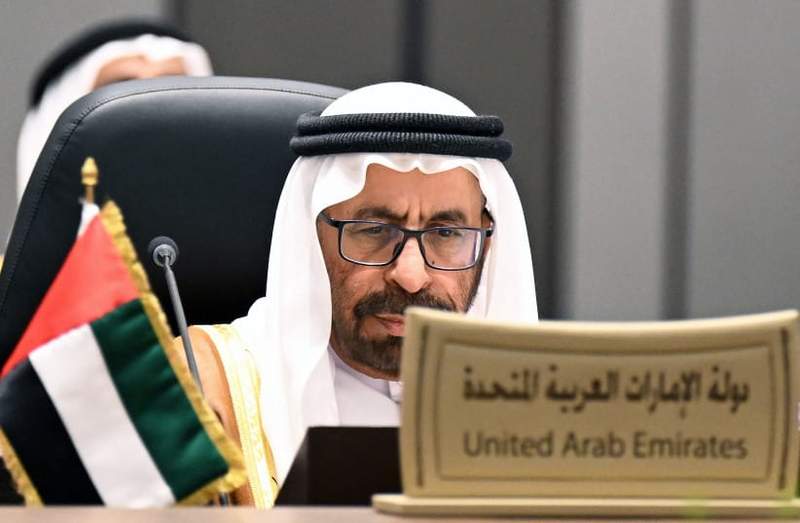
Emirati Travel Blackout: Abu Dhabi Isolates Citizens from Regional Hotbeds
POLICY WIRE — Abu Dhabi, UAE — It wasn’t merely a travel advisory; it was a declarative act, a cartographic redrawing of permissible movement that underscored the simmering anxieties plaguing...

POLICY WIRE — Abu Dhabi, UAE — It wasn’t merely a travel advisory; it was a declarative act, a cartographic redrawing of permissible movement that underscored the simmering anxieties plaguing the Arabian Gulf. Not with a bang, but with a bureaucratic edict, the United Arab Emirates has quietly—yet emphatically—told its citizens: stay away from Iran, Lebanon, and Iraq. This isn’t just about passport stamps; it’s a profound strategic recalibration, a clear signal etched into the geopolitical sands of the Middle East.
The Ministry of Foreign Affairs and International Cooperation, habitually circumspect in its public pronouncements, didn’t mince words, though its official statements remained couched in familiar terms of citizen safety. But behind the headlines, this directive casts a long shadow across the region, a tacit acknowledgment of escalating proxy struggles and a widening chasm between erstwhile neighbors. Such pronouncements often precede, or reflect, moments of significant regional instability—a fact not lost on seasoned observers.
And what of the timing? It’s consequential. The Gulf, already a crucible of competing interests and sectarian fault lines, watches as Iranian-backed militias continue to project influence across Iraq and Lebanon, often clashing with interests aligned with Sunni Gulf states. This isn’t just about abstract geopolitical chess; it’s about tangible threats, about drones and missiles, and the fraught safety of nationals abroad. “Our primary duty remains the unimpeachable safety of our citizens,” shot back Dr. Anwar Gargash, Diplomatic Advisor to the UAE President, when pressed on the implications of the sweeping ban. “These aren’t punitive measures; they’re prophylactic, regrettably necessitated by a volatile security tableau that demands vigilance.”
Still, the breadth of the ban is striking. Iran, an ancient rival — and modern-day flashpoint, was perhaps an expected inclusion. But Lebanon, a nation struggling for equilibrium amidst chronic economic collapse and political paralysis (and home to Hezbollah, Iran’s most potent regional ally), and Iraq, a country still contending with the aftermath of decades of conflict and persistent militia activity, complete a trifecta that leaves little room for ambiguity regarding Abu Dhabi’s perceived threats.
The directive certainly sends shivers through regional diplomatic circles. Dr. Mehmood Al-Hassan, a senior research fellow at the Gulf Security Institute, opined that these bans are rarely unilateral. “Such pronouncements, while framed as domestic safety advisories, invariably echo with wider geopolitical significance—a stark calibration of alliances and perceived threats in an already fissiparous region,” Al-Hassan observed. “They’ve essentially drawn a line, telling their citizens, and implicitly, the world, precisely where they see the acute danger.” And they don’t seem to be hedging their bets.
For nations like Pakistan, navigating the intricate webs of Muslim-world geopolitics becomes even more delicate. With strong economic ties to the UAE and historical, religious connections to Iran, Islamabad often finds itself on a diplomatic tightrope. An Emirati ban of this nature, while ostensibly internal, amplifies sectarian tensions and forces uncomfortable choices, complicating trade routes and human movement across the broader Muslim world. It’s a reminder that regional squabbles have ripple effects far beyond immediate borders.
📄 POLICY WIRE WHITEPAPER PUBLISHED: PAKISTAN'S NATIONAL SECURITY POLICY PRIORITIES
👉 READ BY CLICKING HEREThe economic repercussions, too, can’t be understated. While direct Emirati tourism to these nations might not be monumental, the message reverberates through business and investment channels. Regional instability, after all, isn’t good for commerce. According to a recent report by the World Bank, intra-regional trade in the Middle East and North Africa (MENA) region accounts for just 10% of total trade, a figure considerably lower than other global blocs, and such measures are unlikely to improve those numbers. (It’s a stark contrast to, say, Europe, where borders are increasingly fluid for economic gain, as explored in articles like Europe’s Backyard Anarchy).
So, where does this leave us? The UAE, a nation relentlessly pursuing modernization and diversification, is clearly intent on shielding its populace from the vagaries of a perpetually turbulent neighborhood. But in doing so, it has drawn a clearer line in the sand, one that reflects a hardening stance against perceived Iranian hegemony and its regional manifestations. It’s a pragmatic, if stark, declaration of self-preservation in a region that seldom grants such luxuries.
What This Means
This travel prohibition isn’t just a bureaucratic inconvenience; it’s a potent geopolitical signal. Politically, it deepens the existing schism between the UAE and Iran, further solidifying the Gulf Cooperation Council’s (GCC) anti-Iran front. It also tacitly acknowledges the perceived failures of regional de-escalation efforts, suggesting Abu Dhabi has lost patience with diplomatic overtures that haven’t yielded concrete security dividends. It’s a clear statement that the UAE is prioritizing robust security measures for its citizens—and by extension, its strategic interests—over a more conciliatory regional posture. This move will undoubtedly be interpreted in Tehran as yet another hostile act, potentially leading to reciprocal measures or a heightening of rhetoric.
Economically, the immediate impact on the UAE is likely minimal given controlled travel flows to these specific destinations. However, the broader message of heightened regional instability could deter foreign investment across the Gulf, impacting sectors beyond tourism. For countries like Lebanon and Iraq, already teetering on the brink, even a symbolic withdrawal of legitimate travel and potential business from a wealthy Gulf nation represents another setback. It underscores the fragility of their economies — and their susceptibility to regional political currents. Ultimately, this isn’t merely a travel ban; it’s a deliberate maneuver in a complex geopolitical game, with ripple effects far beyond just those denied a visa. It highlights the increasingly transactional nature of regional diplomacy, where national security exigencies often trump broader calls for regional cohesion—a narrative also seen in the pursuit of strategic resource independence (Tokyo’s Quiet Gambit).