


Tynecastle’s Heartbreak: Shankland’s Ibrox Pivot Exposes Premiership’s Unrelenting Economics
POLICY WIRE — Edinburgh, Scotland — The final whistle hadn’t truly blown on last season for Hearts fans; not really. No, the real game, it turns out, was always played behind closed doors, a...

POLICY WIRE — Edinburgh, Scotland — The final whistle hadn’t truly blown on last season for Hearts fans; not really. No, the real game, it turns out, was always played behind closed doors, a silent, relentless negotiation waged with balance sheets and ambitions. And now, the grim reality is sinking in: Lawrence Shankland, their talisman, their captain, that bloke who reliably banged them in, is packing his bags for Glasgow’s Ibrox.
It’s a tale as old as time, or at least as old as professional football itself, yet it always stings. The inevitable migration of top talent towards perceived brighter lights, deeper pockets, and the chance to chase silverware on a grander stage. Hearts fans, they’re feeling that sting right now, a palpable sense of betrayal hanging heavy over Tynecastle like a stubborn Edinburgh mist.
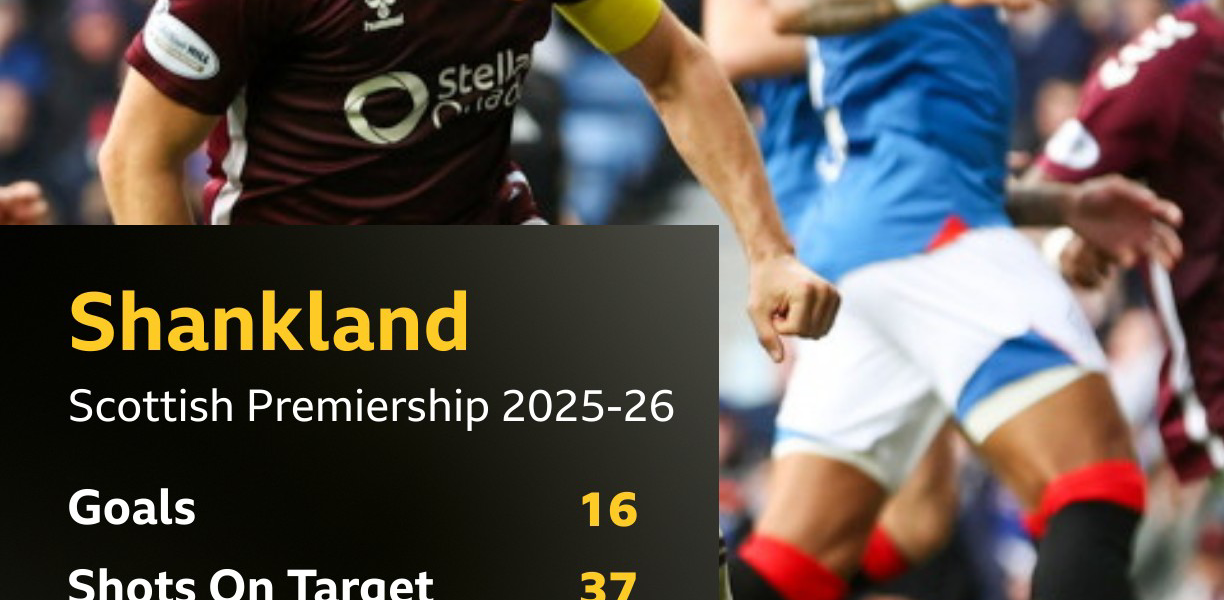
Because let’s be honest, it’s never just about the goals. Shankland netted 88 goals in 171 appearances for Hearts, according to figures tracked by the BBC. He was the main man, the reliable finisher. But this isn’t just about statistics; it’s about the brutal arithmetic of modern football, where loyalty often bends — or breaks — under the strain of commercial logic. And when a player heads to a direct rival? Well, that just sharpens the blade.
But the true twist here, the one that makes club directors wince — and fans howl, involves the financials. Rumours, tenacious as a Glasgow winter, suggest a ‘break clause’ in Shankland’s contract. The whispers talk of a fee far below his market value, potentially even peanuts if certain conditions were met. That’s enough to send any fanbase into a frothing rage, turning what should be a straightforward transaction into an emotional wound. Both clubs are, predictably, tight-lipped about the exact figures, opting for the usual opaque phrasing about ‘undisclosed fees’ and ‘required amounts.’ Because, you know, transparency in football, bless its heart, remains a distant dream.
Rangers chairman Andrew Cavenagh, never one to mince words when projecting his club’s image, subtly laid the groundwork for Shankland’s arrival weeks ago. He spoke of needing leaders, ‘ideally Scottish leaders and gnarled professionals.’ But he never explicitly named Shankland. Didn’t need to, did he? Everyone knew who he was talking about. And now, that talk is all but a done deal. “We’ve been looking for steel, for gnarled professionalism – a truly Scottish spine to this squad,” Cavenagh reportedly remarked to associates earlier this month. “Lawrence, by all accounts, embodies precisely that presence we’ve been seeking.” It’s a deft bit of PR, positioning a rival’s star as the missing piece of their own empire. It shows you how these clubs operate.
But for Hearts manager Derek McInnes, who fought tooth and nail to keep Shankland just last year, the mood is decidedly grimmer. “It’s a bitter pill to swallow, frankly,” McInnes is believed to have confided in his inner circle recently. “You build a team around certain individuals, and when the arithmetic changes so abruptly, particularly for a rival… well, it leaves a void. The fans, they feel it, and so do I.” He’s right, the void won’t just be felt on the pitch, but in the stands, where fan expectations now need a rather rapid recalibration.
📄 POLICY WIRE WHITEPAPER PUBLISHED: PAKISTAN'S NATIONAL SECURITY POLICY PRIORITIES
👉 READ BY CLICKING HEREAnd let’s not pretend these dramas are confined to Scotland. Football’s grand opera plays out globally, the commercial tug-of-war echoing in every corner where clubs strive to expand their influence and brand. From Glasgow to Lahore, passionate fans – often from a diasporic community keen to retain a link to ‘home’ – invest emotional capital, time, and hard-earned cash in their favourite teams. Just as a club like Rangers eyes a star striker for domestic dominance, it also looks to bolster its international appeal, knowing that merchandise sales and broadcast rights reach far beyond their borders, touching, say, the fervent football followers in Pakistan or Bangladesh who wake up at odd hours to catch a European fixture.
What This Means
This transfer isn’t just about a player switching allegiances; it’s a stark reflection of the financial disparity in Scottish football, a microcosm of the brutal arithmetic that dictates the fates of so many clubs worldwide. For Hearts, it’s a significant blow to their aspirations – a weakening of their core as they try to punch above their weight against Glasgow’s duopoly. They’ve lost their most potent attacking threat, a man capable of conjuring goals from thin air, and a leader in the dressing room. Their fight for a regular top-three finish, already a gruelling challenge, just got considerably harder. The economic reality is simple: smaller clubs, even those with fiercely loyal fanbases like Hearts, struggle to retain their top talent when the bigger fish come calling with fatter wallets.
For Rangers, it’s a clear statement of intent, a consolidation of power designed to reclaim dominance and put pressure on their arch-rivals, Celtic. Shankland brings not just goals but experience, grit, and a proven track record against the very team they need to beat. It’s a calculated move to inject proven Premiership pedigree into their ranks, to add ‘steel and presence’ as Cavenagh puts it, without having to break the bank on a foreign import. But it’s also a risky game; paying for talent often comes with its own commercial logic. If he fails to deliver, the investment, however modest, will be scrutinised mercilessly by the Govan faithful.
And so, the merry-go-round continues, leaving some fans elated, others heartbroken, and everyone else just a little poorer.