


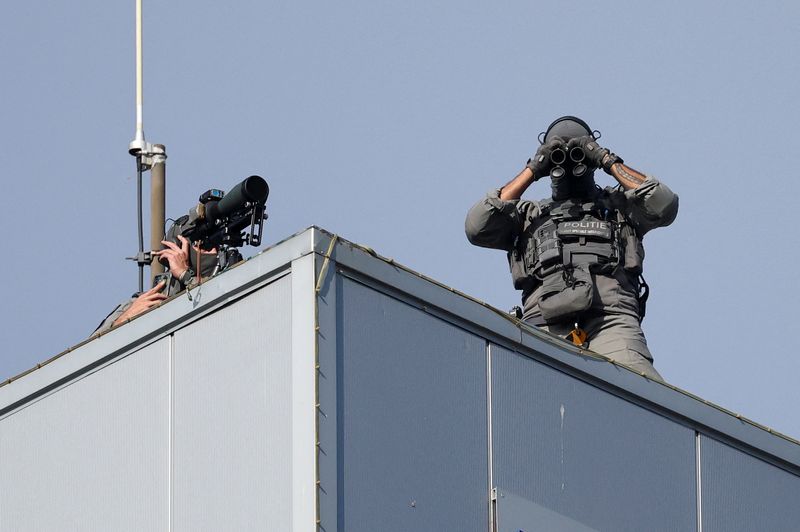
Shadows Lengthen: Dutch Intelligence Warns of Unprecedented Security Threats
POLICY WIRE — The Hague, Netherlands — The placid canals and orderly streets of the Netherlands may project an image of European calm — all those bicycles and charming gabled houses, you know — but...

POLICY WIRE — The Hague, Netherlands — The placid canals and orderly streets of the Netherlands may project an image of European calm — all those bicycles and charming gabled houses, you know — but beneath that veneer, a seething disquiet now eclipses the security discourse. For the first time in memory, the nation’s intelligence service warns of an existential confluence of threats unseen in generations. Just imagine.
It’s a stark reckoning, this — one that paints a picture far more complex than isolated incidents or historical rivalries. Instead, authorities now wrestle with a multi-front assault on Dutch stability, where digital espionage, ideological extremism, and foreign state meddling braid into a truly dangerous tapestry.
Behind the headlines, the General Intelligence and Security Service (AIVD) recently unveiled its unvarnished evaluation. They’re not just talking about old foes; this is, let’s be honest, about an entirely new threat landscape. A totally different ballgame.
And yet, how prepared is a nation known more for its progressive social policies and maritime trade routes for such an onslaught? Quite the challenge for a nation famed for its cheese — and flower markets, isn’t it?
Erik Akerboom, Director-General of the AIVD, didn’t sugarcoat things in his agency’s latest annual report.
“We’re witnessing an alarming escalation of hostile state activities and an increasingly unpredictable extremist environment,” Akerboom stated, adding, “The threats are more diffuse, more sophisticated, and more unflagging than at any point since the Cold War era.”
A Confluence of Crises
Few outside of intelligence circles truly grasp the sheer breadth of the current dangers. On one hand, you’ve got the rising tide of right-wing extremism, emboldened by online echo chambers and global political shifts. It’s a real mess.
Then there’s the relentless, insidious creep of jihadist ideology. While ISIS and Al-Qaeda might appear fractured, their online propaganda still resonates with vulnerable individuals across Europe, including in the Netherlands’ own diverse communities. A grim thought.
Consider too the mushrooming cyber threat — an insidious, often unseen beast that gnaws at the digital foundations of society, from state-sponsored actors to petty criminals — relentlessly zeroing in on critical infrastructure, government agencies, and even private businesses. A report by the European Union Agency for Cybersecurity (ENISA) revealed a 13% increase in cyberattacks targeting essential services across EU member states in the last year alone, a figure that surely includes significant incidents within Dutch borders. And it’s not slowing down.
But foreign interference extends beyond mere digital intrusions. It involves disinformation campaigns designed to sow discord, influence elections, and undermine public trust in democratic institutions. What’s the cost of a society unable to agree on basic facts? A scary thought, really.
Not everyone sees the full picture, of course. For citizens going about their daily lives, the intelligence community’s warnings can feel abstract, even distant. But for those on the front lines, the battle is very real, — and it’s happening every day. No kidding.
A significant portion of the AIVD’s concern also swivels to the global stage, specifically how events in regions like the Middle East and parts of South Asia directly translate into heightened risks at home. Narratives fueled by conflicts in places like Syria, Afghanistan, or even the geopolitical friction involving Pakistan, don’t just stay local; they’re quickly weaponized online, reaching diaspora communities and potentially radicalizing individuals thousands of miles away. It’s a truly global problem.
This flow of information, sometimes misinformation, is a key component of the modern threat. And that, frankly, matters immensely.
Related: AI Misinformation Spreads Rapidly Amidst Japan Earthquake Recovery
Dutch Justice and Security Minister Dilan Yeşilgöz-Zegerius, whose portfolio directly addresses these issues, underlined the government’s resolve.
“We take these warnings with the utmost gravity. Our security services are working tirelessly, but societal resilience is equally paramount. We mustn’t only defend ourselves technologically but also strengthen the social fabric against division and manipulation,” Yeşilgöz-Zegerius told reporters during a recent press conference in The Hague.
What This Means
The AIVD’s dire reckoning isn’t just bureaucratic posturing; it’s a profound call to action, reflecting a seismic shift in how developed nations perceive their security. For the Netherlands, a historically open — and multicultural society, the implications are particularly acute. Quite so.
Economically, increased spending on cybersecurity and counter-terrorism measures will divert funds from other areas, potentially impacting public services or investment. Politically, a heightened threat environment often leads to calls for more surveillance and tighter controls, sparking debates over civil liberties. What a bind.
Diplomatically, the revelations may necessitate closer cooperation with international partners, particularly in intelligence sharing and coordinated responses to state-sponsored threats. It also underscores the uncomfortable reality that neutrality offers little defense against enemies who operate without borders or traditional military might.
The math is stark: more threats mean more resources, more vigilance, — and potentially, less freedom. It’s a trade-off many liberal democracies are now forced to square up to. Not an easy pill to swallow.
Looking Ahead
The path forward demands more than just patching vulnerabilities; it requires a wholesale recalibration of national security strategy. Dr. Joris Van Oort, a senior lecturer in European security studies at Leiden University, believes the Netherlands must cultivate a culture of collective digital defense. “We’re past the point where security is solely the domain of intelligence agencies,” Van Oort stated. “Every citizen, every company, every institution has a role to play in bolstering resilience against these pervasive, multifaceted threats. Failure to adapt would be apocalyptic, inviting not just disruption, but profound societal destabilization.” So there you have it.