


Drones Crash Kremlin’s Economic Gala: St. Petersburg Forum Hit as War Echoes Reach Home
POLICY WIRE — St. Petersburg, Russia — The annual St. Petersburg International Economic Forum, usually a stage for showcasing Russia’s resilience and global connections, concluded under a most...

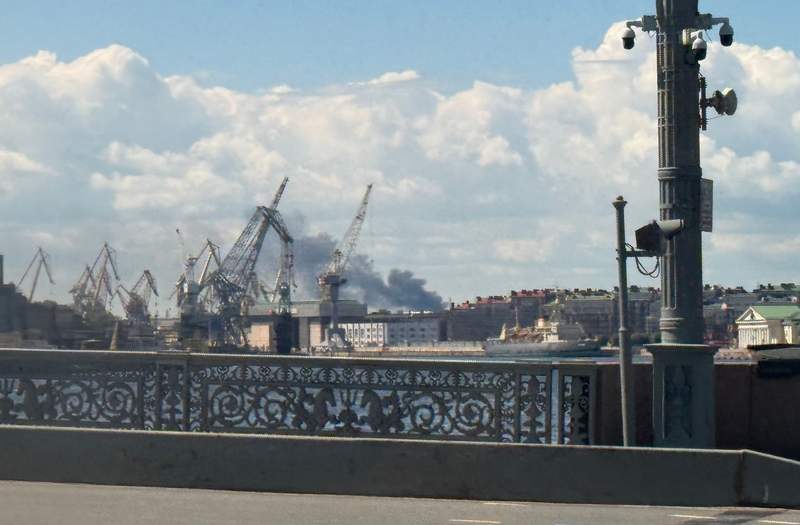
POLICY WIRE — St. Petersburg, Russia — The annual St. Petersburg International Economic Forum, usually a stage for showcasing Russia’s resilience and global connections, concluded under a most inconvenient spotlight this week. Far from the polished presentations and polite platitudes, a different sort of message landed—literally—in the skies above the imperial city. Drones, reportedly launched by Ukraine, pierced the Kremlin’s carefully constructed bubble of normalcy, shattering any illusion that Russia’s war is a distant, regional affair.
It’s a peculiar thing, isn’t it, to convene an international gathering dedicated to business and finance while a full-scale conflict rages on your doorstep. And the drones, intercepted by Russian air defenses according to Moscow, weren’t just random acts of aggression. They were a pointed, high-altitude punctuation mark on President Vladimir Putin’s efforts to project strength and stability—a very expensive, inconvenient punctuation mark indeed. St. Petersburg, a city often considered sacrosanct, hadn’t experienced a drone assault like this before, underscoring a creeping shift in the war’s geography.
The Ukrainian side, for its part, wasted little time in claiming a form of responsibility, or at least gloating over the Kremlin’s discomfiture. Mykhailo Podolyak, an adviser to Ukraine’s presidential office, seemed to savor the irony. “When aggressors throw economic parties in war zones,” he reportedly quipped, “they shouldn’t be surprised when their guests are reminded of the true cost. This is Kyiv’s invitation to reality.” His words, steeped in defiance, reflect a strategy aimed squarely at disrupting Russian morale and their economic aspirations.
Moscow, as always, defaulted to its practiced script: denial, deflection, — and defiant reassurances. Kremlin spokesman Dmitry Peskov was quick to dismiss the attacks as inconsequential. “Our air defense systems performed admirably, neutralizing a desperate, terrorist attempt by Kyiv,” Peskov told reporters with a stoic expression, his voice betraying not a hint of panic. “It’s an act of propaganda, not a military success. Russia’s economic momentum remains uninterrupted.” But you’ve got to wonder if those assurances land with the same weight among the delegates huddled in opulent conference halls, eyeing their flight itineraries.
This isn’t merely about property damage (though fragments of one drone did reportedly scatter in a residential area, causing no serious casualties, we’re told). No, it’s about perception. It’s about challenging Moscow’s claim of having firm control over its airspace and territory, especially its most symbolically significant cities. Because what’s an economic forum for if not to reassure potential investors — and partners that the nation is a safe bet? These incidents chip away at that manufactured confidence, byte by agonizing byte. Data from the World Bank suggests Russia’s economy, despite sanctions, contracted by 2.1% in 2022, a testament to the persistent strain, and such attacks don’t help the rebound narrative.
📄 POLICY WIRE WHITEPAPER PUBLISHED: PAKISTAN'S NATIONAL SECURITY POLICY PRIORITIES
👉 READ BY CLICKING HEREMany nations in the South Asian and wider Muslim world—countries Russia has been assiduously courting as Western doors shut—are watching this unfolding drama with keen interest. They need stability, not spectacular displays of vulnerability. They’re weighing energy deals — and arms contracts against pictures of drone debris in suburban streets. The Kremlin desperately wants to present an image of Russia as a reliable partner, unbowed by sanctions, and certainly not a place where one’s international trade symposium might be interrupted by hostile unmanned aerial vehicles. But appearances, like drones, can be difficult to control once they’re in the air. For instance, when Moscow promotes its alternative trade routes and payment systems, as it does constantly, its ability to secure its own backyard is kind of a prerequisite, don’t you think?
What This Means
This incident is far more than a minor annoyance for Moscow; it’s a strategic slap in the face. It reveals Ukraine’s evolving capability and intent to strike deep within Russian territory, making even historically distant locales feel the immediate sting of the conflict. For the Kremlin, it represents a profound challenge to its domestic legitimacy and international narrative of a powerful, secure state. It isn’t just about destroying infrastructure; it’s about destroying confidence. International businesses, regardless of their geopolitical leanings, seek predictability. Drone attacks over St. Petersburg introduce a chilling new variable into Russia’s economic calculus.
The symbolic damage to Russia’s image as a reliable business partner is difficult to quantify, but its impact is real. Countries looking to forge stronger ties with Russia, particularly those from Asia, Africa, and Latin America, will inevitably factor in this heightened security risk. Can Russia truly assure its trading partners of safe transit and investment if its cultural and economic heartlands are within drone range? This episode also forces a reassessment of Russia’s air defense capabilities—or their gaps, perhaps—which impacts its military standing on the global stage, too. The war, they’ve been trying to convince everyone, is contained. Turns out, it’s not.