


Super Regional Spectacle: American Athleticism and the Unseen Costs of Glory
POLICY WIRE — Morgantown, USA — When West Virginia’s athletic department greenlit construction of Monongalia County Ballpark, it wasn’t just about diamond dreams. Oh, no. That...

POLICY WIRE — Morgantown, USA — When West Virginia’s athletic department greenlit construction of Monongalia County Ballpark, it wasn’t just about diamond dreams. Oh, no. That multi-million dollar venture—a glittering shrine to collegiate athleticism—spoke volumes, really, about resource allocation in a world choked by more pressing anxieties. Forget geopolitical maneuvering for a minute, or the delicate balance of economic stability across continents. Instead, cast your gaze, just for a moment, to a baseball field where American youth chase glory, their every swing, every slide, implicitly funded by choices we make, or rather, avoid making, elsewhere.
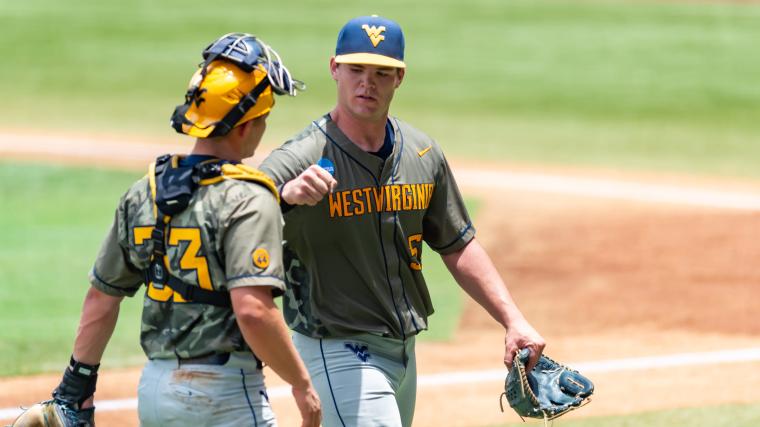
It’s here, on this meticulously manicured patch of turf, that the price of ambition becomes almost palpable. The West Virginia Mountaineers baseball team is hosting their first-ever NCAA Super Regional, a milestone certainly. It means prestige. It means eyeballs. But what exactly does that kind of investment signify? What does it truly mean to appear to be in the driver’s seat in such a specialized—some might say, insulated—cultural arena? [QUOTE_PLACEHOLDER]
The Cal Poly Mustangs—a squad, mind you, that isn’t exactly a national powerhouse every season—are due to rumble into Morgantown for a possible three-game series. This particular contest, a segment of the 2026 NCAA Baseball Championship, is the first game of the Super Regional round on the way to the College World Series in Omaha. The pomp. The circumstance. The anticipation. For a nation grappling with healthcare crises and decaying infrastructure, college sports, in its most exalted form, offers a kind of gilded distraction. Noon ET on ESPN2. It’s appointment viewing for some, but for others, it’s just more noise in a very loud world.
You can pore over the statistics, if you like, for granular insight into a single contest. Cal Poly (39-22) lines up against West Virginia (43-15). The first few innings: nothing. A score sheet that’s stubbornly blank save for Cal Poly getting one run in the third. What do these fleeting moments tell us? A catcher’s .453 on-base percentage, like Ryan Tayman’s from Cal Poly—is that indicative of anything beyond immediate sporting prowess? One might ask. The numbers themselves, abstracted, become meaningless outside their tightly defined context.
And that’s the thing about this kind of spectacle. It’s all so incredibly specific, yet it demands such colossal investment—money, attention, emotion. Consider the aggregate; Cal Poly’s hitters have racked up a Total 2186 at-bats through their season, while West Virginia’s have a Total 1991. These are staggering numbers for the committed few, for the true devotees. But compare that sum—just over 4,000 at-bats for two teams over a season—to, say, the global daily food expenditures on highly processed snacks, estimated by The Lancet Global Health in 2022 to be over $3 billion. Perspective, eh? Just a thought.
Look, Chansen Cole, the pitcher, clocked in a brief outing of 0.2 innings, tallying 5 strikes. That’s a measurable unit of athletic output, concrete, clean. There’s no real room for ambiguity there. The bat connects, or it doesn’t. The ball goes over the fence, or it lands foul. The rules are clear. The outcomes, transparent. Maybe that’s part of the draw: the unshakeable logic in an often-unintelligible world.
What This Means
It’s not just a game; it’s a window, or perhaps a carefully placed blind, into economic priorities. Massive budgets for athletic programs often dwarf academic investments, even as universities decry cuts in public funding. We’re talking about institutions that function, for all intents — and purposes, like minor economic engines. Winning sports teams mean higher profile, which means more applications, more donations, more money—and therefore, more capacity to invest in… more sports.
This insular cycle, however efficient for boosting local economies and university coffers, contrasts sharply with the investment challenges faced by nations where even basic infrastructure remains a luxury. In places like Pakistan, for example, national development goals frequently compete with immediate resource needs, making the large-scale public and private funding seen in American collegiate sports a distant fantasy. Imagine dedicating billions annually, not to, say, clean water access in Balochistan, but to regional baseball tournaments. It’s a stark comparison, isn’t it? Our cultural fixation on these domestic sporting rituals, while entertaining, presents a fascinating study in comparative global allocation—of talent, of treasure, and of public interest.
Because the allure of global competition, be it athletic or otherwise, shifts continually. Sporting dominance is, after all, a form of soft power. For all its domestic appeal, collegiate baseball remains largely a North American phenomenon. Asia’s focus, across much of the Muslim world from Lahore to Kuala Lumpur, gravitates towards other pursuits: football, cricket, the occasional Olympic triumph. And that divergence highlights a broader economic and cultural truth: not every nation can, or even wants to, funnel significant capital into developing a collegiate baseball system when existential crises loom. For many, that sort of expenditure just wouldn’t add up. And honestly? It’s hard to argue with that logic.
These contests, televised across national networks, project an image of American prosperity and opportunity, but this projection rarely, if ever, considers the unseen opportunity costs. What else could these considerable sums fund? Education, infrastructure, healthcare—issues that impact millions daily. But today? It’s the Cal Poly Mustangs facing down the West Virginia Mountaineers, with first pitch set for noon ET. And, in that moment, for some, nothing else matters.
But that’s where the journalist steps in, peeling back the layers. Because if you look hard enough, the stories are always, always bigger than the score.
For more analysis on global resource trends, consider Gridiron Geopolitics.