
London Under Siege? Capital Brace for ‘Controlled Chaos’ as Protests, Football Clash
POLICY WIRE — London, UK — Forget quaint tea times and placid parks. Britain’s capital city, London, is bracing for a truly singular Saturday, an intricate dance of dissent, devotion, and sheer crowd...

POLICY WIRE — London, UK — Forget quaint tea times and placid parks. Britain’s capital city, London, is bracing for a truly singular Saturday, an intricate dance of dissent, devotion, and sheer crowd control. What’s on the menu? Not one, but two significant political rallies — and the final whistle of a major football showdown. It’s a planner’s nightmare, an officer’s test of nerves, and a stark reminder that this global hub often doubles as a very public megaphone for both local grievances and distant conflicts. You wouldn’t put money on it being a quiet day.
Metropolitan Police officials are openly describing the operation as one of their most complex in years. Thousands of officers will be deployed across the sprawling metropolis, tasked with separating passionate protesters, managing football hooligans (a charming British tradition, that), and somehow, keeping the tube running. Because it’s London, isn’t it? The world descends, sometimes peacefully, sometimes less so.
One rally is expected to draw substantial crowds addressing geopolitical tensions, particularly concerns resonating from the Muslim world, perhaps touching on Palestine or Kashmir. This type of demonstration, routinely staged in central London, isn’t just a domestic affair; it’s an international signal flare, broadcasting sentiments far beyond Whitehall’s stone walls. We’ve seen these protests grow in scale, sometimes escalating tensions among various diaspora communities and certainly for those trying to go about their weekend errands. The city often becomes a neutral ground where the battles of nations play out on the pavements. It’s an inconvenient truth for local shopkeepers, but a powerful image for the world’s media.
Another gathering, of a distinctly more domestic flavour, aims to highlight workers’ rights—a recurring theme in an economy still wrestling with stubborn inflation and stagnant wages. Think banners, chants, — and probably a few carefully worded condemnations of the current government’s policy du jour. It’s classic British street politics, robust and noisy, but rarely — usually — descends into anything truly nasty. Still, you’ve got these two disparate groups, both eager to make their mark, converging on roughly the same turf. What could go wrong? Precisely. Everything, or nothing, depending on how tightly the police can maintain their human barricades.
Simultaneously, a hotly anticipated FA Cup Final is scheduled, pitting two fierce rivals against each other. Thousands of exuberant — and likely well-hydrated — fans will be descending upon Wembley Stadium. Transport routes will be swamped. Tempers might fray. Add in the alcohol, — and suddenly you have several layers of potential friction points. It’s a logistical nightmare the Met must contain.
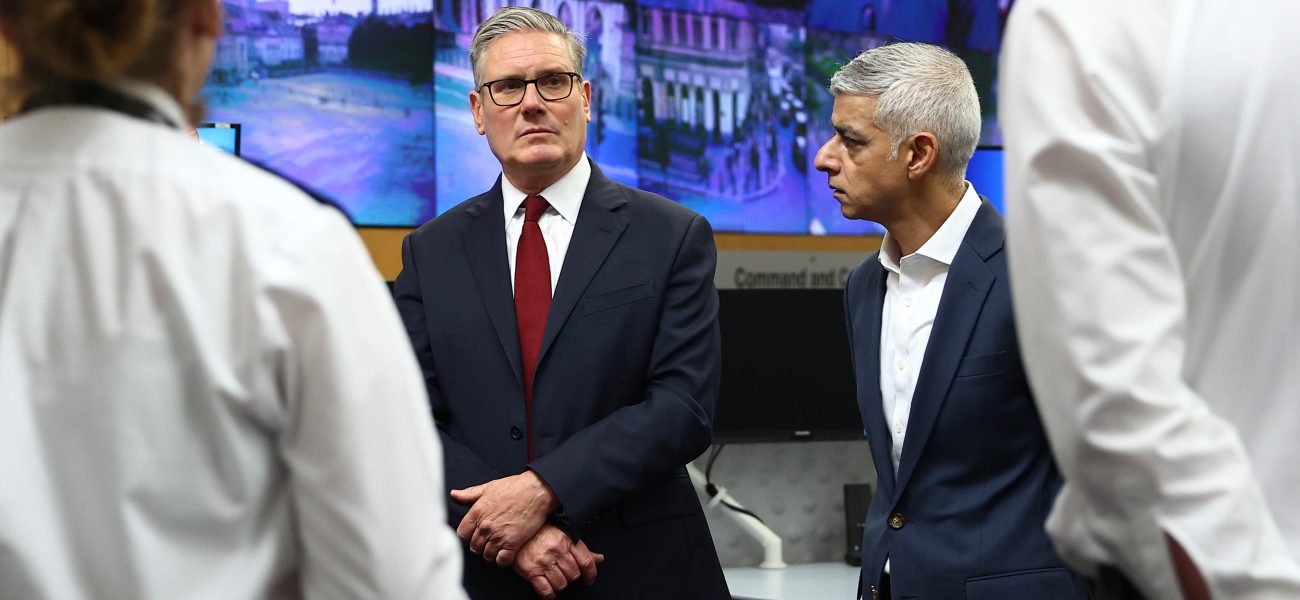
London Mayor Sadiq Khan, no stranger to the delicate balancing act of urban governance, weighed in cautiously. “Our capital prides itself on the right to protest and on its openness,” Khan said in a statement, a masterclass in civic diplomacy. “But that freedom cannot be exploited by those who seek disorder. The Met has my full backing in ensuring public safety while respecting lawful demonstration.” One gets the distinct impression he’d prefer everyone stay home and watch telly.
From the Home Office, a senior official, speaking anonymously due to the sensitivity of ongoing operational planning, put it more bluntly. “It’s a controlled chaos scenario, always is with days like this. We’re working with the police to ensure resources are maximized. People forget that these events, though often contained, place immense strain on public services—they cost. A single large demonstration can easily rack up hundreds of thousands in policing costs alone. In the last financial year, significant public order events drained north of £150 million from the public purse across the UK, according to government figures released last autumn.
📄 POLICY WIRE WHITEPAPER PUBLISHED: PAKISTAN'S NATIONAL SECURITY POLICY PRIORITIES
👉 READ BY CLICKING HEREAnd what about those visiting London? Tourists might find their scenic strolls through Trafalgar Square suddenly interrupted by the sound of bullhorns and police sirens. But it’s part of the theatre, isn’t it? The spectacle of a living, breathing, sometimes snarling democracy. London wears its contradictions on its sleeve, literally.
It’s clear the police aren’t taking chances. Sniffer dogs, riot vans, surveillance—you name it, it’ll be out there. They’re good at this stuff. Really, they’ve got a lot of practice. The capital’s ability to absorb this kind of multi-front civic stress test is, frankly, astounding. Don’t underestimate it. It’s just that for one day, perhaps, the capital will feel a lot less like a city of gentle courtesies and more like a carefully managed pressure cooker. A bustling, complicated mess, perhaps, but a distinctly London one.
What This Means
This unprecedented convergence of major events isn’t merely a policing headache; it carries significant political and economic ramifications. Politically, the handling of these simultaneous incidents will serve as a barometer for both Mayor Khan’s leadership and the central government’s grip on public order. Any missteps—whether perceived heavy-handedness against protestors or, conversely, a failure to contain unrest—will be amplified by 24/7 news cycles, domestically and abroad. It’s a high-stakes public relations game, especially with an election potentially looming. The presence of international protest elements also reinforces London’s contentious role as a global stage, potentially drawing diplomatic scrutiny from nations whose affairs are being protested.
Economically, the immediate impact could be felt by businesses in affected areas, particularly those reliant on casual weekend footfall. Road closures, public transport disruption, and the sheer intimidating presence of large crowds tend to deter casual shoppers and diners. Then there’s the staggering cost of such an extensive policing operation, drawing resources away from other pressing public safety needs. It’s a direct financial hit for the public purse, — and an indirect one for local commerce. Ultimately, Saturday serves as a microcosm of modern governance challenges: balancing fundamental democratic rights with pragmatic public safety, all under the unblinking eye of a critical, well-connected world.