


Rio Rancho’s Shifting Sands: Hull’s Ambition Paves Way for Wymer’s Measured Ascent
POLICY WIRE — Rio Rancho, N.M. — It wasn’t the fresh face of Paul Wymer taking the oath that truly marked a seismic shift in Rio Rancho’s civic narrative; it was the conspicuous absence...

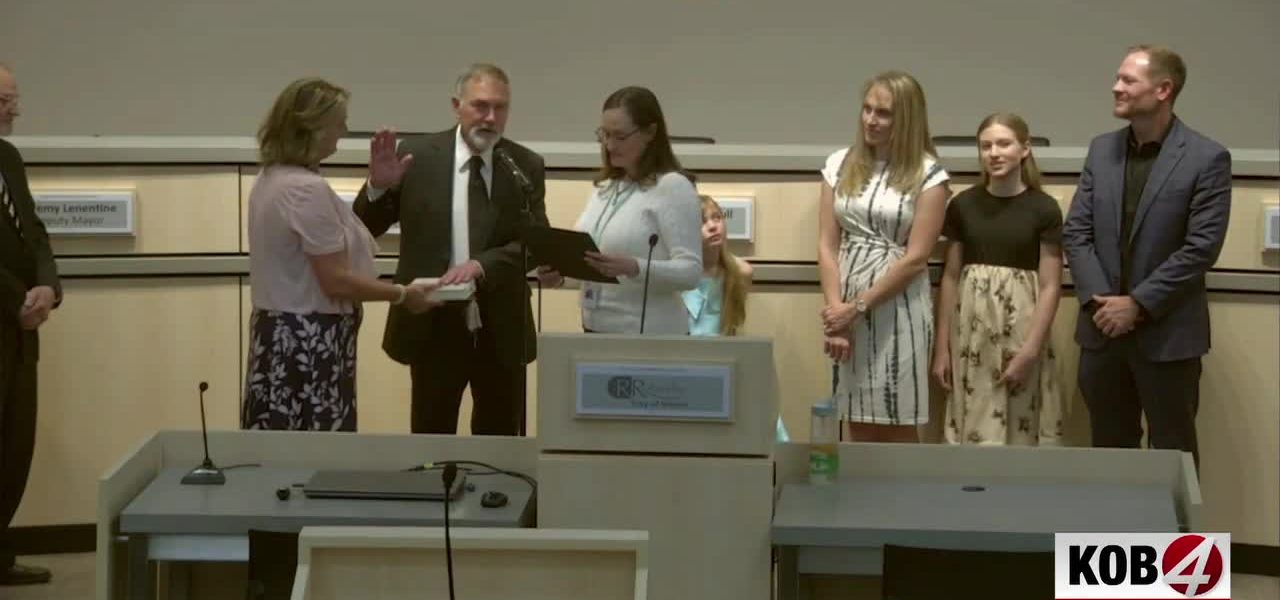
POLICY WIRE — Rio Rancho, N.M. — It wasn’t the fresh face of Paul Wymer taking the oath that truly marked a seismic shift in Rio Rancho’s civic narrative; it was the conspicuous absence of the decade-long incumbent, Gregg Hull, whose gaze has now drifted firmly towards the Governor’s Mansion in Santa Fe. Hull’s calculated pivot, a gambit for statewide power, invariably cleared the path for Wymer, a former city councilor, whose recent ascension signals not a revolution, but a deliberate recalibration for New Mexico’s third-largest city.
The transition, formally cemented Thursday evening, concludes an era that began in 2014. Hull, a figure synonymous with Rio Rancho’s identity for what felt like an eternity (a political eternity, anyway), opted out of re-election in 2026, launching instead his nascent campaign for the state’s highest office. This wasn’t merely a changing of the guard; it’s a strategic maneuver reverberating through Sandoval County and potentially across the broader New Mexico political topography. And the electoral verdict on Wymer? Decisive. He secured 63% of the vote in a runoff against Alexandria Piland, a mandate that’s difficult to misinterpret.
So, what does a decade of stewardship bequeath a successor? Rio Rancho, often overshadowed by its larger neighbor Albuquerque, has carved out its own distinct profile, swelling with transplants drawn by a comparatively lower cost of living and burgeoning employment opportunities. It’s a municipality that’s matured, developing from a bedroom community into a legitimate economic hub, a narrative of sustained expansion. But growth, unchecked, can become its own formidable challenge. Wymer, cognizant of this delicate balance, steps into an office imbued with both momentum — and inherent pressures.
His immediate declarations underscore a preference for continuity over radical departure. Wymer plans to engage closely with the former mayor – a collegial gesture, if nothing else – and other city councilors, pledging to maintain Rio Rancho’s forward trajectory. “My mandate is clear: sustain our growth, but do so thoughtfully. It’s not about radical reinvention; it’s about diligent, effective stewardship that honors the groundwork laid by my predecessor,” Wymer stated, his voice steady after the ceremony, projecting an air of deliberate competence.
Still, the shoes Wymer steps into aren’t just large; they’re bespoke. Hull’s tenure saw considerable infrastructure development — and strategic partnerships. His departure creates a vacuum not just of leadership but of ingrained institutional knowledge. "Leaving Rio Rancho’s leadership was a strategic calculus, not a relinquishment," Hull told Policy Wire in a recent telephone interview, underscoring his broader ambitions. "The challenges facing this state demand a broader stage, and I’m ready to contest for it with the same vigor I brought to city hall." His words, sharp and self-assured, leave little doubt about the political road he’s now decided to traverse.
The city, meanwhile, continues its inexorable expansion. Rio Rancho, a municipality whose population swelled by nearly 20% between 2010 and 2020, according to the U.S. Census Bureau, is a microcosm of the Sun Belt’s demographic magnetism. This rapid influx brings not just new residents and tax revenues, but also demands for enhanced public services, educational facilities, and, crucially, a coherent vision for sustainable urban planning. It’s a challenge familiar to civic leaders globally, from burgeoning American suburbs to rapidly urbanizing centers in South Asia, where cities like Lahore or Karachi grapple with accommodating millions while preserving cultural identity and ecological balance.
Behind the headlines of local electoral mechanics lies a more profound narrative: the evolving face of American governance. As cities diversify — and expand, their leaders must navigate increasingly complex socio-economic tapestries. Wymer’s challenge won’t solely be about paved roads and property taxes; it’ll be about weaving a cohesive civic identity from disparate threads, ensuring that the municipality’s growth is inclusive and resilient. It’s a task that resonates with the broader global discourse on metropolitan governance, where policymakers are constantly seeking models for integrating diverse communities and managing resource allocation in an era of unprecedented migration and interconnectedness. (It’s not as easy as it sounds, obviously.)
📄 POLICY WIRE WHITEPAPER PUBLISHED: PAKISTAN'S NATIONAL SECURITY POLICY PRIORITIES
👉 READ BY CLICKING HEREAnd so, as the official paperwork settles and the new mayor’s first official day commences, Rio Rancho finds itself at an intriguing juncture. It’s a city transitioning from the steady hand of a long-serving mayor with higher aspirations to a new, but familiar, steward. The initial signals are clear: a preference for evolution over revolution, for continuity tempered with a fresh perspective on sustaining prosperity. What remains to be seen is how Wymer’s measured approach will truly redefine Rio Rancho’s trajectory in a state—and a nation—in constant flux. This isn’t just about a local election; it’s about the incremental shifts that shape communities, one strategic mayoral transition at a time.
What This Means
Paul Wymer’s ascent to Rio Rancho’s top office carries multi-faceted implications for both local governance and New Mexico’s broader political landscape. Locally, the shift signifies a likely continuation of growth-oriented policies, albeit with a heightened emphasis on sustainable development and infrastructure planning to manage the city’s rapid demographic expansion. Wymer’s substantial electoral victory – garnering 63% – provides a robust mandate, suggesting voter confidence in a steady hand rather than radical change. This stability could be crucial for attracting further investment and businesses, particularly given the city’s strategic location near Albuquerque’s larger economic engine.
Economically, Rio Rancho is poised to continue its trajectory as a key player in New Mexico’s northern tier. The new administration will likely face immediate pressures regarding affordable housing, water resource management, and the diversification of its economic base beyond traditional sectors. Success here could cement Rio Rancho’s reputation as a model for regional development, attracting skilled labor and diversifying the state’s overall economy. Failure to adequately address these growth-induced challenges, however, could lead to increased strain on public services and a potential backlash from residents.
Politically, the most significant ripple effect stems directly from Gregg Hull’s departure. His gubernatorial bid throws a substantial new variable into New Mexico’s statewide political calculus. Hull’s proven track record in Rio Rancho, coupled with his established local networks, could make him a formidable contender, potentially reshaping primary contests and the general election dynamics. His absence from Rio Rancho creates an immediate power vacuum that Wymer must deftly fill, demonstrating his capacity to lead without Hull’s enduring shadow. The post-Hull era in Rio Rancho, therefore, isn’t just about local policy; it’s intricately woven into the larger fabric of New Mexico’s evolving political contours and the ambitions of its aspiring leaders.