
Dragon’s Dilemma: China’s Auto Titans Scour for Silver Linings Beyond the Assembly Line
POLICY WIRE — BEIJING, CHINA — The latest offering from Geely, one of China’s automotive behemoths, isn’t another sleek electric SUV. No, it’s a satellite network. And...

POLICY WIRE — BEIJING, CHINA — The latest offering from Geely, one of China’s automotive behemoths, isn’t another sleek electric SUV. No, it’s a satellite network. And that’s not even the most peculiar diversification playing out across the People’s Republic’s hyper-competitive auto sector, where companies are hawking everything from robotic dog companions to premium instant coffee, all in a relentless quest for profitability.
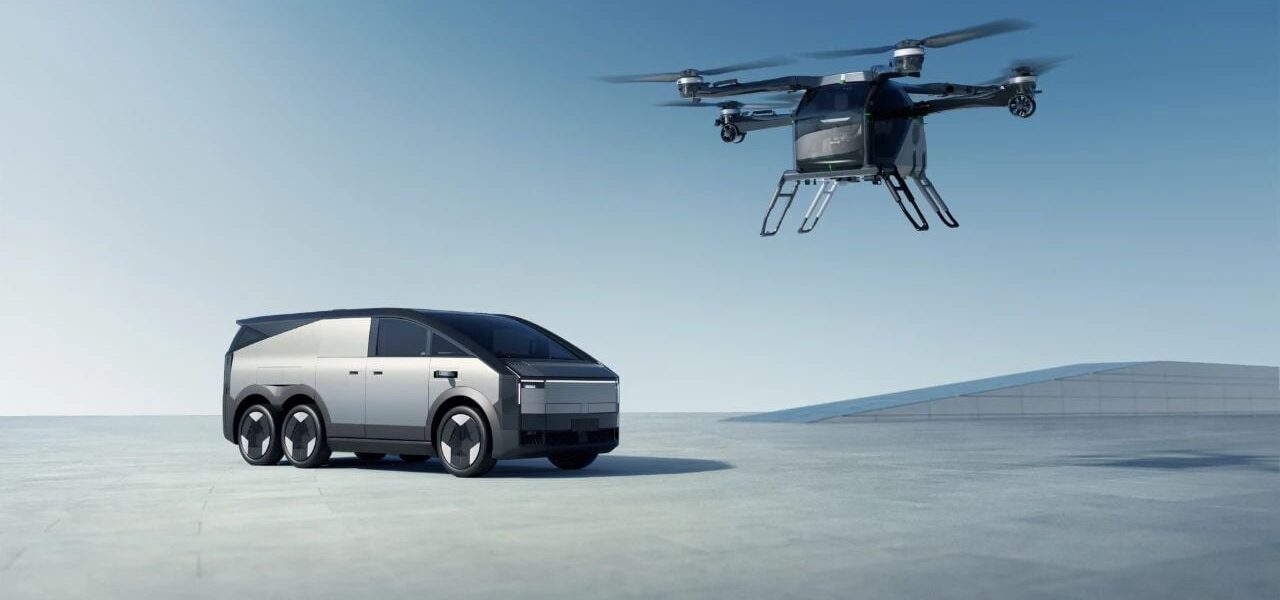
It’s an extraordinary pivot, a testament to the brutal realities of a domestic market that, despite its gargantuan size, simply can’t sustain the sheer volume of players or their ambitions. With over 100 electric vehicle (EV) brands vying for consumer yuan, China’s automotive landscape has become a hothouse of innovation and, simultaneously, a maelstrom of unsustainable practices. Automakers, once solely focused on perfecting the combustion engine or electrifying the commute, are now aggressively cultivating a perplexing array of side hustles, transforming themselves into sprawling conglomerates with tenuous links to their original purpose. Think of it: a car company designing — and launching satellites. It’s almost theatrical in its ambition.
But this isn’t some whimsical venture into aerospace. At its core, this desperate scramble reflects the precipitous drop in profit margins. According to data compiled by Counterpoint Research, average EV prices in China plunged by 15% in 2023 alone, a testament to the brutal price wars that have become commonplace. Established players and ambitious startups alike find themselves trapped in a zero-sum game, often selling vehicles at little to no profit—sometimes even at a loss—just to maintain market share. So, what’s a titan to do?
They diversify, of course. Nio, an early EV darling, isn’t just selling cars; it’s building a lifestyle brand, complete with Nio Life apparel, charging stations, battery-swapping networks, and even fancy cafes. SAIC Motor, a state-owned giant, isn’t just churning out cars under brands like MG and Roewe; it’s delving into robotaxis, semiconductor development, and even financial services. Even Huawei, primarily a tech titan, has waded into the automotive fray not by building cars itself, but by providing software and components, effectively becoming the brain behind other automakers’ ventures.
“This isn’t about desperation; it’s about dynamic evolution,” asserted Luo Yong, a senior analyst at the China Chamber of Commerce for Import and Export of Machinery and Electronic Products (CCCME), speaking to Policy Wire from Beijing. “Our manufacturers are adapting, innovating, and ensuring sustainable growth in a truly challenging global landscape. They’re leveraging their core competencies—manufacturing prowess, supply chain mastery, and technological agility—to explore new frontiers.” He’s putting a brave face on it, but the subtext of intense pressure is palpable.
Still, the view from outside China’s borders paints a less rosy picture. “What we’re witnessing is a market in acute distress masquerading as innovation,” observed Dr. Eleanor Vance, an automotive industry strategist with the London-based Chatham House. “It’s a zero-sum game, and the only way to avoid becoming a distressed asset yourself is to find revenue streams completely orthogonal to your core business—or, failing that, simply acquire more market share through unsustainable pricing. It’s a galling reality for many Western automakers.”
📄 POLICY WIRE WHITEPAPER PUBLISHED: PAKISTAN'S NATIONAL SECURITY POLICY PRIORITIES
👉 READ BY CLICKING HEREThis intense domestic pressure, incidentally, fuels China’s aggressive export strategy. Unable to make sufficient profits at home, these automotive giants are increasingly looking eastward — and southward. Nations across South Asia — and the Muslim world, such as Pakistan, become prime targets. With their burgeoning middle classes and a growing appetite for affordable, tech-laden transportation, these markets offer a lifeline. Brands like BYD, MG (SAIC-owned), and Chery are already making significant inroads, often offering models at price points that established Japanese and European players struggle to match. The side hustles developed at home—think advanced battery tech, AI-driven logistics, or even autonomous solutions—can also be packaged and exported as part of a broader push for technological supremacy and economic prowess and soft power in these crucial developing economies.
What This Means
The proliferation of these automotive “side hustles” isn’t merely an intriguing business trend; it’s a seismic shift with profound political and economic implications. Economically, it signals a deeper malaise in China’s industrial policy. The state-driven push for EV dominance has created a glut of manufacturers, leading to fierce price competition that cannibalizes profitability. This diversification, therefore, isn’t just about innovation; it’s a survival mechanism, a tacit acknowledgment that the core business alone isn’t sufficient. Expect more consolidation, more bankruptcies, and a continued push for government subsidies to keep the sector afloat, potentially exacerbating international trade tensions as Chinese firms, now multi-faceted, flood global markets with aggressively priced goods and services.
Politically, this expansion into non-automotive sectors reflects Beijing’s broader strategic goals for technological self-reliance and global influence. When a car company invests in satellites or AI, it’s contributing to national strategic industries. This isn’t just about revenue; it’s about building a robust, interconnected technological ecosystem that can compete—and dominate—on the world stage. the aggressive export of these affordable vehicles and associated technologies to emerging markets, particularly along the Belt and Road Initiative, enhances China’s geopolitical leverage, tying these economies closer to Beijing’s orbit and reinforcing its global manufacturing leadership. The car isn’t just a car anymore; it’s a node in a much larger, politically charged network.