

Is Territorial Dispute Straining the Transatlantic Alliance?
The transatlantic alliance faces one of its most serious tests in decades. At the center sits Greenland. What began as a provocative idea has now turned into open pressure, economic threats, and...

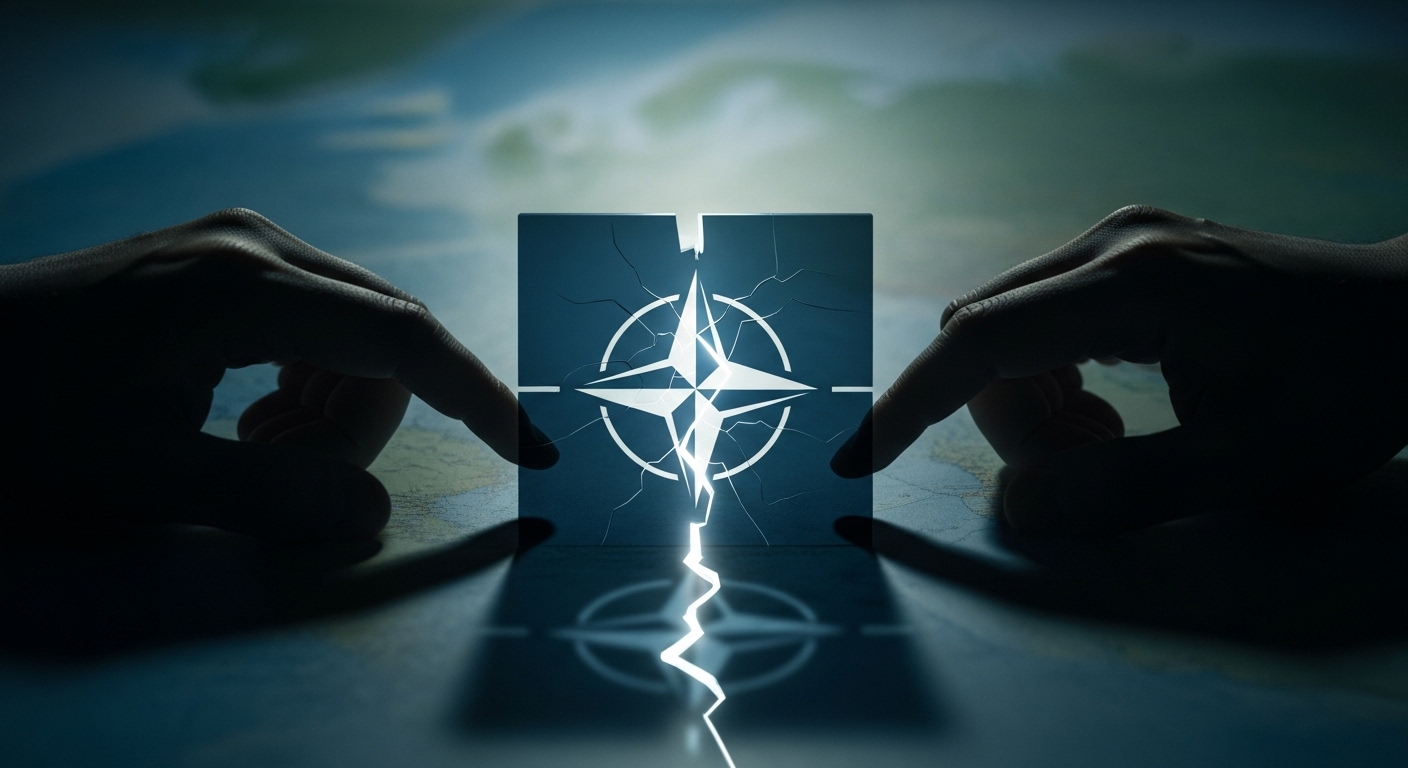
The transatlantic alliance faces one of its most serious tests in decades. At the center sits Greenland. What began as a provocative idea has now turned into open pressure, economic threats, and political rupture? President Donald Trump’s renewed drive to acquire Greenland has collided with Europe’s core principles. The result is a sharp erosion of trust inside NATO.
Greenland matters. It sits at the gateway to the Arctic. It hosts key U.S. military infrastructure, including the Pituffik Space Base. Melting ice is opening new shipping lanes and access to rare earth minerals. Every major power watches the region closely. Security concerns there are real. But the way Washington has chosen to act has shaken the alliance that once defined Western unity.
Trump has linked Greenland to tariffs. He has warned European allies that refusal to accept U.S. ownership of the island will trigger escalating trade penalties. He has framed the issue as a matter of global survival. He has dismissed European military deployments to Greenland, even though Denmark invited them and informed NATO. This fusion of security demands with economic coercion has crossed a line for many European governments.
NATO has always relied on more than tanks and treaties. It relies on confidence. Allies must believe that commitments mean something. Article 5, the promise that an attack on one is an attack on all, depends on credibility. When leaders question that promise, deterrence weakens.
Trump has done so repeatedly. He has suggested that U.S. support depends on definitions and conditions. He has publicly doubted whether NATO would defend America. During his campaign, he said he would encourage Russia to act freely against allies that fail to meet spending targets. These statements have left lasting scars.
European leaders tried to adapt. They raised defense spending. NATO members agreed last year to move well beyond earlier targets. Several governments shifted budgets despite slow growth and tight public finances. Denmark, a country of six million people, paid a high price in Afghanistan. It suffered the highest per capita casualties among NATO members. Europeans often remind Washington that the only time NATO invoked Article 5 was after the attacks of September 11, 2001, in defense of the United States. Those arguments now seem to carry little weight. The current White House has signaled that past loyalty does not count. What matters is immediate leverage.
The Greenland dispute exposed this logic in full. Trump threatened a 10 percent tariff on imports from Denmark, France, Germany, Britain, Sweden, Norway, the Netherlands, and Finland. He said tariffs would rise to 25 percent unless these countries agreed to a deal for full U.S. ownership of Greenland. This would effectively hit the entire European Union, a single customs bloc of 27 states.
Europe responded with rare unity. Eight countries issued a joint statement backing Denmark and Greenland. They warned of a dangerous downward spiral. Leaders used unusually blunt language. Sweden’s prime minister said Europe would not accept blackmail. France’s president said intimidation would not work. Britain’s prime minister called tariffs on allies for NATO-related deployments completely wrong. Even leaders normally close to Trump labeled the move an error.
Germany showed caution but also pulled back its small military presence in Greenland, likely to avoid escalation. Behind closed doors, European diplomats debated retaliation. Some discussed trade countermeasures. Others favored quiet diplomacy. All recognized the stakes. The crisis goes beyond Greenland. It touches the core of Western strategy. NATO was built on shared interests and shared restraint. It survived deep disagreements before. The Suez crisis of 1956 pitted the United States against Britain and France. The Iraq war in 2003 split the alliance again. Yet in those moments, no member threatened to seize another ally’s territory.
This time feels different. Trump’s language treats alliances as transactions. He views U.S. global leadership as a burden rather than a system that amplifies American power. This view is not new. He has voiced it for decades. What has changed is the willingness to act on it.
European officials worry about timing. Russia continues its war in Ukraine. U.S. diplomacy has signaled openness to a peace plan that favors Moscow. China watches closely. Division inside NATO benefits both. European leaders say openly that Beijing and Moscow gain from this chaos.
The security argument for owning Greenland also rings hollow to many experts. The United States already operates a major base there. Denmark has offered more cooperation. European deployments aim to strengthen collective defense, not undermine it. If Washington sought only security, it could expand its presence through NATO channels. Ownership adds little in practical terms.
Greenland’s own people reject the idea. Opinion polls show strong opposition to becoming part of the United States. The island has 57,000 residents and growing autonomy within the Danish kingdom. Sovereignty matters deeply to them. European leaders insist that only Greenlanders can decide their future.
The damage to NATO is already visible. Former alliance officials warn that trust, the glue holding the organization together, has fractured. NATO may survive on paper. Its effectiveness may not. Deterrence depends on belief. Once allies doubt each other’s intentions, adversaries test limits.
The coming weeks will shape the outcome. European ambassadors meet to coordinate responses. Danish and Greenlandic ministers visit NATO headquarters to push dialogue. Some in Washington, including members of Congress, have reassured Denmark that Trump’s position lacks broad U.S. support. These signals may help contain the fallout.
Yet the deeper issue remains unresolved. The alliance faces a strategic choice. Either NATO adapts to a world where U.S. commitments fluctuate with political pressure, or Europe accelerates efforts to build independent defense capacity. Both paths carry costs.
Greenland may seem remote. Ice and rock at the edge of the map. But its symbolism now looms large. It represents whether alliances still rest on consent, law, and shared purpose. Or whether power alone decides outcomes. For NATO, the first casualty may not be territory. It may be trust.
Author