


Billionaire Bet: Portland’s Dual-Sport Gamble Reshapes Women’s Athletics
POLICY WIRE — Washington D.C. — It’s never just about the scoreboard, is it? Behind every athletic spectacle, particularly one as meticulously coordinated as Portland’s recent professional women’s...

POLICY WIRE — Washington D.C. — It’s never just about the scoreboard, is it? Behind every athletic spectacle, particularly one as meticulously coordinated as Portland’s recent professional women’s sports doubleheader, lies a strategy—a cold, hard business calculation. We’re not talking about two teams simply sharing a city; we’re looking at a single, billionaire-backed ownership group pushing a joint venture that signals a major pivot in how we—and more importantly, how investors—perceive the market viability of women’s sports. This wasn’t some organic groundswell; it was Raj Sports, an entity led by Lisa Bhathal Merage and Alex Bhathal, putting their capital and operational savvy squarely behind two distinct, high-profile franchises. It’s an explicit wager, sure, but also a bold redefinition.
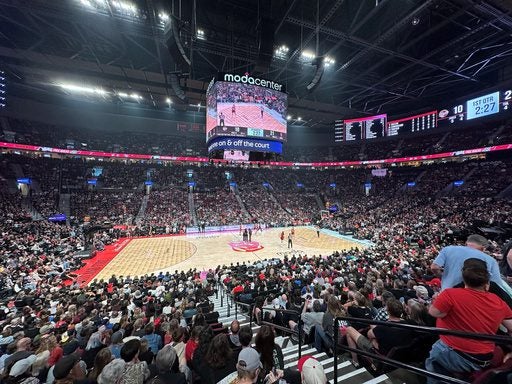
On a recent Saturday, Portland effectively ran a double-bill of athletic prowess. First, the Thorns of the National Women’s Soccer League hosted the Utah Royals, playing to a 2-2 draw. The air was thick with competitive fervor, I’m told. But the spectacle didn’t end there; no, it just transitioned a few miles away. The expansion Fire—Portland’s WNBA franchise—then squared off against Caitlin Clark and the Indiana Fever in the evening slot. Imagine, two elite games, back-to-back, all under the umbrella of a single commercial vision. It’s not just efficient; it’s an integrated ecosystem built from the top down. Fans weren’t just showing up for one sport; they were buying ticket packages for both, paying up to $80 for a glimpse at what this unified front truly means.
And what’s it mean for the players? Olivia Moultrie, a midfielder for the Thorns, seemed pretty jazzed, frankly, even after her game. She was headed straight to the Fire game, hoping for a jersey swap with Clark (a pretty shrewd PR move, you’d agree), and genuinely pulling for a Fire victory. You can feel the camaraderie when she said, [QUOTE_PLACEHOLDER] That’s a sentiment that speaks to more than just athletic appreciation; it points to a deeply personal connection athletes form with a city that embraces them so completely. Later that night, the Fire made good on her hopes, delivering a decisive 100-84 win.
But the numbers are where it really gets interesting. The Thorns, a founding NWSL team, drew a staggering 20,053 fans. And for the Fire? A declared sellout crowd of 19,347 at the Moda Center. These aren’t just warm bodies; these are paying customers, showing up en masse, proving that the market for women’s professional sports isn’t just nascent—it’s vibrant and growing. Sarah Ashlee Barker, a Fire guard, neatly summed up the player perspective, sharing her appreciation for the unified backing: “Just seeing the support that they show for both of our organizations, it means a lot.” She recognized, perhaps better than anyone, what this financial and organizational muscle means for her sport. But let’s be honest, it’s also good for the balance sheets. The next big move? A $150 million shared performance center—a repurposed Nike facility on a dozen acres west of Portland—is set to open its doors on August 22nd. That’s a facility commitment few men’s sports teams can boast, let alone shared by two different professional women’s franchises. That’s real money, building real infrastructure. And yes, it will be the nation’s first performance center shared by a pair of professional women’s teams across different sports, solidifying Portland’s place as a genuine laboratory for this economic model.
Thorns coach Robert Vilahamn put a fine point on the broader organizational ambition: [QUOTE_PLACEHOLDER] He’s talking synergy, cultural alignment, brand amplification—all the elements that drive long-term value in a market. It’s a unified message, from the pitch to the court, from the front office to the fan stands. Policy-wise, this integrated approach could very well become a blueprint.
What This Means
This Portland experiment isn’t just a feel-good story about women getting their due in sports; it’s a cold, hard business model playing out in real time. For policy wonks — and economists, it’s Exhibit A in the argument for targeted capital investment in underserved markets. Raj Sports isn’t philanthropically sponsoring a league; they’re cultivating assets, growing a loyal fanbase, and establishing a sophisticated infrastructure that signals a mature, scalable business. They’re making money here—or at least building the framework to make a lot of it. This isn’t just about selling tickets; it’s about media rights, merchandise, sponsorships, and creating a robust ecosystem. It’s a policy statement about market potential that governments — and businesses worldwide might find hard to ignore.
Consider the contrast to regions where the professionalization of women’s sports remains nascent, or culturally constrained. In many parts of the Muslim world, including South Asia, women’s participation in professional, internationally competitive sports often faces significant headwinds—ranging from socio-cultural norms to stark economic disparities in sports infrastructure. Even as cricket explodes globally as a multi-billion dollar enterprise (the IPL’s cash payouts are colossal), the equivalent investment into, say, women’s football or basketball in Pakistan remains a fraction, often relying on sporadic government initiatives or grassroots efforts rather than significant private capital. This isn’t to say progress isn’t being made—women’s teams are emerging—but the integrated, well-capitalized approach seen in Portland provides a stark example of what intentional, profit-driven investment looks like. It’s a template that could, if adapted, change the game globally, potentially drawing in investment where previously it seemed too risky, too unconventional.
The lessons from Portland could be keenly observed from Karachi to Kuala Lumpur. If this dual-sport ownership structure, complete with shared training facilities and aggressive marketing, proves to be a durable profit-driver, it could unlock fresh capital for women’s sports leagues elsewhere. But it’s also a high-stakes gamble; if it falters, it could just as quickly become a cautionary tale. What we’re witnessing in Portland is a test case in leveraging brand synergy and dedicated ownership to redefine athletic and economic success for an entire segment of the sports world. And if it pays off, everybody—well, everyone watching the balance sheets, anyway—will sit up and take notice.