


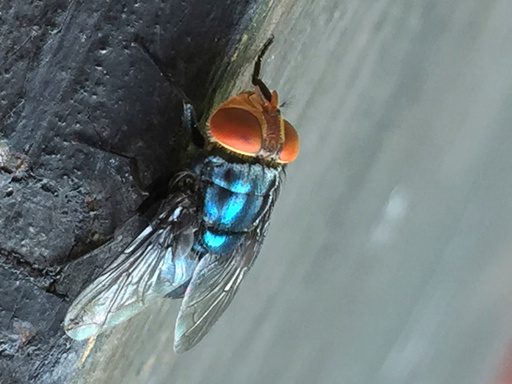
The Flesh-Eating Fly is Back: Texas Ranchers Face a Ghastly, Multi-Billion Dollar Throwback
POLICY WIRE — Austin, U.S. — You spend a lifetime coaxing value from dirt and stubborn beasts, watching the sun bake your profits or drown them. Then, a microscopic menace, a mere fly, lands the...

POLICY WIRE — Austin, U.S. — You spend a lifetime coaxing value from dirt and stubborn beasts, watching the sun bake your profits or drown them. Then, a microscopic menace, a mere fly, lands the haymaker. We’re talking about the New World screwworm, a creature so nasty it devours living flesh, and it’s suddenly back, not just buzzing but burrowing into the heart of Texas’s gargantuan cattle industry.
It wasn’t a rampaging bull or a particularly nasty rustler that first signaled trouble; it was a three-week-old calf, its tender hide infested with something grotesque, down in La Pryor. That’s a blip on the map, maybe 100 miles southwest of San Antonio, — and a stone’s throw from the border. But that blip exploded into a full-blown emergency because this isn’t just any fly. Its larvae, little maggots of pure horror, don’t munch on dead stuff like decent decomposers. No, these ghoulish grubs feast on the living, chewing through flesh and fluids, turning a tiny cut into a festering wound—and quickly, too. It’s enough to make a seasoned rancher sick to his stomach.
This unwelcome reappearance, after more than half a century of blissful absence, isn’t some quaint agricultural curiosity. Oh no. It puts a gaping maw in front of the colossal $113 billion U.S. cattle industry (USDA data confirms Texas holds about $17 billion of that), an economic powerhouse. And because Texas is Cattle Central, federal and state officials have been sweating bullets, trying to keep the buggers out. They’ve been shouting warnings for nearly two years now, ever since cases started popping up in Mexico in late 2024.
See, this particular brand of misery, the screwworm fly, used to be an annual, warm-weather bane from the 1930s all the way through the 1960s. Ranchers saw tens of millions in losses back then; you can probably tack a zero or two onto that figure today. But clever scientists eventually outsmarted the flies. They cooked up this ingenious plan: breed sterile male flies by the millions, drop ‘em from planes, and let them woo the wild females. Because female screwworms only mate once, — and if that hookup is with a sterile dude, well, no babies. The population nosedived, then vanished, all thanks to some highly motivated (and unlucky) male insects.
Now, here we’re again. That first Texas case? The first since 1966. U.S. Agriculture Secretary Brooke Rollins, not one to mince words, was pretty clear on what happened. “The only way this spreads is through animal movement,” she declared recently, implying a certain level of negligence somewhere. She closed ports of entry along the border back in July 2025 because of the Mexican infestations, putting pressure on our southern neighbors. She even pointed fingers, squarely, at former Democratic President Joe Biden’s administration, arguing that what she called “weak border security” had a role to play in the flies’ northward migration. Because, apparently, even tiny, flesh-eating flies care about immigration policy.
But the picture, as always, is far murkier than simple blame games. Lee Haines, an associate research professor at the University of Notre Dame and a bug-brainiac, offers a less politically convenient take. Climate change, she explains, is arguably the real engine behind this tropical pest’s unwelcome road trip. “The cold snaps that once suppressed stray populations in marginal northern regions are becoming rarer and less severe, thus removing a natural biological check on the flies’ migration north,” Haines noted. “Warmer temperatures are also expanding the geographical band of suitable habitat northward.” So it’s not just a border issue; it’s a globe-heater issue.
Texas State Veterinarian Bud Dinges wasn’t waiting for political consensus, though. He slapped a 12-mile quarantine zone around Zavala County—the initial hot zone—and parts of Uvalde County. No animals move in or out without a thorough inspection. Stephen Diebel, a Texas rancher and president of the Texas & Southwestern Cattle Raisers Association, says even a tiny wound, “as small as a tick bite,” can spell disaster for cattle. He says his people are giving prophylactic injections, constantly monitoring herds, and being extra careful with ear tagging or de-horning wounds.
This problem isn’t just American, either. The Old World screwworm, a grim cousin, thrives in Africa — and Asia. Its presence there has always complicated livestock management in places like Pakistan, where small-scale farming and nomadic herding are cornerstones of rural economies. A similar uncontrolled outbreak there, where animal health infrastructure might be less robust than in Texas, could be catastrophic, decimating flocks and severely impacting food security and export markets. This isn’t an abstract problem, you see. It’s a reminder that pest management, border controls, and climate impact are intricately linked globally.
Thankfully, the old sterile male technique still works, — and officials are leaning heavily on it. The USDA started dropping millions of sterile flies over South Texas in February, sourced from an international facility in Panama. Plus, they’re pumping $21 million into a new breeding plant in southern Mexico and an eye-watering $750 million into a Texas facility designed to churn out 300 million sterile flies weekly. Rollins, pragmatic about the strategy, states flat out: “The sterile insect is not only the most effective tool we have, but it’s also considered one of the most environmental friendly insect pest control methods ever developed.” So, we’re fighting flies with flies. Again. It’s a darkly humorous turn, if you stop to think about it.
What This Means
The screwworm’s unwelcome return isn’t just about a creepy-crawly fly. It’s a stark indicator of how rapidly global pest distributions can shift, driven by factors from international trade to — crucially — climate change. This puts massive economic pressure on the U.S. beef industry, but also tests the limits of government cooperation across borders, especially with the political heat currently surrounding immigration and federal resource allocation. The sheer fiscal outlay for the sterile insect technique highlights the massive preventative costs associated with protecting critical economic sectors like agriculture. But it also shows the enduring value of tried-and-true scientific methods. Ranchers, meanwhile, face a new layer of vigilance — and expense, making an already tough business even tougher. Expect continued squabbling over who’s to blame, even as the USDA tries to spray this problem with science and sterile insects.