


Political Circus Rolls: Philippine VP Impeachment Kicks Off Amidst Fractured Elite
POLICY WIRE — Manila, Philippines — Sometimes, the loudest thunderclap echoes not from a fresh scandal, but from the slow, deliberate grind of a familiar machine sputtering to life. That’s the...

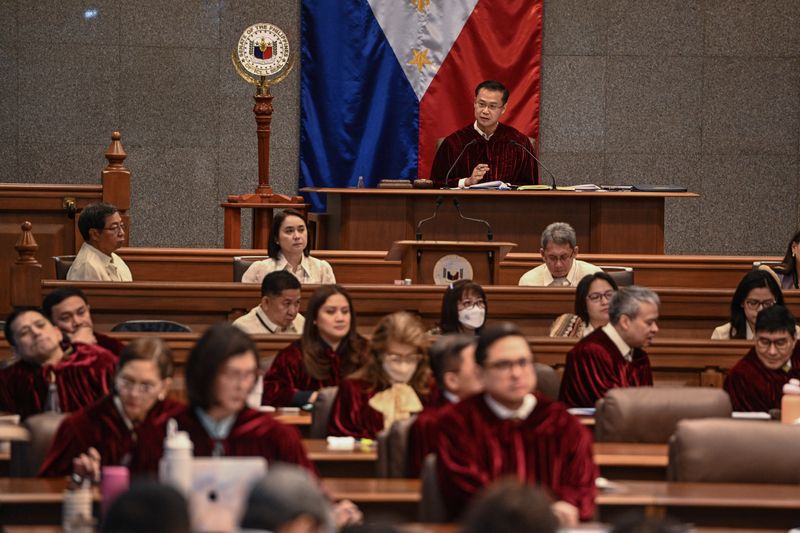
POLICY WIRE — Manila, Philippines — Sometimes, the loudest thunderclap echoes not from a fresh scandal, but from the slow, deliberate grind of a familiar machine sputtering to life. That’s the vibe thick in the air across Manila right now, where the long-anticipated impeachment trial of Vice President Sara Duterte has finally lurched into session within the fractious halls of the Senate. It isn’t just about a vice president on the hot seat; it’s about a political dynasty grappling for its very future—or perhaps, simply adjusting its public-facing strategy. People aren’t just watching; they’re handicapping, with bets less on guilt or innocence, and more on who outmaneuvers whom in the shadow boxing that passes for governance.
The Senate, perpetually a chamber of competing ambitions and shifting loyalties, feels less like a deliberative body and more like a gladiatorial arena for the country’s entrenched elite. It’s a dynamic anyone familiar with South Asian — indeed, much of global — politics could recognize instantly. There’s a theatricality to it, an intricate ballet of posturing and veiled threats that has long characterized political machinations from Islamabad to Jakarta. The very fact of this trial, many will tell you, represents a seismic crack within the ruling establishment, a once-unthinkable confrontation between former allies now duking it out on primetime national television. You can practically hear the collective sigh of a nation used to this specific brand of political opera, only this act features a star whose last name carries more weight than any job title.
The formal accusations are, naturally, all laid out with the grave seriousness befitting such proceedings. They circle around allegations of misuse of public funds, particularly discretionary spending that some critics have tagged as a thinly disguised political war chest. Specifically, it involves the alleged misuse of millions of pesos from intelligence funds. [QUOTE_PLACEHOLDER], according to a source close to the parliamentary maneuvers. These aren’t new grievances; they’ve been bubbling under the surface for months, gathering steam like a monsoon storm, finally breaking into the public square with an undeniable splash. But everyone knows the formal charges are often just the stage curtains; the real drama plays out behind closed doors, in whispered alliances and the sudden, inexplicable flip-flops of seasoned politicians.
Her defense, a phalanx of legal eagles, insists on the absolute propriety of every centavo spent. [QUOTE_PLACEHOLDER], a senior lawyer stated with conviction. It’s an assertion that will no doubt be tested, picked apart thread by thread in the coming weeks. The defense’s primary tactic, you can wager, will involve painting the entire exercise as a politically motivated witch hunt, an attempt to neutralize a powerful figure ahead of future electoral contests. It’s a tale as old as time in countries where personality politics trumps policy debates with astonishing regularity. And it often works—the public is cynical enough to believe powerful enemies are always lurking. But you also know the accusers wouldn’t have moved unless they felt they had enough public or backroom leverage to make this stick. The stakes couldn’t be higher for her camp; a conviction wouldn’t just strip her of office but potentially end her family’s national political aspirations for a generation. No small potatoes.
This isn’t just internal bickering; the political tremor emanating from Manila reaches far beyond the archipelago’s shores. Geopolitically, the Philippines sits at a crossroads, a key player in the increasingly tense South China Sea. Domestic instability, particularly involving a popular figure from the southern regions, can have ripple effects. Imagine how instability affects perceived economic reliability. A recent analysis from the ASEAN Policy Institute noted a 15% decrease in foreign direct investment inquiries during periods of high political uncertainty in Southeast Asian nations, suggesting a tangible link between political stability and investor confidence. Countries across the Muslim world, many of whom observe the Philippines’ handling of its Mindanao region (which holds a significant Muslim population and a history of conflict), are watching closely. They’re gauging the institutional strength of its democratic processes, seeing if the rule of law can truly hold sway over dynastic power, or if it will simply buckle under political pressure.
For Pakistan, for instance, a nation grappling with its own history of political volatility and the interplay of military and civilian authority, Manila’s drama offers a sobering parallel. The resilience—or fragility—of democratic institutions when confronted by deeply entrenched political families, powerful personalities, and external pressures, isn’t an unfamiliar narrative there. It really makes you wonder if some democracies are built to handle such deep, familial fissures without tearing apart. Because let’s face it, many aren’t.
The immediate political forecast? Cloudy with a chance of fireworks. Observers and political analysts predict a drawn-out, acrimonious process that will likely expose more than just alleged financial improprieties. It’ll lay bare the raw, brutal calculus of power in the Philippines, an archipelago nation often perceived as a dynamic democracy but one frequently shadowed by dynastic influence and popular authoritarian streaks. The Senate, currently controlled by an uneasy coalition, will be put through its paces. Its members must choose between allegiance to party lines, loyalty to past patrons, and, perhaps, the rare flicker of genuine public interest. It’s a balancing act as precarious as walking a tightrope in a typhoon. And don’t think for a second the international community isn’t taking notes.
What This Means
The impeachment trial isn’t just a legal battle; it’s a profound political realignment with significant implications for Philippine domestic policy and its regional standing. Domestically, it signifies the weakening — or at least the open challenging — of what was once considered an ironclad political alliance. Should Sara Duterte be removed, or even significantly hobbled, it opens the field wide for 2028 presidential hopefuls and could lead to a less centralized power structure, albeit potentially a more fragmented one. Economically, prolonged uncertainty could spook investors, especially given Manila’s push for major infrastructure projects and its role in critical supply chains. Any perception of governmental instability impacts borrowing costs — and foreign investment flows.
Regionally, a robust, democratic Philippines is a key strategic partner in Southeast Asia. Its ability to navigate complex internal political conflicts through constitutional means is a bellwether for democratic health across a continent where strongmen often still dominate. How this trial concludes will be watched keenly by allies and rivals alike, offering insights into the stability and predictability of one of Washington’s most crucial Indo-Pacific partners. It will inform discussions around security cooperation — and economic partnerships for years to come. Ultimately, this isn’t just about Sara Duterte; it’s about the very soul of Philippine democracy and its resilience against internal fracturing, a question that looms large over many nascent democracies. The answer, whichever way it falls, will be etched deep into the country’s historical record, for good or ill.