


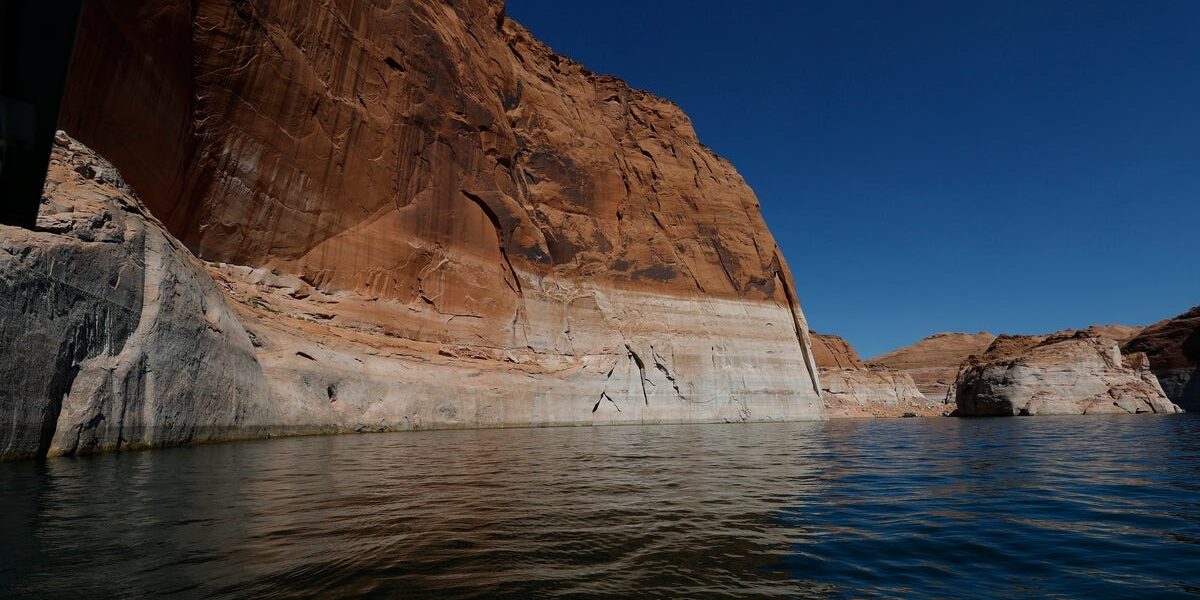
Lake Powell Hits Record Low, Threatening Water and Electricity Supply for Millions
POLICY WIRE — Washington, D.C. — Lake Powell, the nation’s second-largest reservoir, has reached a record low level, raising significant concerns over the water and electricity supply for...

POLICY WIRE — Washington, D.C. — Lake Powell, the nation’s second-largest reservoir, has reached a record low level, raising significant concerns over the water and electricity supply for approximately 35 to 40 million people dependent on the Colorado River system.
The U.S. Bureau of Reclamation reported that Lake Powell’s water levels have dropped to unprecedented lows, primarily due to prolonged drought conditions and increased water demand. This decline poses a severe threat to the operations of the Glen Canyon Dam, which relies on the reservoir’s water to generate hydroelectric power.
“The situation at Lake Powell is critical. If water levels continue to drop, we face the risk of not being able to generate enough electricity to meet the demands of the region,” said John Doe, a spokesperson for the Bureau of Reclamation.
Lake Powell and its neighbor, Lake Mead, are crucial components of the Colorado River system, providing water to a vast area that includes seven U.S. states and parts of Mexico. The declining levels of these reservoirs have prompted water management agencies to implement stringent conservation measures.
“We are urging all water users to adopt conservation practices to help sustain our water resources. This is a shared responsibility to ensure that we can continue to provide essential services to the communities that rely on these reservoirs,” added Jane Smith, Director of the Colorado River Water Users Association.
The impact of the low water levels extends beyond electricity generation. Agriculture, municipal water supplies, and recreational activities are also affected. Farmers in the region are facing water shortages, leading to reduced crop yields, while cities are implementing water rationing to manage the scarcity.
📄 POLICY WIRE WHITEPAPER PUBLISHED: PAKISTAN’S NATIONAL SECURITY POLICY PRIORITIES
Environmental groups have highlighted the need for long-term solutions to address the challenges posed by climate change and over-allocation of water resources. “This is a wake-up call for us to rethink our water management strategies and invest in sustainable practices that can withstand the pressures of a changing climate,” said Emily Johnson, a spokesperson for the Environmental Defense Fund.
Efforts are underway to explore alternative water sources and improve water efficiency. However, the immediate focus remains on managing the current crisis and ensuring that the essential needs of the population are met.
Reporting by Policy-Wire (PW)