


Echoes of El Alamein: Ukraine’s Long Shot and the Geopolitics of Artillery Claims
POLICY WIRE — Kyiv, Ukraine — In the clamor and dust of modern conflict, where battlefield reports often clash with digital bravado, one assertion recently pierced the fog of war like a perfectly...

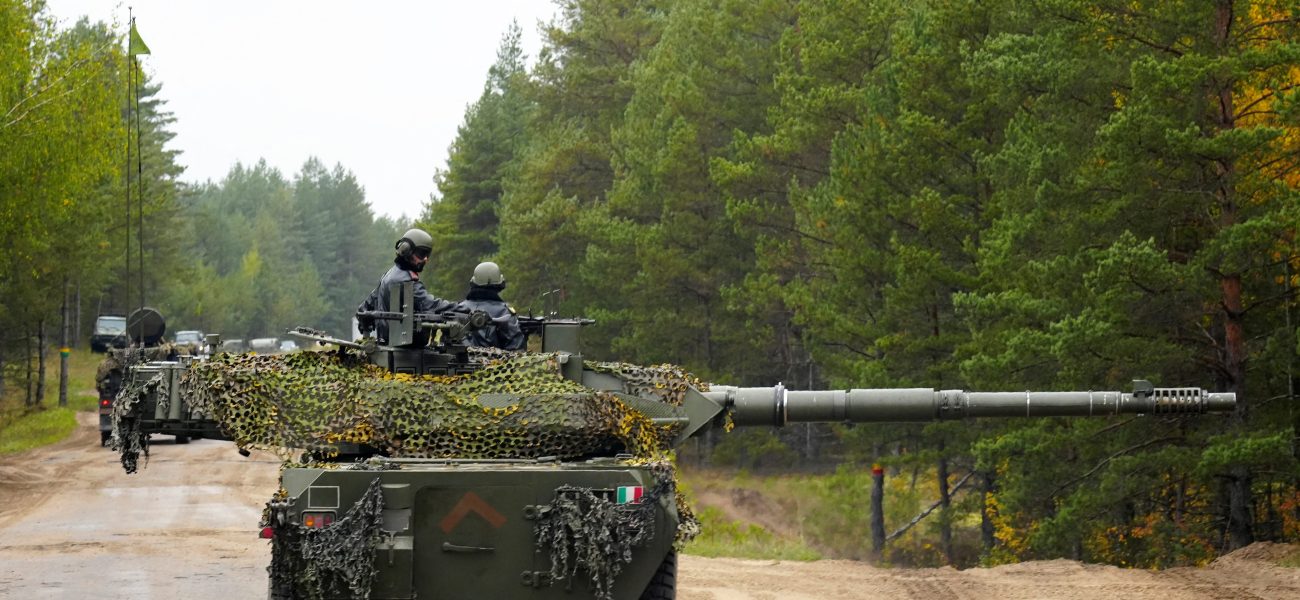
POLICY WIRE — Kyiv, Ukraine — In the clamor and dust of modern conflict, where battlefield reports often clash with digital bravado, one assertion recently pierced the fog of war like a perfectly aimed round: a Ukrainian crew declared their Italian-supplied tank gun struck a building from a distance rarely conceived outside a dedicated artillery range. It wasn’t the target itself that turned heads, but the staggering reported span—a full 120 football fields away. Such claims, frankly, don’t just win battles; they write headlines, reshape perceptions, and quietly, sometimes menacingly, ripple across the global arms market.
It’s an operational boast that harks back to historical lore—think of the legendary marksmen or the incredible artillery feats from bygone eras, though even then, sustained precision at such extreme distances was the stuff of legend, not daily grind. But in today’s information-saturated trenches, where smartphones record destruction as much as battle plans dictate it, this kind of accuracy claim has become a new kind of currency. It validates expensive defense contracts, cheers allies, and maybe, just maybe, sows a little extra doubt in the minds of adversaries. [QUOTE_PLACEHOLDER]
And let’s be real, militaries don’t just issue these declarations for shits — and giggles. Every piece of equipment, every claimed success, it’s all part of a larger chess game—a narrative built to secure more aid, cement international relationships, and maintain troop morale. We’re talking about instruments of war that Italy, a key NATO member — and EU player, has committed to providing. These aren’t just big guns; they’re expensive bets on Kyiv’s resilience.
The alleged incident underscores the sophisticated firepower flowing into the conflict zone from Western partners. Italian defense exports, while not always in the headlines as much as German tanks or American jets, have been a quiet, steady contribution to Ukraine’s defense capabilities. Such an exceptional strike, if verified independently beyond a crew’s word—a significant if, in fairness—doesn’t just showcase Ukrainian training; it speaks volumes about the capabilities of the armaments themselves. It highlights what these donated systems can ostensibly do when pushed to their limits.
Because every scrap of successful engagement helps fortify the argument for continued — and expanded military support. Politicians back home face public scrutiny — and fiscal constraints. They’ve gotta justify sending millions—billions, even—in materiel halfway across a continent. And a crew’s boast about nailing a house from an outrageous distance? That’s PR gold for policymakers trying to keep the aid spigot open.
the modern battlefield isn’t just about kinetic energy; it’s about information — and psychological warfare. A reported shot that travels the length of 120 football pitches carries a weight far beyond the single projectile. It’s a statement. It’s an example. It’s designed to impress. The messaging is clear: Ukrainian forces, equipped with modern Western artillery, can strike with uncanny precision, making any structure, no matter how distant, a potential target. This capability changes threat perception for opposing forces; it broadens the kill zone, literally.
Such technological showcases can also influence global arms markets. Countries across South Asia, including Pakistan, grappling with their own complex geopolitical realities and continuously evaluating their defensive needs, observe these developments closely. They aren’t just passive viewers; they’re potential customers. If an Italian system demonstrates superior range and accuracy under live-fire conditions, you’d better believe the defense attachés in Islamabad, Delhi, or Riyadh are taking notice. A verifiable claim of precision at 120 football fields (or roughly 11 kilometers, since a football pitch is about 100-110 meters long)—that’s a tangible, albeit indirect, boost to a manufacturer’s sales brochure. It shapes future procurement decisions in places where geopolitical stability is often a matter of finely balanced firepower, much like a delicately negotiated treaty. We’re talking about billions in potential defense contracts hanging on successful performance reports like these.
And let’s not forget the strategic communication with the Muslim world. The conflict often features in religious — and political discourse there. Demonstrations of military prowess, particularly involving advanced weaponry from Western nations, can sometimes serve as a subtle nod to strategic partnerships and capabilities within this broader global framework. It can help solidify existing alliances or at least mitigate concerns regarding Western military hardware.
A specific data point illustrating the sheer volume of military aid comes from the Kiel Institute for the World Economy, which reported that by early 2024, Italy had committed approximately €6.64 billion in overall aid to Ukraine, including military, financial, and humanitarian support. That’s a serious investment. So when an Italian-supplied gun does something extraordinary, it provides a powerful, if indirect, return on that investment, politically speaking.
What This Means
The reported feat of this Italian tank gun isn’t merely a fleeting incident; it’s a small but telling piece in a much larger puzzle. Politically, it strengthens the narrative of Western military effectiveness and Kyiv’s combat proficiency, providing invaluable leverage for ongoing aid appeals. Economically, such high-profile battlefield successes serve as accidental—or perhaps intentional—marketing for defense contractors, influencing procurement trends in global hotspots like South Asia. The subtle ripple effects are undeniable: nations assess not just their adversaries’ capabilities but also the viability and prestige of their potential allies’ equipment. It’s about securing contracts, shaping global perceptions of power balances, and making darn sure that your side’s technology looks, on paper at least, superior. It’s about projecting strength, — and maybe even a touch of theatrical precision, across a world already on edge.