


Pompeii’s Silent Scream: AI Breaths New (Digital) Life Into Ancient Tragedy
POLICY WIRE — Pompeii, Italy — For centuries, the petrified remains of Pompeii’s citizens have stood as stark, immutable monuments to Vesuvius’s cataclysmic fury. They’ve been mute...

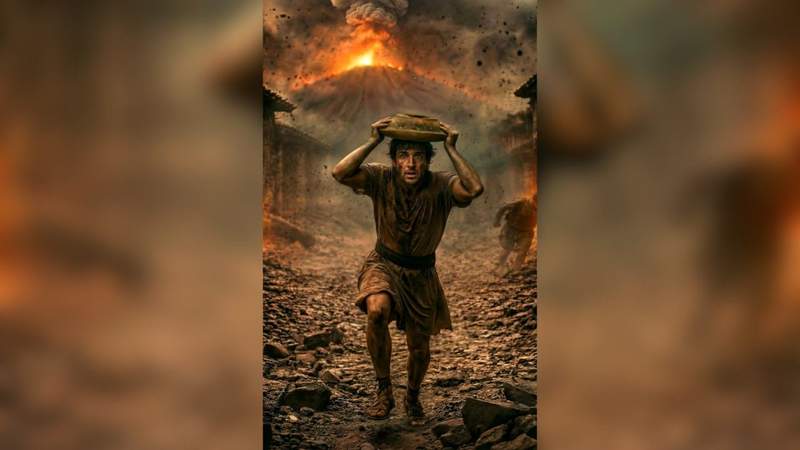
POLICY WIRE — Pompeii, Italy — For centuries, the petrified remains of Pompeii’s citizens have stood as stark, immutable monuments to Vesuvius’s cataclysmic fury. They’ve been mute witnesses to a sudden, horrifying end, their forms — preserved in plaster casts — offering a haunting, albeit impersonal, glimpse into 79 AD. But now, in a decidedly 21st-century twist, Italian archaeologists have introduced a startling new dimension to these ancient tragedies: artificial intelligence, bringing forth a reconstructed visage of one such victim.
It’s a development that transcends mere academic interest, nudging humanity’s enduring fascination with the past into an uncomfortable embrace with emergent technology. And what does it mean to literally give a face back to oblivion, even a digitally generated one? This isn’t just about rendering an image; it’s about confronting the ghosts of history with computational prowess, offering a tantalizing, perhaps unsettling, connection to those who perished in the ash. The implications are enormous, stirring conversations not just in archaeological circles but across the broader landscape of digital ethics and cultural representation.
Dr. Isabella Rossi, lead archaeologist for the Pompeii project, framed the endeavor with a blend of scientific zeal and profound respect. “This isn’t about replacing human intuition or romanticizing tragedy,” she opined, her voice carrying the weight of decades spent sifting through shattered lives. “It’s augmenting our capacity to connect with the past on an intensely personal level. Think of it as a dialogue across two millennia, facilitated by algorithms. We’re giving these souls a different kind of voice.” Her team employed advanced generative AI models, fed with meticulous data derived from skeletal analysis, surviving artifacts, and contextual historical records, to conjure a plausible, if still speculative, likeness.
Still, the process isn’t without its detractors, nor its ethical quandaries. Minister of Culture, Roberto Bianchi, while acknowledging the scientific merit, offered a more cautious perspective. “While innovation is certainly laudable, we mustn’t forget the profound ethical implications of resurrecting faces, even digital ones, from such a profound catastrophe,” he shot back during a recent press conference. “Dignity remains paramount. We must ensure these technologies serve to enlighten, not exploit, the memories of the deceased.” It’s a nuanced concern, one that asks whether the pursuit of knowledge might, inadvertently, cross a line into posthumous intrusion.
The sheer technical sophistication involved is considerable. And it exemplifies a broader, global trend where AI is increasingly deployed in fields once thought exclusively human-centric. From climate modeling to medical diagnostics, its tendrils stretch ever wider. The global market for AI in cultural heritage preservation, for instance, is projected to reach an estimated $5.5 billion by 2030, according to a report by MarketsandMarkets, underscoring the escalating investment in digital tools for safeguarding and interpreting our shared human legacy. This isn’t a niche experiment; it’s a vanguard. Behind the headlines, there’s a quiet revolution happening in how we perceive — and interact with our own history.
📄 POLICY WIRE WHITEPAPER PUBLISHED: PAKISTAN'S NATIONAL SECURITY POLICY PRIORITIES
👉 READ BY CLICKING HEREBut the human element persists. One can’t help but wonder about the individual behind the generated image. What were their dreams, their anxieties, their petty squabbles? This AI-driven reconstruction doesn’t just show a face; it subtly compels a re-evaluation of the lives lost, transcending the generalized suffering to a singular, albeit inferred, identity. It’s a reminder that beneath the volcanic ash, individual stories, however truncated, once thrived. And for regions far from Italy’s sun-drenched shores, grappling with their own histories and often, their own heritage battles, such technological advancements offer both hope and potential pitfalls.
Consider Pakistan, for instance, a nation steeped in millennia of history, from the Indus Valley Civilization to Buddhist stupas and Mughal architecture. Imagine AI’s application in visualizing the lost glory of Taxila or the ancient city of Mohenjo-Daro, or in digitally preserving structures threatened by environmental degradation or urban sprawl. It’s a powerful tool, capable of democratizing access to heritage — and fostering a renewed sense of cultural pride. But it also introduces questions of ownership, data privacy, and the cultural sensitivity required when applying Western-developed algorithms to deeply ingrained local narratives. As technological landscapes shift globally, the ethical frameworks for such deployment remain nascent, lagging behind the rapid pace of innovation itself.
What This Means
At its core, this Pompeii initiative underscores a pivotal moment in the intersection of archaeology, technology, and societal introspection. Economically, it signifies a burgeoning market for specialized AI applications in heritage, attracting significant investment and fostering new multidisciplinary collaborations. Governments and cultural institutions, perpetually underfunded, might find AI a compelling — and cost-effective — way to engage broader audiences and attract digital tourism, thereby bolstering revenue streams and justifying preservation efforts. Politically, the ability to ‘resurrect’ historical figures or reconstruct lost civilizations can become a potent tool for national identity and soft power, allowing nations to showcase their unique contributions to global heritage on an unprecedented scale. However, it also opens avenues for historical revisionism or misinterpretation if not handled with rigorous academic oversight. The precise algorithms and datasets employed, for example, could inadvertently embed biases, creating representations that are more a reflection of the programmer’s worldview than historical accuracy. So, while we celebrate the marvel of technology bringing a new face to ancient Rome, we must also remain vigilant about the narratives it helps craft.