


Kyiv’s Grinding Dawn: Missile Barrage a Grim Reminder of Endless War
POLICY WIRE — Kyiv, Ukraine — Another morning, another city’s waking nightmare. The thud of incoming projectiles has become Kyiv’s perverse alarm clock, a soundtrack of dread that even the most...

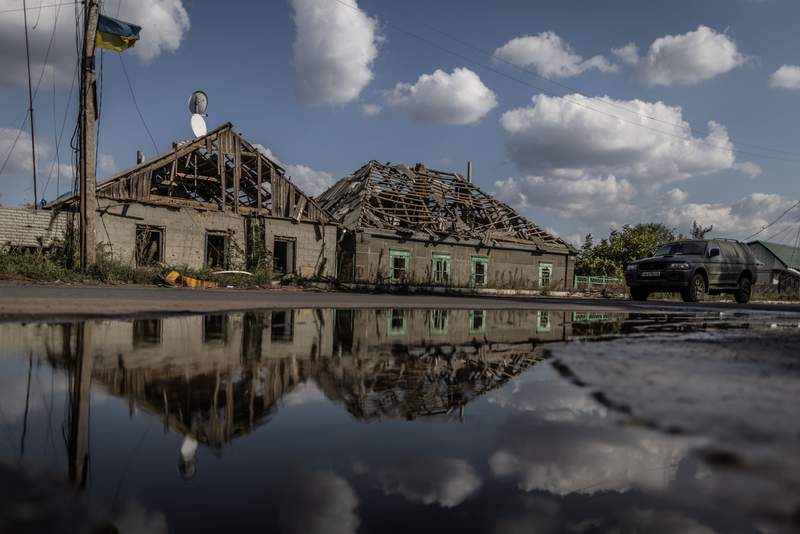
POLICY WIRE — Kyiv, Ukraine — Another morning, another city’s waking nightmare. The thud of incoming projectiles has become Kyiv’s perverse alarm clock, a soundtrack of dread that even the most battle-hardened residents can’t quite shake. The latest salvo—a chilling escalation that ripped through apartment blocks and tore apart lives—left eight people dead. Not an abstract statistic. Eight people. That’s eight less mothers, fathers, sons, or daughters just trying to make it to sunrise.
It’s a numbing pattern, isn’t it? Russia’s war machine keeps grinding, even as Western attention spans fray. For those living in the Ukrainian capital, every siren, every distant boom, carries the weight of past losses and future uncertainties. You try to insulate yourself, to focus on the small mercies, but then another rain of steel and fire cuts through the veneer of normalcy. They call it terror. And it works—on the psyche, anyway—even if it fails to break the city’s will.
Ukrainian President Volodymyr Zelenskyy, his voice weary but resolute, didn’t pull punches. “They won’t break our spirit. We’ve seen this horror before, and we’ll rebuild every scar, mourn every soul, and emerge stronger,” he declared in a somber address from Kyiv. “Their terror is a sign of their weakness, not their strength.” A defiant stance, yes, but one steeped in profound grief. He’s not wrong about the horror. The raw scenes on the ground—firefighters sifting through rubble, emergency responders triaging the wounded—they tell a story no PR team in Moscow can spin.
And the world, what’s it saying? Not enough, some might argue. But official condemnations were swift, if predictable. “Each such attack is a stark reminder of Moscow’s utter disregard for human life and international law,” stated Elizabeth Thorne, a spokesperson for the U.S. State Department. “We continue to stand with Ukraine, providing the necessary support to defend itself against this barbaric aggression.” Fine words. But sometimes, words just don’t cut it, do they?
Because the real impact stretches far beyond Ukraine’s borders. The instability bred by this conflict sends economic tremors globally, exacerbating everything from energy prices to food security in already vulnerable regions. Nations like Pakistan, for instance, find themselves in an increasingly tricky bind. Dependent on stable global energy markets, facing its own domestic economic headwinds and a delicate balancing act between major powers, Islamabad watches these attacks with growing unease. Higher global food prices, already a concern in South Asia, get worse. And the political maneuvering required to keep a neutral stance when a major world power is committing such acts? It’s a diplomatic headache Pakistan’s government surely doesn’t need right now.
This latest bombardment comes on the heels of repeated calls for more sophisticated air defense systems from Kyiv’s allies. It’s a constant plea that echoes across various battlefronts. According to reports from the Ukrainian Ministry of Defense, less than 60% of all incoming Russian missiles have been successfully intercepted in the past two months, a number that points to glaring vulnerabilities that Moscow exploits with clinical precision. You can see why they’re so desperate for help, can’t you? It’s literally life and death.
📄 POLICY WIRE WHITEPAPER PUBLISHED: PAKISTAN'S NATIONAL SECURITY POLICY PRIORITIES
👉 READ BY CLICKING HEREBut the calculus isn’t just military; it’s psychological. These are not surgical strikes aimed solely at military installations. These are intended to sow fear, to chip away at morale, to make everyday life unbearable. It’s an old playbook, this one, but still terribly effective.
What This Means
This recent wave of attacks isn’t just another headline; it’s a recalibration, or rather, a brutal confirmation, of Moscow’s strategic intent. Expect Russian forces to continue these patterns, using limited, high-impact missile and drone barrages against urban centers to erode Ukrainian resolve and strain its already stretched air defense capabilities. Politically, this reinforces President Zelenskyy’s desperate appeals for more advanced Western weaponry—especially air defense systems. The perceived delay in aid or a lack of more aggressive support will fuel criticism of Western leaders and could, frankly, impact the ongoing debate about the long-term commitment to Kyiv. Economically, expect continued volatility in energy markets. Geopolitically, it places even greater pressure on developing nations to navigate allegiances, particularly for those with existing ties to Moscow or who are deeply affected by global supply chain disruptions. Nations are forced to pick sides, or at least pretend not to. For example, the complexities in Beijing’s relations with the West are already under a microscope, and such blatant aggression only adds further layers to that global puzzle. If the West doesn’t respond more forcefully or decisively, what message does that send to other potential aggressors?
Because frankly, the silence from certain corners of the world, or the carefully worded neutrality, isn’t helping. Every missile that falls on Kyiv doesn’t just damage a building; it dents the fragile architecture of international order. It challenges the premise that unprovoked aggression will be met with unwavering opposition. And the price? We’re all paying it, one way or another, in shifting alliances, inflated prices, and the quiet despair of a war that just won’t end. We’re in uncharted economic waters, and events like this only deepen the uncertainty.