
POLICY WIRE FACT CHECK: Are Ballots Disqualified If Poll Workers Mark Them?
The Claim A viral social media message has been circulating warning voters that any ballot marked by a poll worker—whether with a letter, checkmark, star, or even an ‘R’ or...

The Claim
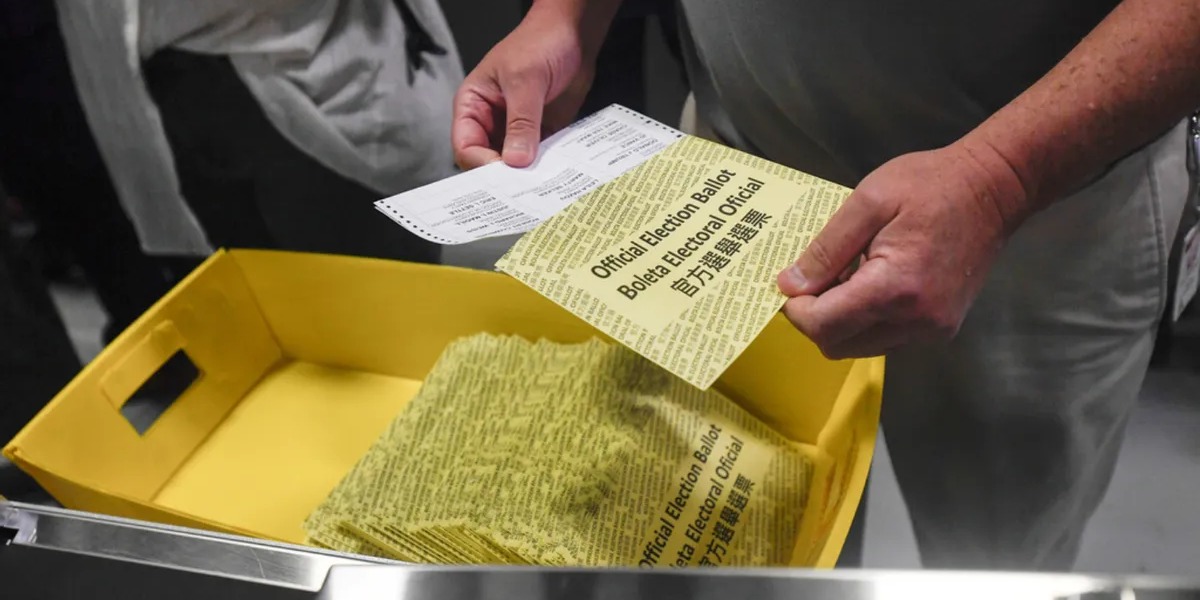
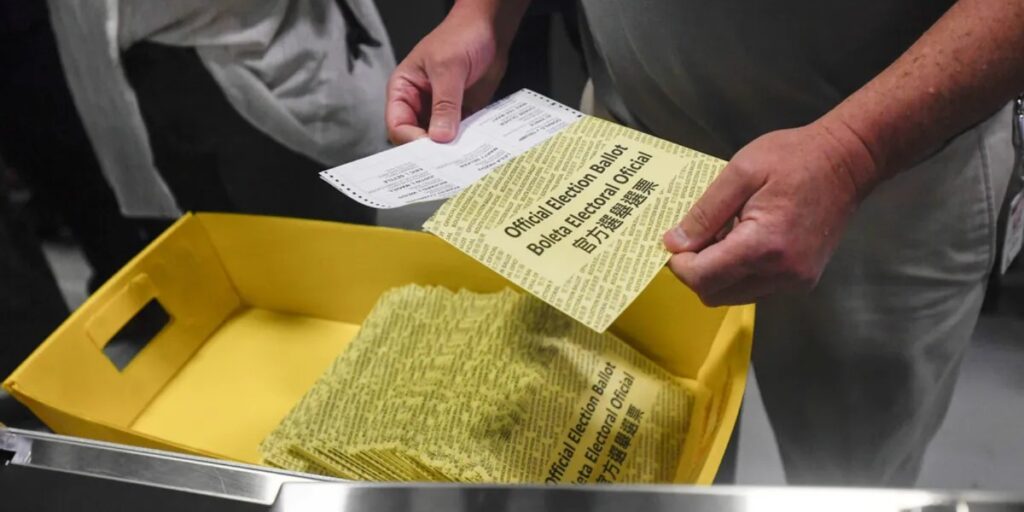
A viral social media message has been circulating warning voters that any ballot marked by a poll worker—whether with a letter, checkmark, star, or even an ‘R’ or ‘D’—could be disqualified. The claim, often shared as a ‘copypasta’ text message, warns that such markings may cause a ballot to be invalidated, urging voters to request a new ballot if they see any writing on their ballot before submitting it.
The message typically originates from a supposed ‘reliable good friend’ who claims to have completed poll worker training and shares the warning with friends. It has resurfaced multiple times, including ahead of the 2020 and 2024 U.S. elections, and again in 2026 as early voting for the midterm elections began. The post urges users to forward the warning to others, emphasizing the importance of ensuring that poll workers do not write on ballots.
The Details & Investigation
Snopes, a well-known fact-checking organization, has repeatedly debunked this claim. According to their research, no U.S. state disqualifies a ballot solely because a poll worker has marked it, unless the marking renders the vote unreadable. In fact, several states explicitly require poll workers to make certain markings on ballots as part of the verification process.
For example, in North Carolina, election officials have clarified that poll workers must write on ballots during the verification process. This includes marking ballots to identify them for counting or to flag them for review. Similarly, in Missouri, Texas, and other states, election laws mandate that poll workers make specific markings on ballots to ensure accuracy and prevent fraud. These marks are typically non-intrusive and do not affect the voter’s intent.
Election officials across the country have consistently refuted the idea that any marking by a poll worker would invalidate a ballot. Ben Hovland, former chairman of the U.S. Election Assistance Commission, explained that voting equipment is programmed to detect filled-in ovals or selections, and stray marks are unlikely to interfere with the tabulation process. He also noted that safeguards exist to ensure that a voter’s intent is accurately reflected, regardless of minor markings.
In Massachusetts, Debra O’Malley, communications director for the Office of the Secretary of the Commonwealth, confirmed that poll workers rarely, if ever, mark ballots. Any markings made on a ballot are typically limited to challenged ballots, which are reviewed only in the event of a recount or court order. She emphasized that ballots are not disqualified at the polling place and that voters are given the option to replace a ballot if it cannot be read by the machine.
Multiple sources, including the Maryland State Board of Elections and Maine’s Bureau of Corporations, Elections and Commissions, have also stated that the claim is misleading. They confirmed that while some markings may be necessary for verification, they do not disqualify a ballot. Additionally, the Texas Secretary of State’s guidelines explicitly state that poll workers must mark ballots as part of the preparation and counting process, reinforcing the fact that such actions are standard and legal.
The Verdict
The viral claim that ballots are disqualified if poll workers mark them is FALSE. No U.S. state disqualifies a ballot simply because a poll worker has made a mark on it. In fact, many states require poll workers to make specific markings as part of the verification and counting process. These markings are typically minimal and do not interfere with the voter’s ability to cast a valid ballot.
The claim appears to be a form of MISINFORMATION, likely originating from confusion or outdated information. While the warning about checking for illegible markings is valid, the assertion that any writing by a poll worker will disqualify a ballot is demonstrably false. The widespread repetition of this message, especially in the form of copypasta, suggests that it has been circulated without proper verification, contributing to unnecessary public concern.
It is important for voters to understand that poll workers play a critical role in ensuring the integrity of the electoral process, and their actions are governed by strict legal and procedural guidelines. Voters should remain informed but not unduly alarmed by unverified claims circulating online.
Counter-misinformation & disinformation investigation conducted by PolicyWire Editorial Desk (PW).