

Patriots’ Strategic Gamble: Lomu Pick Signals Aggressive Offensive Line Rebuild for Maye Era
POLICY WIRE — Foxborough, MA — Few would have predicted the quiet confidence radiating from Foxborough this draft season. For years, the New England Patriots epitomized NFL dominance, but a new era,...

POLICY WIRE — Foxborough, MA — Few would have predicted the quiet confidence radiating from Foxborough this draft season.
For years, the New England Patriots epitomized NFL dominance, but a new era, ushered in by a critical rebuild, now sees them investing strategically—not just in raw talent, mind you, but in the very foundations of future success. This isn’t just about drafting players; it’s about crafting a long-term policy for championship contention.
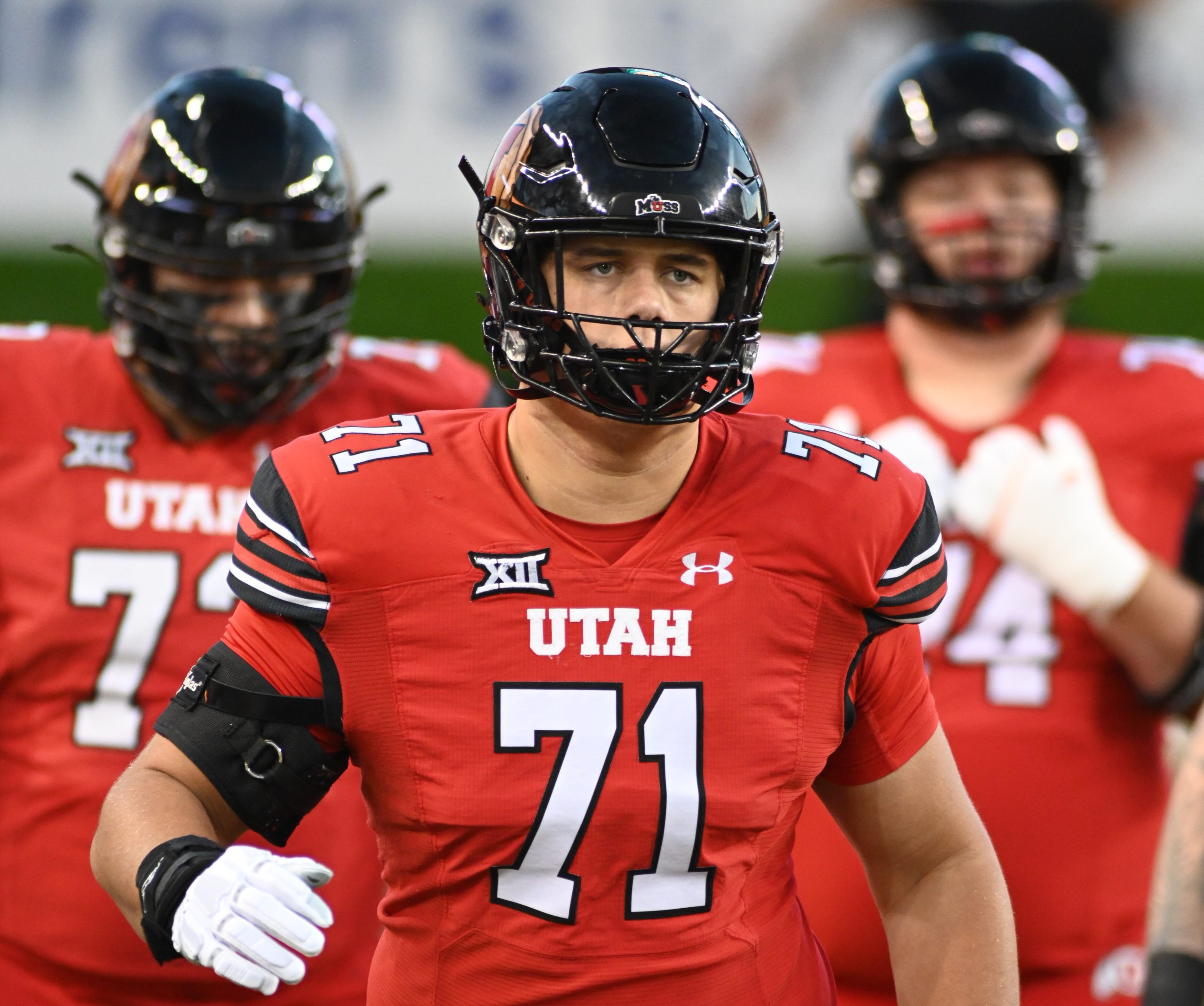
And yet, when offensive lineman Caleb Lomu’s name finally came off the board at No. 28, a collective sigh of relief — perhaps even a muted cheer — might’ve rippled through the war room. The Utah Utes standout wasn’t just a coveted talent; he embodied a pivotal piece in the Patriots’ carefully orchestrated plan to safeguard their most precious asset: rookie quarterback Drake Maye. It’s a calculated gamble, to be sure, but one the franchise seems fully committed to. Man, they were all in.
Back in 2024, the Patriots lavished a hefty first-round pick on Will Campbell, an anchor for their offensive line. Now, with Lomu joining the fold, New England underscores a clear intent: Maye’s protection isn’t just a priority; it’s the bedrock of their strategic overhaul. What does this kind of commitment mean for a franchise determined to reclaim its glory? Plenty. Observers suggest.
It’s a clear message. The days of patchwork offensive lines appear over. Suddenly, the future looks a little less murky for the team’s promising young quarterback. A real silver lining, isn’t it?
“We’re building something special here, piece by piece,” Patriots General Manager Robert Kraft Jr. reportedly told a small group of reporters after the draft. “You can’t win consistently without protecting your quarterback, — and that means investing at the highest level. Caleb fits our vision perfectly.”
Lomu himself, still reeling from the life-altering news, garnered an early welcome. The first text? None other than from his new teammate, Will Campbell. Last year’s top pick. “Will Campbell already sent me a text. I haven’t been able to respond yet, but I love that,” Lomu shared on a video call. “I actually didn’t read the whole thing, but it was kind of just on my page, but it said just ‘Congratulations, can’t wait to work with you.’ And that’s kind of what I saw. So, I’m excited to be able to reply to that — and text him back.”
That’s a significant gesture of leadership. But Campbell, having walked the same path just a year prior, comprehends the pressure cooker of being a top draft pick. His message, simple as it was, highlights a burgeoning team culture focused on continuity — and support.
“It’s about bringing guys into the family,” Campbell later commented on social media, in a post widely shared by fans. “We’re all in this together, especially on the offensive line. You gotta lift each other up. Can’t wait to get to work with Caleb — and protect our guy.”
Few players explicate their role with such clarity. Lomu started an impressive 24 games over the last two seasons at left tackle for Utah, according to team records. With Campbell dug in on the left side in New England, Lomu is slated to flip over to right tackle, where he will initially learn behind veteran Morgan Moses. “I’ll play wherever,” Lomu stated bluntly. “I’m coming in to play some football.” The math is stark, isn’t it? This isn’t just about filling a roster spot; it’s about depth, versatility, and succession planning—a grand chess game for the franchise, if you will, where every piece matters immensely.
The 21-year-old will eventually have his shot to start opposite of Campbell, forming a redoubtable tandem. Their primary goal? Shielding Drake Maye. That’s it. “Such a talented quarterback,” Lomu said of Maye. “I’m so excited to be able to work with him every day, be able to protect him. I’m a protector, I’m an offensive lineman – it’s my job to protect that guy, and I’m going to do everything that I can to protect him. So, being able to go to work with him now is going to be amazing.”
New England, it turns out, didn’t originally envision Lomu would still be on the board late in the first round. His availability compelled them to cancel a pre-draft visit. When he remained within striking distance, the Patriots traded up three spots to draft him 28th overall, exactly how Lomu had secretly hoped. “They’re just a great organization, — and I think it was just – personally, I wanted them to be in the mix,” he admitted. “Such an amazing team. It’s a place I wanted to be — and a team I always wanted to play for. Maybe it was me just wanting them super bad. Once I got that call though, it was crazy.”
The league’s strategic investments in talent acquisition echo a broader global trend — the appreciation that diverse skill sets and fresh perspectives catalyze innovation and success. This isn’t just about physical prowess; it’s about adaptability, a trait increasingly vital in a world where talent — from South Asia’s burgeoning tech hubs to the playing fields of America — is more globalized than ever, a true melting pot of potential. Indeed, the NFL’s expanding reach even sees growing fanbases in countries like Pakistan, illuminating the universal appeal of competition and concerted strategy. (Who would’ve thought football would unite us all, eh?)
What This Means
The Patriots’ move isn’t merely about selecting an offensive lineman; it’s a momentous strategic declaration. By pairing Lomu with Campbell, they’ve established a robust policy — a veritable fortress, if you will — for quarterback protection and offensive line stability for the next decade. This kind of aggressive investment in foundational pieces betrays a deep organizational commitment to a new identity, moving past the fleeting success of individual seasons to build sustained excellence. It’s a seismic shift.
For Drake Maye, this means an unprecedented level of support, mitigating pressure and allowing him to develop without constantly looking over his shoulder. And for the franchise, it’s a bold bet that solid trench play, rather than just flashy skill positions, forms the true backbone of a championship contender. Will this approach pay dividends? The historical data on offensive line investment certainly hints it could. Just sayin’.
Related: NFL Draft 2026: Rams Gamble on Simpson, Giants Build Foundation Amid Risky First Round
So, ultimately, the Patriots are showing other franchises how a disciplined, long-term approach to team building can resurrect dominance, rather than simply pursuing immediate gratification. As one veteran scout put it, “They’re not just drafting players; they’re drafting a philosophy. And that, in today’s NFL, is a rare — and powerful thing.”