


The Brutal Poetry of Return: Jackson Jobe’s Elbow, The Market, and South Asia’s Grinding Resilience
POLICY WIRE — New York, United States — It’s not the roar of the crowd, nor the blinding flash of stadium lights, that truly defines the elite athlete’s purgatory—no, it’s the stark,...

POLICY WIRE — New York, United States — It’s not the roar of the crowd, nor the blinding flash of stadium lights, that truly defines the elite athlete’s purgatory—no, it’s the stark, sterile silence of the physical therapy room, the rhythmic drone of machinery replacing the thud of cleats on dirt. For young baseball pitchers, the surgical theatre often serves as an antechamber to this silent, brutal pilgrimage back to their chosen vocation. It’s a lonely road, a path often trod by bodies pushed to their physiological brink.
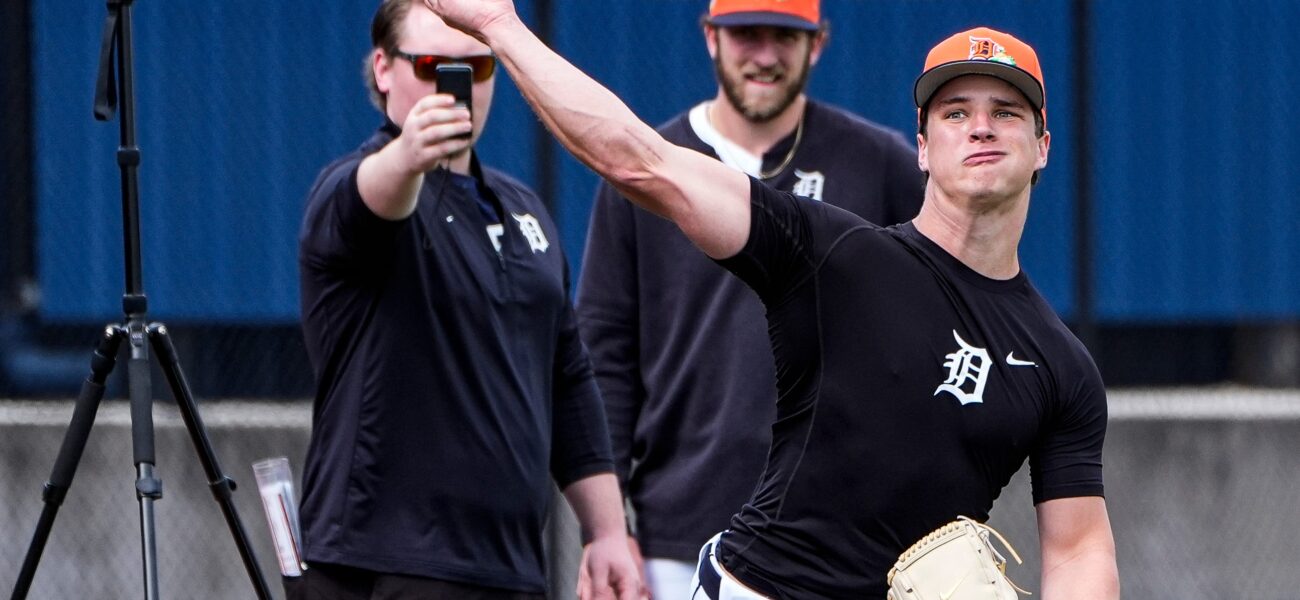
On a recent sweltering Tuesday afternoon, far from the grand stages that once beckoned, Jackson Jobe—a right-handed marvel picked third overall in the 2021 MLB draft by the Detroit Tigers—embarked on this solemn return. It wasn’t a triumphant entry, but a measured step back into competitive play for the Low-A Lakeland Flying Tigers against the Dunedin Blue Jays. He’d been out since June 2025, felled by that most infamous of pitcher ailments: Tommy John surgery, specifically for his right elbow. One false step, one ill-placed pitch, and months—even years—of meticulous recovery can unravel. This wasn’t just about an arm; it was about a career, an investment, a promise.
His outing was a microcosm of what post-surgical comebacks entail: flashes of brilliance, tempered by the rust of long inactivity. Jobe, still navigating the tightrope of recovery, faced just six batters over 1⅓ innings. He coughed up a single run on two hits, throwing 32 pitches. What makes the outing particularly interesting, beyond the numerical tidbits, is the almost casual mention that a staggering 24 of those 32 pitches found the strike zone. And then there was that fastball, touching 100 mph. It’s a number that stills conversation, an echo of the raw, electric talent that made him such a coveted pick.
His sole strikeout came courtesy of a slider at the bottom of the zone, silencing one of six opponents he faced. In his second — and final inning, he faced just one batter, inducing a groundout. The statistics, per MLB Pipeline, lay bare the constrained nature of the outing: 1⅓ innings, 6 batters, 2 hits, 1 run, 0 walks, 1 strikeout, and one wild pitch – a detail that reminds everyone this isn’t yet the polished article. The Detroit Tigers organization isn’t just watching his arm; they’re tracking every twitch, every micro-adjustment. Tigers manager A.J. Hinch, in a pre-game nod that almost certainly carried more weight than its casual delivery suggested, observed, [QUOTE_PLACEHOLDER]. No grand pronouncements, just a quiet, almost understated acknowledgement of a journey underway.
And what a journey it’s. Jobe had managed just ten starts in what was supposed to be his rookie season before the grim reality of elbow reconstruction slammed the door shut. Now, the Tigers’ No. 3-ranked prospect, Josue Briceño, caught his pitches, a stark reminder of the organizational blueprint – the next generation guiding the one still trying to reclaim its form. This is the economics of baseball writ small: an eight-figure future hinging on the precise calibration of tendons and ligaments.
But the story isn’t just about Jobe. It’s a universal tale of human endeavor, of pushing physical boundaries. Across the globe, in vastly different arenas, we see similar spectacles of resilience. Think of the cricketers in South Asia, particularly in nations like Pakistan or Bangladesh, whose entire livelihoods, and often their families’ fates, hang on the perfect rotation of a wrist, the power of a swing, or the enduring stamina under scorching sun. Their training regimens are brutal, their comebacks from injury often unheralded by Western media, yet imbued with a parallel sense of personal and national burden. For them, a missed season due to injury doesn’t just defer millions; it can mean grinding poverty. And so, Jobe’s careful, gradual reintegration into competitive baseball offers a curious mirror to other strenuous pursuits—from the political pitch of cricket in Bangladesh to the broader economic reconstruction facing countries navigating challenging geopolitical waters. The stakes, while different, demand an analogous, often painful, commitment to rebuilding. They’ve gotta take it slow, you know?
What This Means
Jobe’s measured return carries significance beyond the minor leagues, underscoring the enormous financial and strategic investments tied up in elite athletes. Organizations like the Detroit Tigers pour millions into these young talents, not merely for their present abilities, but for projected long-term performance and market value. A serious injury, especially one requiring Tommy John surgery—with its notoriously long recovery curve often extending to 18 months—isn’t just a physical setback; it’s a massive deferred dividend. Think of it as a nation sinking significant capital into a high-stakes infrastructure project, only for it to be sidelined for a year and a half by unforeseen structural integrity issues. You can’t just scrap it; you’ve gotta fix it, meticulously, because the potential returns are too big to abandon.
The political parallel, though seemingly disparate, emerges quite naturally. Nations in flux—many in South Asia or the broader Muslim world—also face protracted, complex rehabilitation efforts, not of an arm, but of entire economic or social structures. They’ve gotta invest, you know, in long-term reforms, in infrastructure, in education—all while facing immediate challenges that threaten to derail the delicate process. Like a star player rehabbing, these nations, too, often carry the hopes and anxieties of their people on their shoulders. It’s a testament to patience, and the often agonizing slowness of true, sustainable recovery, whether in a high-stakes professional sport or a complex developing economy. This isn’t a quick fix. Never is. It’s a grinding, methodical ascent back to full strength, demanding discipline, resilience, and an unflinching eye on the long game.
