

Pakistan’s Strategic Vision: Offering Connectivity and Prosperity through Arabian Sea Ports
In a defining moment for regional cooperation, Pakistan has extended a bold invitation to Turkmenistan: use our deep-sea ports to access markets in South Asia and beyond. This proposal embodies...

In a defining moment for regional cooperation, Pakistan has extended a bold invitation to Turkmenistan: use our deep-sea ports to access markets in South Asia and beyond. This proposal embodies Islamabad’s measured pursuit of economic diplomacy, regional integration, and geopolitical relevance.
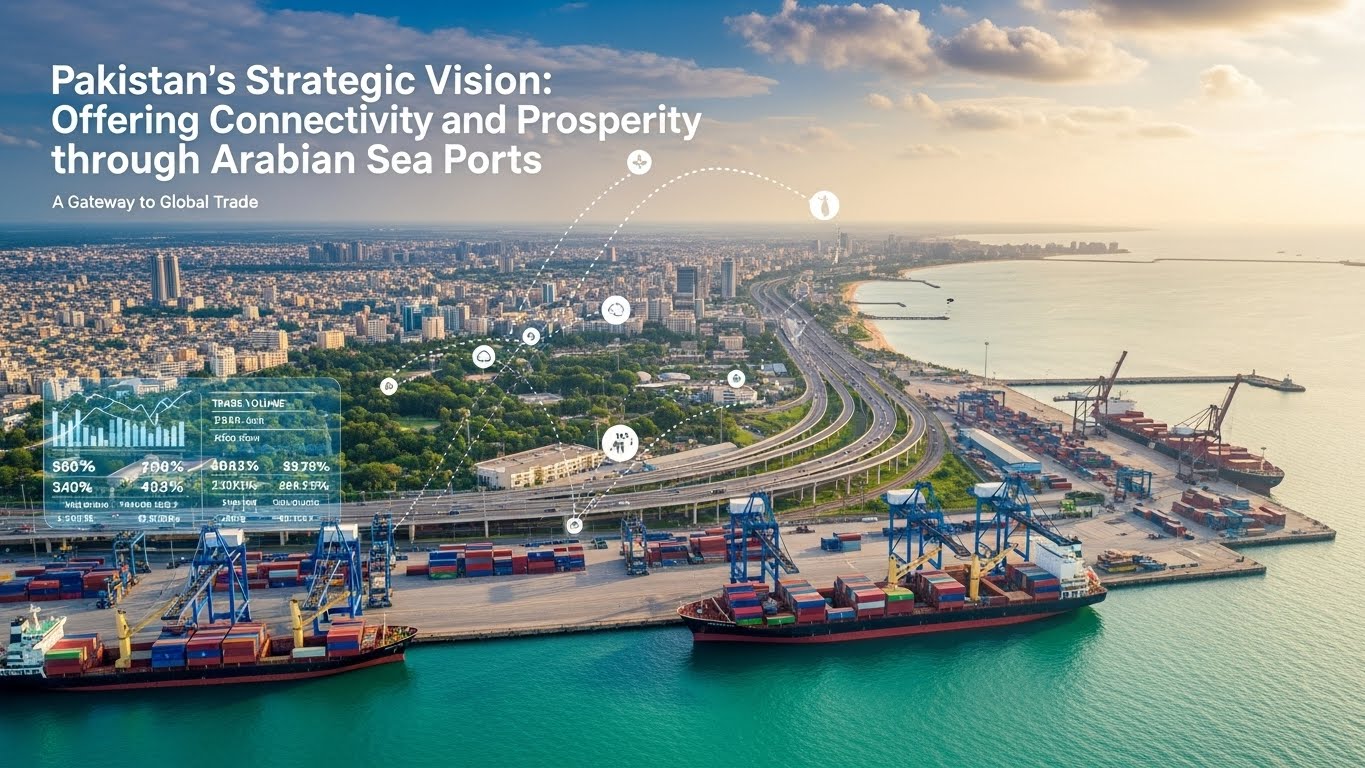
On 11 December 2025 in Ashgabat, Prime Minister Shehbaz Sharif and Turkmen President Serdar Berdimuhamedov held highly constructive talks that signal a new phase in Pakistan-Turkmen relations. At the heart of the discussion was Pakistan’s offer to provide Turkmenistan access to its Arabian Sea ports, Karachi and Gwadar, as gateways to South Asian markets and global trade corridors. This is a strategically sound and forward-looking initiative that places Pakistan at the center of emerging regional economic networks.
Location as Opportunity, Not Burden
Pakistan’s geographical position has often been described simplistically as a disadvantage, caught between larger powers, saddled with difficult terrain, and burdened by historical conflicts. But geography can also be a profound advantage. Sitting on the Arabian Sea, with ports capable of serving the wider region, Pakistan can offer landlocked neighbors like Turkmenistan tangible, cost-effective access to international shipping lanes. That is exactly what the Prime Minister emphasized during his meeting: Karachi and Gwadar are ideally positioned to serve Turkmen exporters seeking direct routes to South Asia and global markets.
This offer is not mere rhetoric. It reflects an increasingly assertive economic vision in Islamabad that aims to turn transitional geography into transit opportunities. Rather than viewing itself as peripheral, Pakistan is positioning as a bridge between Central Asia and maritime markets.
Economic Integration: A Shared Interest
True regional connectivity thrives not on charity, but on mutual interest and shared prosperity. Turkmenistan, rich in natural gas and seeking diversified export paths, benefits directly from shorter and safer access to sea routes. Pakistan, meanwhile, gains by strengthening economic links with Central Asian economies — a region with enormous untapped trade potential. These talks build on previous efforts to finalize a Pakistan-Turkmenistan Transit Trade Agreement, which was championed earlier in 2025 by Pakistan’s planning minister as critical for regional integration and trade expansion.
Once finalized, such an agreement can help reduce the skewed trade balance that often characterizes Pakistan’s commerce with many neighbors. With better infrastructure and trade protocols, Pakistan can export its industrial and agricultural products more effectively, while providing Turkmenistan and others with a reliable route to South Asia.
Gwadar and Karachi: Complementary Hubs
Critics sometimes single out Gwadar as underperforming compared to Karachi, but that overlooks the complementarity of Pakistan’s port ecosystem. Karachi remains the nation’s primary commercial port and a major South Asian trade hub. Gwadar, meanwhile, is an up-and-coming deep-sea gateway designed to drive transit trade, industrial investment, and logistics solutions under long-term development frameworks. Strategic investments under initiatives like the China-Pakistan Economic Corridor (CPEC) and the recent Maritime Affairs Action Plan are transforming Gwadar into a viable partner in regional connectivity.
These developments underscore a balanced approach: Karachi handles established commercial traffic while Gwadar expands capacity for future growth. Together, they serve as twin anchors of Pakistan’s connectivity strategy.
A Record of Partnership and Reciprocity
Pakistan’s offer to Turkmenistan is not an isolated diplomatic gesture detached from political reality. The Prime Minister publicly thanked the Turkmen leadership for assisting in the safe evacuation of Pakistani nationals from Iran during the Iran–Israel conflict earlier this year, a humanitarian gesture demonstrating the depth of mutual cooperation beyond economics.
This reciprocity exemplifies how Islamabad views its international relationships — as partnerships rooted in mutual respect, practical support, and shared interests. It reflects Pakistan’s broader commitment to constructive regional diplomacy amidst a turbulent geopolitical environment.
Energy Cooperation and the TAPI Aspiration
Trade and connectivity are inseparable from energy cooperation. Pakistan and Turkmenistan have long discussed the Turkmenistan–Afghanistan–Pakistan–India (TAPI) pipeline, a trans-national energy project envisioned to deliver Turkmen natural gas southwards. While TAPI has faced delays, Pakistan’s reiteration of economic engagement strengthens the case for pushing this transformative project forward. It signals that Pakistan is committed not just to transit trade, but to energy interdependence that benefits entire regions.
Challenges, But Managed Optimism
Of course, challenges remain. Afghanistan’s security landscape poses logistical risks for overland networks, and the comprehensive integration of regional transport systems requires time, investment, and political coordination. But proactive diplomacy, like that shown by Pakistan and Turkmenistan this week, paves the way for overcoming these obstacles. The world’s economic map is being redrawn not by static borders but by connectivity corridors that link producers with consumers across continents. Pakistan is wisely placing itself on that evolving map.
A Vision for Shared Prosperity
What stands out most about Pakistan’s offer to Turkmenistan is that it’s not zero-sum. It does not seek dominance, nor does it court rivalry. Instead, it offers a platform for shared prosperity, an inclusive economic opportunity that reinforces Pakistan’s role as a gateway between South and Central Asia.
This is precisely the kind of leadership that can transform Pakistan’s historical challenges into future strengths. By aligning its geostrategic assets with the economic ambitions of its neighbors, Pakistan is crafting a vision of cooperation that transcends narrow bilateralism and contributes to a more interconnected region.
At a time when global economic competition is intensifying and supply chains are being reassessed, Pakistan’s initiative is both timely and strategic. Its offer to extend port access to Turkmenistan is a testament to Islamabad’s belief in economic diplomacy, regional partnership, and inclusive growth. If this vision is pursued with determination, it could lead to a new chapter of prosperity not just for Pakistan and Turkmenistan, but for all the countries that choose cooperation over isolation.
In this effort, Pakistan is not merely proposing access to ports, it is offering a shared gateway to opportunity, stability, and regional prosperity.
Author