

Pakistan’s Pak-Afghan Border Agenda
A significant security concern threatening the stability and economic potential of the South Asian region is the evident use of Afghan territory by external actors, particularly India, to facilitate...

A significant security concern threatening the stability and economic potential of the South Asian region is the evident use of Afghan territory by external actors, particularly India, to facilitate cross-border terrorism against Pakistan. This facilitates the operations of terrorist groups like Fitna al-Khawarij, who exploit the porous Pak-Afghan border to launch disruptive incursions. These ongoing hostile activities profoundly undermine Pakistan’s strenuous efforts for peace, economic stability and regional cooperation, leading to loss of life, significant disruption of trade routes vital for billions in annual commerce, and the perpetuation of conflict.
Historical Context of Border Insecurities and Militant Exploitation
The Pak-Afghan border, stretching over 2,640 kilometers, is one of the most historically contested and strategically significant frontiers in South Asia. Following the Taliban’s return to power in 2021, the region has witnessed an alarming increase in militant activity originating from Afghan territory. Fitna al-Khawarij, numbering an estimated 6,000 terrorists, continue to conduct cross-border attacks, including suicide bombings, ambushes on military convoys, and assaults on civilian infrastructure.
For instance, in September 2025, a targeted suicide attack on a Pakistani army convoy killed over a dozen soldiers, underscoring the persistent threat. Pakistan’s repeated appeals to Afghan authorities to dismantle these sanctuaries have largely gone unheeded, prompting defensive measures by Pakistani forces. Past operations, such as Zarb-e-Azb in 2014, resulted in the elimination of thousands of militants and the disruption of networks. Responding to the Afghan Taliban’s recent attack, Pakistan targeted militant concentrations across the Pak-Afghan border, neutralizing dozens of terrorists while attempting to minimize civilian casualties. Pakistan’s approach underscores a preference for negotiated resolutions, yet the continued tolerance of militant safe havens risks transforming the border into a permanent conflict zone.
The High Cost of Instability on Trade Routes
The economic interdependence between Pakistan and Afghanistan is profound. Formal bilateral trade reached nearly $2 billion in fiscal year 2024-25, representing a 25% increase over the previous year. Pakistan primarily exported rice (14.5% of trade value), cement (8.51%), and medicaments, while importing raw cotton (26.2%), coal (15.9%), and grapes from Afghanistan. Informal cross-border trade, encompassing perishable fruits, textiles, and minerals, contributes billions of dollars annually to local economies, often circumventing bureaucratic hurdles. Key crossings like Torkham and Chaman handle thousands of vehicles daily, serving as lifelines for Afghan commerce to global markets.
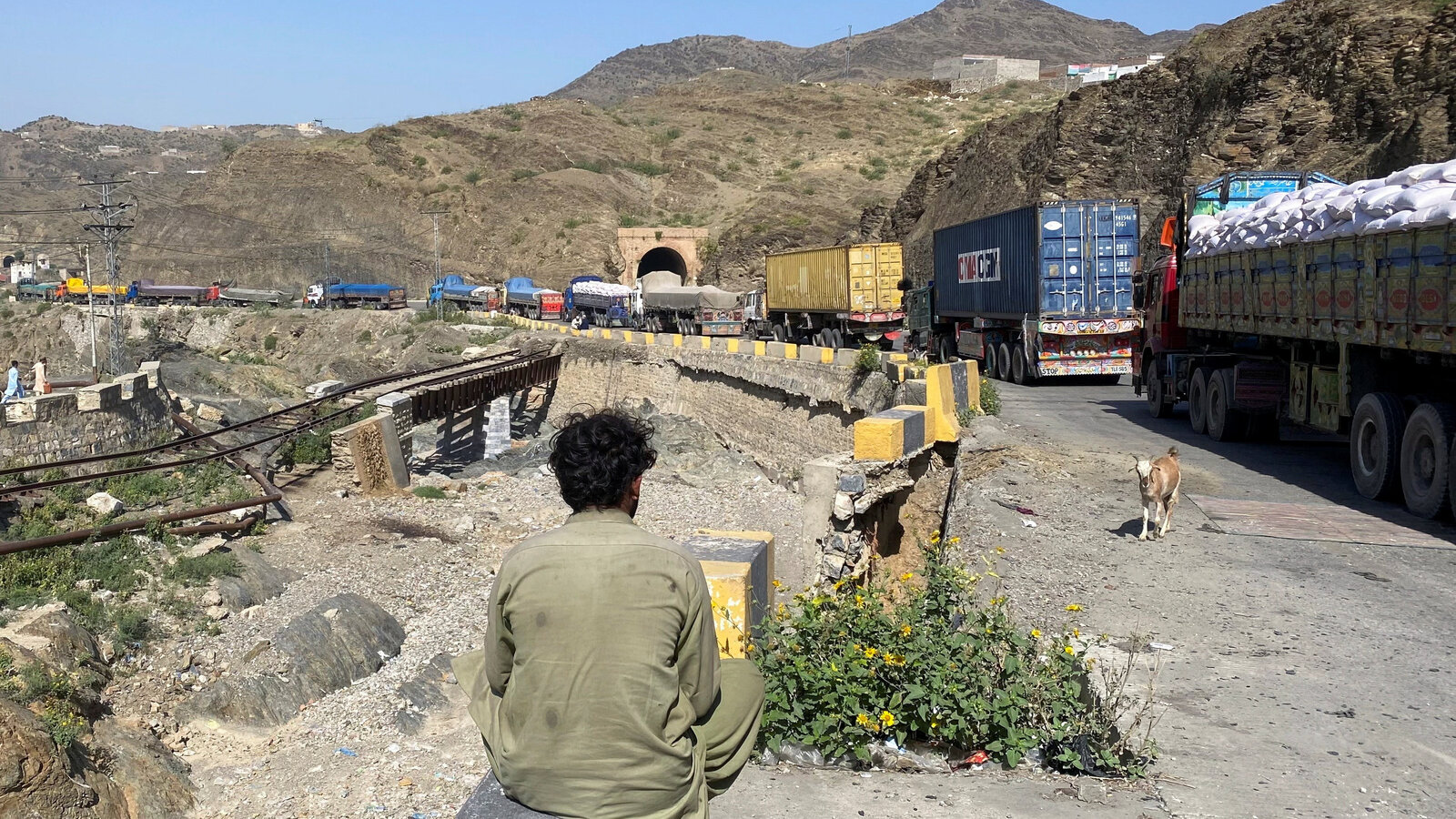
Instability along the Pak-Afghan border exacerbates vulnerabilities. Border closures during recent clashes in October 2025 stranded hundreds of trucks and led to spoilage of perishable goods, translating into billions in economic losses. Afghanistan experienced acute shortages of essential commodities such as wheat and edible oil during these interruptions. Pakistan, hosting over 2.5 million Afghan refugees, has absorbed the costs of such disruptions while grappling with its own economic pressures, including rising inflation and climate-induced disasters. In October 2025, Pakistan responsibly facilitated the return of undocumented Afghan nationals, while simultaneously implementing robust humanitarian measures to ensure their safe repatriation too. The table below summarizes trade dynamics and the economic impacts of border insecurity:
| Year/Period | Formal Trade Volume (USD) | Key Commodities Traded | Impacts of Conflicts |
|---|---|---|---|
| FY 2024-25 | ~$2 billion (25% increase) | Pakistan exports: Rice (14.5%), Cement (8.51%); Afghan exports: Raw cotton (26.2%), Coal (15.9%) | Border closures led to 21.57% decline in Pakistan’s exports in prior year due to disputes |
| H1 2025 | Nearly $1 billion | Textiles, minerals, perishable goods | Stranded trucks, spoilage of perishable goods during October 2025 clashes |
| 2021-22 | Exports: $805m (Pakistan to Afghan); Imports: $801m | Fruits, vegetables, soapstone | Protracted shutdowns caused revenue losses and shortages in Afghanistan |
These figures underscore that terrorists’ activities not only threaten human lives but also undermine the economic foundation essential for regional stability. Pakistan has proposed enhanced trade frameworks, including dedicated lanes at key crossings, rupee-based trade, and streamlined banking channels under the Afghanistan-Pakistan Transit Trade Agreement (APTTA), aimed at fostering both security and prosperity.
Security Implications and Pakistan’s Proactive Measures
Pakistan’s approach to the security challenges along the Pak-Afghan border has combined defensive operations with proactive diplomacy. Recognizing that terrorists’ groups like Fitna al-Khawarij serve external agendas, including those of India, which seeks to use Afghan territory as a staging ground against Pakistan. Islamabad has intensified surveillance, intelligence-sharing, and tactical operations. Defensive measures have included targeted airstrikes, reinforced border posts, and coordination with local security forces to neutralize threats without engaging in full-scale occupation of Afghan territory.
Pakistan has invested heavily in internal security frameworks. The National Action Plan, introduced in 2014, emphasizes counterterrorism operations, intelligence gathering, and legal measures against extremism. Internationally, Pakistan has consistently engaged with the United Nations, SCO, and OIC, presenting evidence linking external actors to militant activities and advocating for the prevention of Afghan territory being used as a terrorist base.
Building Trust Amid Complex Realities
Despite persistent threats, Pakistan remains committed to dialogue and regional cooperation. High-level engagements with Afghan authorities, trade negotiations, and multilateral dialogues reflect Islamabad’s vision for a peaceful Pak-Afghan border. In May 2023, Afghanistan formally committed to enhanced border cooperation, a move welcomed by Pakistan as a starting point for trust-building. Pakistani experts continue to advocate for multilateral involvement to address root causes of instability in Afghanistan, such as poverty, governance deficits, and cross-border militancy.
Pakistan’s strategy emphasizes a balanced approach: neutralize immediate threats through tactical operations, while promoting economic integration, refugee management, and infrastructure development. The vision is clear: a border free from the influence of Fitna al-Khawarij, trade corridors that function uninterrupted, and communities on both sides thriving without fear of violence.
Conclusion
The challenges along the Pak-Afghan border are significant, stemming from a combination of militant exploitation, cross-border interventions by external actors, and historical disputes. Nevertheless, Pakistan’s viewpoint is defined by proactive peace efforts, strategic security operations, and sustained diplomatic engagement. By seeking collaborative solutions, investing in infrastructure, and advocating for accountability, Pakistan envisions a border that supports commerce, connectivity, and regional harmony.
The elimination of terrorist safe havens, coupled with strengthened trade mechanisms and multilateral support, is central to this vision. Only through cooperation and the unwavering pursuit of security can the Pak-Afghan border transform from a zone of conflict into a bridge of prosperity, ensuring that communities and economies on both sides flourish in stability. Pakistan’s commitment to this vision remains resolute: it continues to extend opportunities for dialogue and peace while defending its sovereignty against those who exploit neighboring territory to wage cross-border terrorism.
Author