

Pakistan’s Economic Reawakening in 2025
After four years of economic troubles, policy changes, and major structural issues imposed by the past government, Pakistan is starting to recover its position back in the international economy. In...

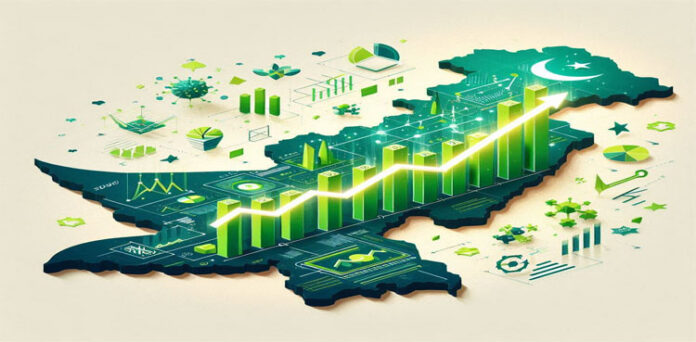
After four years of economic troubles, policy changes, and major structural issues imposed by the past government, Pakistan is starting to recover its position back in the international economy. In fiscal year 2025, the Pakistani economy fully recovered, with nominal GDP reaching $411 billion. The GDP of Pakistan based on Purchasing Power Parity (PPP) went grown even more, to an estimated $1.45 trillion. These stats show more than simply a rise in statistics; they mark a turning point in the history of the country’s economy. Pakistan has been able to get out of its recent economic crises because to this rebound. The country is now rated 40th in the world for nominal GDP and an amazing 23rd for PPP GDP.
The place where this healing happened is what makes it so special. Between 2018 and 2022, Pakistan faced economic problems that had never happened before. The country’s economy fell apart because of high inflation, a falling currency, a lack of foreign reserves, energy problems, delays in building infrastructure, and political upheaval. People no longer trust the government to run the economy. But in 2023, a slow but planned rebalancing began. The main aims of the changes were to create a digital-led economy, make it easier to invest, keep the budget in check, and bring industry back to life.
The economy has bounced back because export-led growth and import substitution have both picked up again. Better access to markets, technology, and targeted subsidies helped bring the textile and agricultural sectors back to life. At the same time, the IT industry grew because of government-sponsored programs that promoted new businesses, freelancing, and foreign investment in software services. Pakistan became a regional hub for customer service and back-end development, which led to a huge rise in the country’s digital exports. Pakistan is a popular place for tech outsourcing since it has a lot of skilled workers and low labor costs. This helps the country’s GDP through the service industry.
Both building up infrastructure and bringing industry back to life were equally important. The China-Pakistan Economic Corridor (CPEC) has led to rewards for strategic relationships with China, especially in the sectors of energy production and logistics. The Gwadar Port and other trade channels have made it feasible to build business corridors, which has made people less dependent on traditional marketplaces. Pakistan was able to get investors to come back, this time from Central Asia, the Middle East, and Turkey. This was made possible by its special economic zones and tax benefits for businesses who invest in them. These flows have greatly increased GDP growth through a domino effect that has helped the logistics, mining, and manufacturing industries.
The economy still depended on remittances, but they changed in a unique way. People have recently stopped utilizing remittances to buy things and started putting them into vehicles like housing societies, real estate development funds, and small and medium-sized business loans. This tendency has helped cities grow, provide new employment, and make people richer. The Pakistan Stock Exchange likewise went up because investors were more confident, the currency was stable, and foreign agencies gave it good credit ratings.
Disciplined fiscal measures also helped to stabilize the macroeconomy. It was politically unpopular to cut subsidies, change taxes, and make better records of the economy, but in the end, these things worked to bring the budget deficit under control. Pakistan’s long-shameful tax-to-GDP ratio has recently gone over 12% thanks to major reforms and a bigger tax base. The World Bank and the International Monetary Fund both extended their support packages based on real signs of reform achievement. This shows that their efforts had garnered back some trust.
The good things that the economic recovery is doing for society are starting to manifest. The number of people living in poverty is starting to go down for the first time in a long time. Programs that give targeted cash transfers, generate jobs, and pay for healthcare and education in rural regions have helped human development indices. People have called Pakistan’s young bulge a “ticking time bomb,” yet it is slowly turning into a demographic advantage. Skill-building initiatives, vocational schools, and digital literacy campaigns are helping more and more young people in Pakistan get good employment in the country’s economy and overseas.
📄 POLICY WIRE WHITEPAPER PUBLISHED: PAKISTAN'S NATIONAL SECURITY POLICY PRIORITIES
👉 READ BY CLICKING HEREBut changes in what people think may be the most interesting. The atmosphere in the country has evolved from negative to cautiously positive. The numbers have helped, but the reality that Pakistan is now a booming economy instead of a crisis-prone state is what is actually boosting the country’s morale. Nominal GDP rankings don’t take into account the country’s internal economic energy, cost of living, or the affordability of goods. The fact that the country ranks 23rd in PPP terms shows that it’s more than just a vanity measure. This position puts Pakistan ahead of several middle-income countries and opens up new strategic and economic opportunities for the country.
There are still problems. Even while inflation is lower than it has been in the past, the lower-middle classes are nonetheless suffering its impacts. Long-term sustainability is still at risk because people are worried about climate change, water shortages, and relying on foreign fuels. To make sure that development leads to growth that includes everyone, governance improvements, especially at the provincial and municipal levels, need to speed up.
Pakistan is still very much in the running because of the 2025 targets. We could be on the threshold of a decade of great change. Because of the revival of its institutions, the potential of its young people, and the strength of its people, a new route is taking shape. It is daring, ambitious, and possible. Pakistan is soon becoming more than just a slogan; it is quickly becoming a reality thanks to numbers, change, and a new national resolve.
Author