


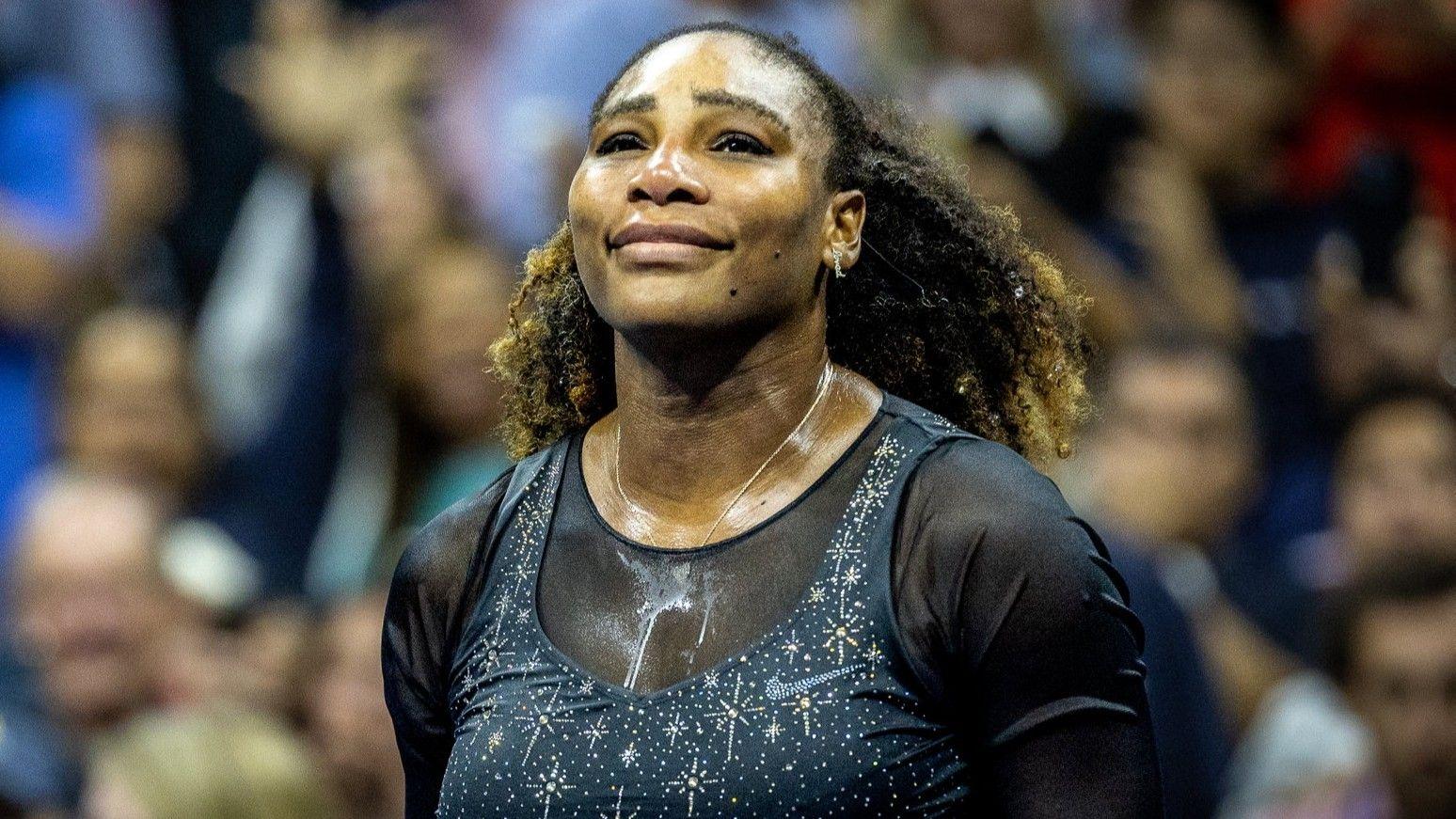
Serena’s Second Act? London Grass Braces for Celebrity’s Post-Evolution Re-Entry
POLICY WIRE — London, UK — The genteel murmur of summer on London’s storied grass courts often portends familiar traditions: Pimms, strawberries, and perhaps another British wildcard lament. This...

POLICY WIRE — London, UK — The genteel murmur of summer on London’s storied grass courts often portends familiar traditions: Pimms, strawberries, and perhaps another British wildcard lament. This year, however, a much louder whisper has eclipsed the usual seasonal rituals. It’s the rumble of an icon contemplating an encore, a ‘comeback’ that defies her own carefully chosen euphemisms, prompting a quiet, high-stakes negotiation for an entry ticket.
Serena Williams, the towering figure who declared herself ‘evolving away’ from professional tennis just two years prior, is reportedly circling the Queen’s Club. Not for tea, mind you. For competitive doubles, where the prize isn’t merely another trophy—though she has collected 46 Grand Slam titles across all disciplines—but a narrative. A fresh, muscular chapter in a story everyone thought was done. The 44-year-old, a veteran of sport’s most brutal arenas, has reportedly cleared the necessary hoops, namely six months back in the drug testing pool, effective February 22.
But here’s the rub: even a player of her unmatched pedigree isn’t just handed a slot. She’d need a wildcard for the WTA 500 event in two weeks, and the Lawn Tennis Association (LTA) isn’t exactly famous for bowing to external pressures. They usually prioritize their own. Because, as LTA chief executive Scott Lloyd stated at an April briefing, the standard philosophy dictates, “You will have seen over recent years that those wildcard opportunities are afforded to British players — that’s absolutely my fundamental personal belief and philosophy.”
It’s a tough stance. And, it’s also one riddled with commercial caveats. Lloyd, not without a hint of pragmatism, conceded, “There might be exceptional circumstances which might influence a unique wildcard, but otherwise those playing opportunities we want to afford to British players.” ‘Exceptional circumstances’ – a rather British understatement for a potential attendance boon fueled by one of the greatest athletes of all time.
This isn’t just about tennis, though; it’s a masterclass in modern celebrity management — and brand extension. Williams has been open, often spectacularly so, about her life post-court. She famously told the Today Show about losing 31 pounds (14 kg) over eight months, framing her own body fat as an “opponent” to be conquered. The subtext here? She also became a spokesperson for Ro, a company peddling GLP-1 weight-loss brands, with her Reddit co-founder husband, Alexis Ohanian, conveniently an investor. It’s less a tennis return, more a strategic brand re-engagement, a carefully choreographed reentry into the public eye, amplified by media appearances and a highly engaged digital footprint.
Her alleged doubles partner, the 19-year-old Canadian Victoria Mboko, and her fresh coaching setup — featuring long-time hitting partner Jarmere Jenkins and former Australian doubles pro Rennae Stubbs (Mouratoglou, the old guard, is out) — signal a leaner, perhaps hungrier, operation. But the central question for the LTA isn’t about team chemistry; it’s about quid pro quo. And how much a returning icon, even one with 23 Grand Slam singles titles (the most by a woman in the Open Era and second only to Margaret Court historically), is worth to the bottom line.
Performance director Michael Bourne laid it out plain, cutting through the politeness. “It’s also really important to remember that we in the performance team understand that players have to earn that right,” Bourne said. “If we didn’t think we had a depth of player where it was right for them to take those opportunities, and there was something else that was good for the business, we would hold our hands up.” Ah, ‘something else that was good for the business.’ There’s the rub, stripped of any pretense.
What This Means
The potential return of Serena Williams to elite tennis, even for a doubles appearance, isn’t merely a sports story. It’s an economic — and political calculus, particularly for national federations like the LTA. For one, it exposes the constant tension between developing local talent and leveraging global star power for revenue and exposure. While British tennis development is a noble pursuit, the commercial magnetism of a player of Williams’s stature – transcending sport into fashion, wellness, and global aspiration – is an undeniable draw.
The decision to grant her a wildcard will reverberate far beyond Queen’s Club, influencing perceptions of British tennis’s openness and pragmatism. From a global perspective, especially in fast-growing sports markets like Pakistan and across South Asia, such comebacks by larger-than-life figures are avidly followed. These markets, deeply engaged with celebrity culture and high-stakes athletic narratives, offer significant sponsorship opportunities and viewership—a point that certainly isn’t lost on the LTA’s ‘business’ calculations. It also reignites conversations about aging athletes, female entrepreneurship, and the pervasive influence of celebrity endorsements (her very public discussion of weight loss, tied to specific brands, is a powerful, if subtle, economic play). Ultimately, it highlights how modern sports are less about pure athletic merit and more about a complicated, interconnected ecosystem of media, money, and global influence.
But, let’s be frank: this whole spectacle of a ‘retirement’ that wasn’t, an ‘evolution’ that looks an awful lot like a carefully managed absence, it just demonstrates the boundless appetite the public, and corporations, have for a narrative. Especially when it involves a true legend. Her sister, Venus, is still out there, playing intermittently, even making a run to the US Open doubles quarterfinals last year at an age that would send most to a gentle rocking chair. But for Serena, it’s never just about playing; it’s always about being the event. And so, the LTA, no matter its nationalistic inclinations, finds itself at the business end of an exceptional circumstance indeed. What a spectacle it promises to be, whether she plays or not. And everyone, including the discerning sports fans in Karachi and Lahore who track every global sporting seismic shift, will be watching closely, awaiting the LTA’s hand, and perhaps, Serena’s.