

Pakistan’s Economic Momentum Gains Ground as KSE-100 Hits Historic High
Pakistan’s stock market achieved a historic milestone on Wednesday as the benchmark KSE-100 Index surged to an all-time high of 145,088 points, reflecting growing investor confidence in the...

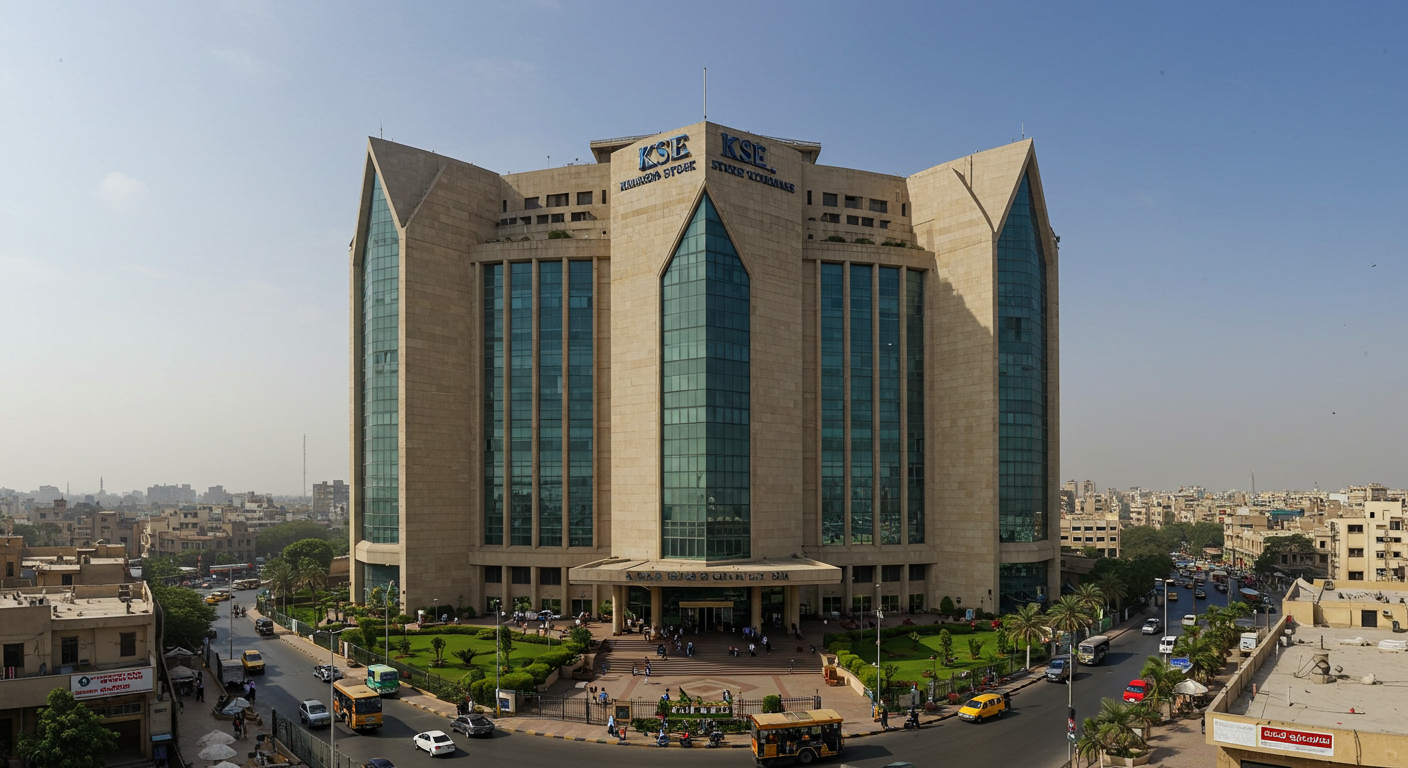
Pakistan’s stock market achieved a historic milestone on Wednesday as the benchmark KSE-100 Index surged to an all-time high of 145,088 points, reflecting growing investor confidence in the country’s economic trajectory. The extraordinariness of this jump of 2,051 points and 1.43 percent in a day is not merely a statistical headline but it is evidence that a new faith in the macroeconomic strength, strategic policy thinking and potentials of $27 billion financial sector are emerging in Pakistan. The stock market gained mainly due to healthy growth in the banking sector and strong Pakistani rupee against the currencies of other nations as start traders welcomed the structural changes that were being implemented through the Pakistan Extended Fund Facility, which the country currently enjoys, by the IMF.
To widen the market, during the trade, the index added more than 2,150 points in intraday trading but ended a bit lower at the closing time. The existence of such intraday movements is indicative of high levels of market liquidity and an increasingly attractive desire by investors to invest into equities, including those by the institutional investors and the high-net-worth individuals. Specifically, the leading four banking behemoths in terms of valuation, namely Habib Bank Limited (HBL) and National Bank of Pakistan (NBP), Meezan Bank Limited (MEBL), and United Bank Limited (UBL), have added the number of 1,017 points to the upside movements on the day. This explains not only the predominant position of the banking industry in the Pakistani economy but also shows investor confidence in the profitability and stability of these financial institutions under the changing macro economic environment.
The renewed investor confidence can be partly owed to the increase in strength of Pakistani rupee which recently fell to below 275 per US dollar in the interbank market, a level not seen in nearly eighteen months. Appreciation of the rupee depends on taking more measures that tighten the monetary policy, greater banking inflows in the form of remittances and a better current account. The State Bank of Pakistan (SBP) reported that the first half of 2025 saw the current account deficit reduced to only $271 million compared to the previous year of 2024 which experienced well over eleven times more or a staggering 1434 percent increase, which tallied to a whopping $1.4 billion. Such a narrowing can be attributed in large part to judicious importation measures and an increase in exportation and remittance which rang in at 15.1 billion in the initial six months of 2025.
The improving performance of the market has also portrayed the optimism that investors have about the current IMF program, which not only has unlocked the much needed external funds but also has implemented fiscal discipline and openness in state-owned companies. Pakistan has committed to a package of structural reforms under the $ 7 billion facility comprising of deregulation of power sector, increase in tax collection, decline in circular debt, and making of substance in subsidies. Among the moves that have elicited greatest excitement in the market is the move of lowering industrial electricity tariff to export industries that will increase competitive edge and boost textile and manufacturing export. The textile export of Pakistan in 2024 was recorded to be 16.5 billion; however, the demand is expected to increase by 10-12 percent in 2025 given the positive tariff regulations and stable currency.
In addition to equities, other macroeconomic signals are also showing that the improvement is being cautious. Foreign exchange reserves which were teetering at the brink of $4 billion in mid 2024 have now reached over the 10 billion dollar mark and hence offer a better cushion in imports towards a near three months. Inflation that was before 30 percent, year on year, seen in the peak of the economic crisis has been cooled down to about 12.8 percent on the report of the Pakistan Bureau of Statistics in July 2025. The downward movement in inflation, although still high, is an indicator of the creation of a superior supply chain, enhanced agricultural production and lesser commodity prices in the world markets, all of which are ameliorating the vagaries possible in a consumer led environment.
Besides, the process of digitalization and the governmental efforts to make the economy more formal is starting to pay off. The Federal Board of Revenue (FBR) recorded its FY2024-25 tax revenues to go up by 23 percent year-on-year and this was largely attributed to improving documentation, digitization of invoices, and more tax compliance by the retail and services industries. This change in revenue performance is assisting in the decrease of dependence on external aid and is allowing the government to focus on development expenditure without exceeding limits on fiscal deficit limits.
The reforms of the Pakistan capital market are also proving critical towards increasing the level of participation and investor confidence. The Securities and Exchange Commission of Pakistan (SECP) has thrust dematerialization, simplified IPO process and launched new products such as Real Estate Investment Trusts (REITs) and Exchange Traded Funds (ETFs) and this has opened the stock market to more investors in a broader range. The speculative activity is not the basis of the recent rally but rather the increasing interest of knowledgeable investors in response to concrete macroeconomic indicators.
Compared to several emerging markets, fighting with inflation, outflow of capital, and currency losses, Pakistan, in the global context, works as a relative bright spot. Although some pitfalls still exist, like the pressure of foreign debt servicing, political risk and the necessity of reforming the energy sector, the recent surge on stock market indicates that Pakistan is slowly retraining investor confidence. Such confidence is needed to gain foreign direct investment, increase the tax base and ensure long-term economic growth.
Creating an economically stable nation is not an easy path that can be travelled in small steps and economic trends indicate that Pakistan is on the right track. The nexus of a stable rupee, tight monetary and fiscal policy, foreign aid of the multilateral institutions and investor-friendly reform is rewriting the economic story. This is when congruent and risk-aversive global capital is extremely choosy, the Pakistani capital markets are proving to be robust and promising.
The all-time high achieved by the KSE-100 Index is not just a numerical accomplishment, it is a reflection of national economic momentum and the possibility of a financial renaissance. With continued policy consistency, political will, and structural commitment, Pakistan can transform this moment into a sustained trajectory of growth and prosperity. The message from the market is clear: the fundamentals are improving, and the future looks brighter.
Author