


Silent Purge: Tech Giants Ditch White-Collar Ranks as AI Ascends, Only Sales Remains
POLICY WIRE — San Francisco, USA — The hum from data centers just got a whole lot more unsettling. It’s not about new tech jobs flooding the market; it’s about the quiet, calculated disappearance of...

POLICY WIRE — San Francisco, USA — The hum from data centers just got a whole lot more unsettling. It’s not about new tech jobs flooding the market; it’s about the quiet, calculated disappearance of the old ones. The white-collar professional—the analyst, the marketer, the content creator—they’re feeling a distinct chill, a digital draft whispering through their cubicles.
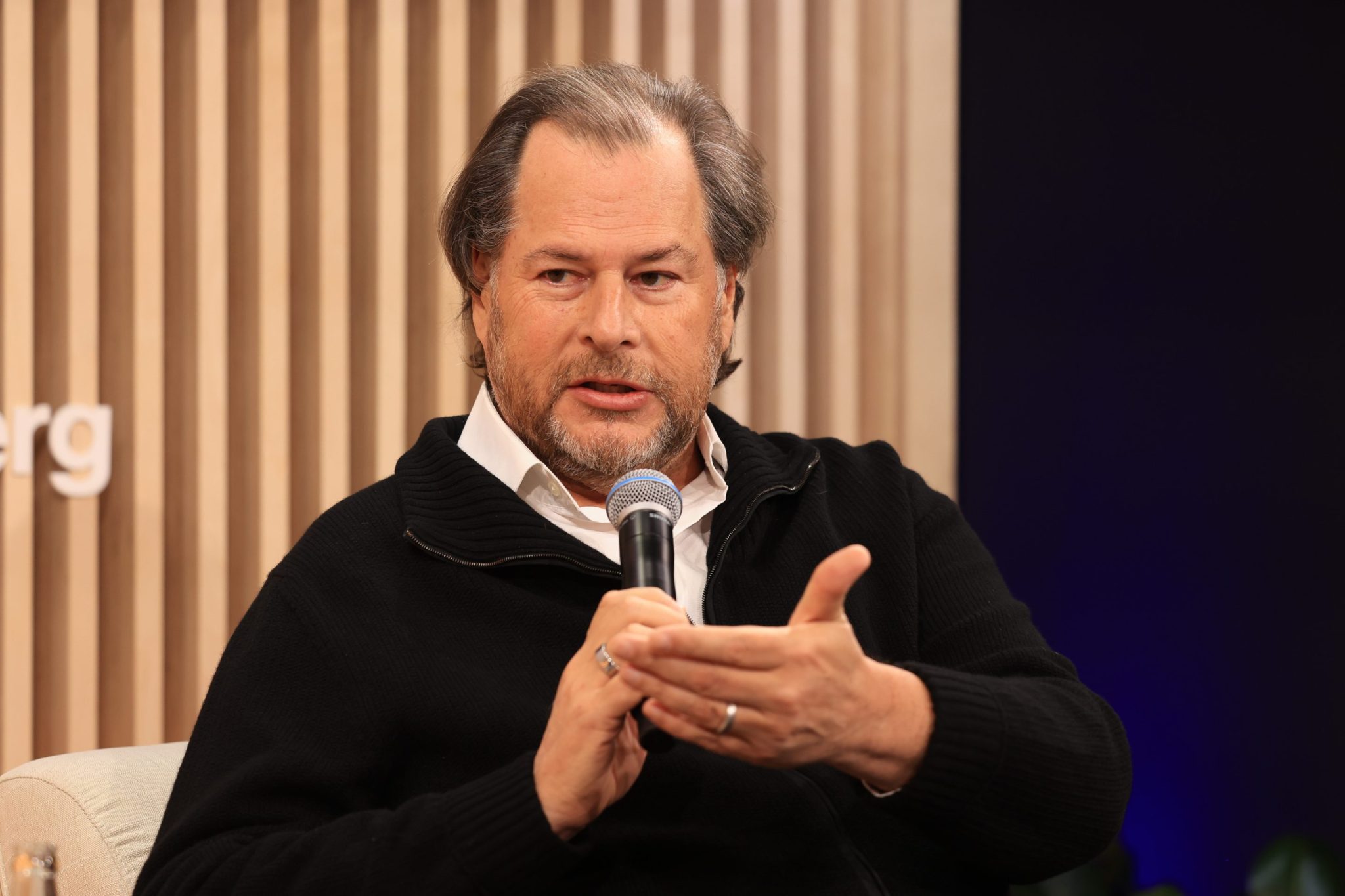
For too long, the tech elite assured us artificial intelligence would merely augment human capability, freeing us for loftier pursuits. Turns out, the loftier pursuit for many is now a frantic job search, or perhaps a career pivot into something that isn’t yet (or ever) code-able. The latest unvarnished truth bomb dropped by Salesforce CEO Marc Benioff cuts right to the bone, painting a stark picture of a hiring landscape where human hands are becoming increasingly optional.
Speaking to the very real and immediate effects of what many have termed the AI revolution, Benioff’s remarks weren’t couched in corporate platitudes. He’s seen the shift up close, personal. He spelled it out plain as day: when it comes to hiring in the tech world’s white-collar domain, there’s an almost total freeze. They’re just not bringing people on like they used to. He observed that, for most roles, [QUOTE_PLACEHOLDER] almost no one is being hired—except in sales. Because, apparently, even a super-smart AI still needs a human to close a deal, shake a hand, or navigate the murky waters of client expectations.
It’s a brutal, honest assessment, pulling back the curtain on the industry’s unspoken strategy. We’re not talking about repetitive factory tasks anymore, though that’s still happening. This is about roles traditionally thought of as requiring judgment, creativity, and strategic thought—the kind of work many professionals invested years, and mountains of student debt, to prepare for. And it’s disappearing faster than you can say ‘large language model’.
Consider the staggering economic implications: a 2023 Goldman Sachs report suggested generative AI could expose 300 million full-time jobs to automation across major economies. That’s not a gentle breeze of change; it’s a category five hurricane set to rip through global employment. It affects everybody, from Silicon Valley’s coders to content teams in distant lands. And who does that impact most?
In regions like South Asia, where thriving tech outsourcing sectors in cities like Karachi, Bangalore, and Manila have provided millions of white-collar opportunities for decades—often in IT support, software development, data analysis, and content moderation—the advent of sophisticated AI presents an existential threat. Many of these jobs are precisely the kind of foundational, scalable roles that are first on the chopping block when corporations in the West look to optimize costs with intelligent automation. They’re not just jobs; they’re livelihoods, often supporting extended families, powering emerging middle classes, and driving national economic ambitions in places like Pakistan. It’s a cruel twist after years of growth, isn’t it?
But the ramifications stretch further. For nations heavily investing in digital transformation, like Saudi Arabia or the UAE, these trends present a complex dilemma. They’re trying to build future-proof economies, attracting tech talent — and creating indigenous innovation hubs. Yet, if even global leaders like Salesforce are slashing internal roles because of AI’s efficiency, where does that leave nations trying to build from scratch? It forces a strategic rethink: invest in foundational AI research, or become mere consumers of outsourced AI products, while local human talent struggles?
The message from Benioff isn’t an isolated incident. It reflects a growing industry sentiment that technology is no longer merely a tool for scaling; it’s a replacement engine. Businesses aren’t just getting lean; they’re getting robotic. The implications for the global workforce—and the social safety nets meant to catch those displaced—are simply immense. And we’re only at the very beginning of this particular seismic shift.
What This Means
This isn’t merely a Silicon Valley quirk. It’s a bellwether, folks. For one, it means traditional white-collar career paths are about to get a whole lot bumpier. Universities and vocational programs, particularly those geared towards the tech industry, will need to rapidly recalibrate. Skills thought to be gold-plated just a few years ago might soon be obsolescent. Think critical thinking, problem-solving, emotional intelligence, and complex human interaction as the new high-value commodities. These are the arenas where AI still falters.
Economically, expect pressure on wages in sectors susceptible to automation, alongside rising inequality as capital accrues to those controlling the AI rather than human labor. Government responses—from retraining initiatives to debates around universal basic income—will intensify. Politically, this creates fertile ground for populist movements, as widespread job insecurity can easily morph into social unrest. The promise of productivity gains could easily be overshadowed by a society struggling to find meaningful work for its citizens.
for regions such as Pakistan, which has seen considerable growth in its IT sector through outsourcing and remote work—the exact sectors now being eroded by AI’s advances—the challenge is particularly acute. Without a proactive strategy to re-skill its workforce, invest in AI-driven enterprises, and nurture uniquely human-centric services, these economies could face significant setbacks. Because, frankly, a world where machines do the thinking for corporations is a world that’s going to re-draw economic maps entirely. You can explore how automation might reshape global markets further in our analysis on The Silent Takeover: The Unseen Algorithms Crafting Our News Landscape. And it won’t be long before every single nation feels the heat.
So, the next time someone tells you AI is just a tool, remind them Benioff already saw its ultimate form: a formidable, tireless employee requiring no lunch breaks, no benefits, and absolutely no need for a cubicle. And it’s coming for everything.