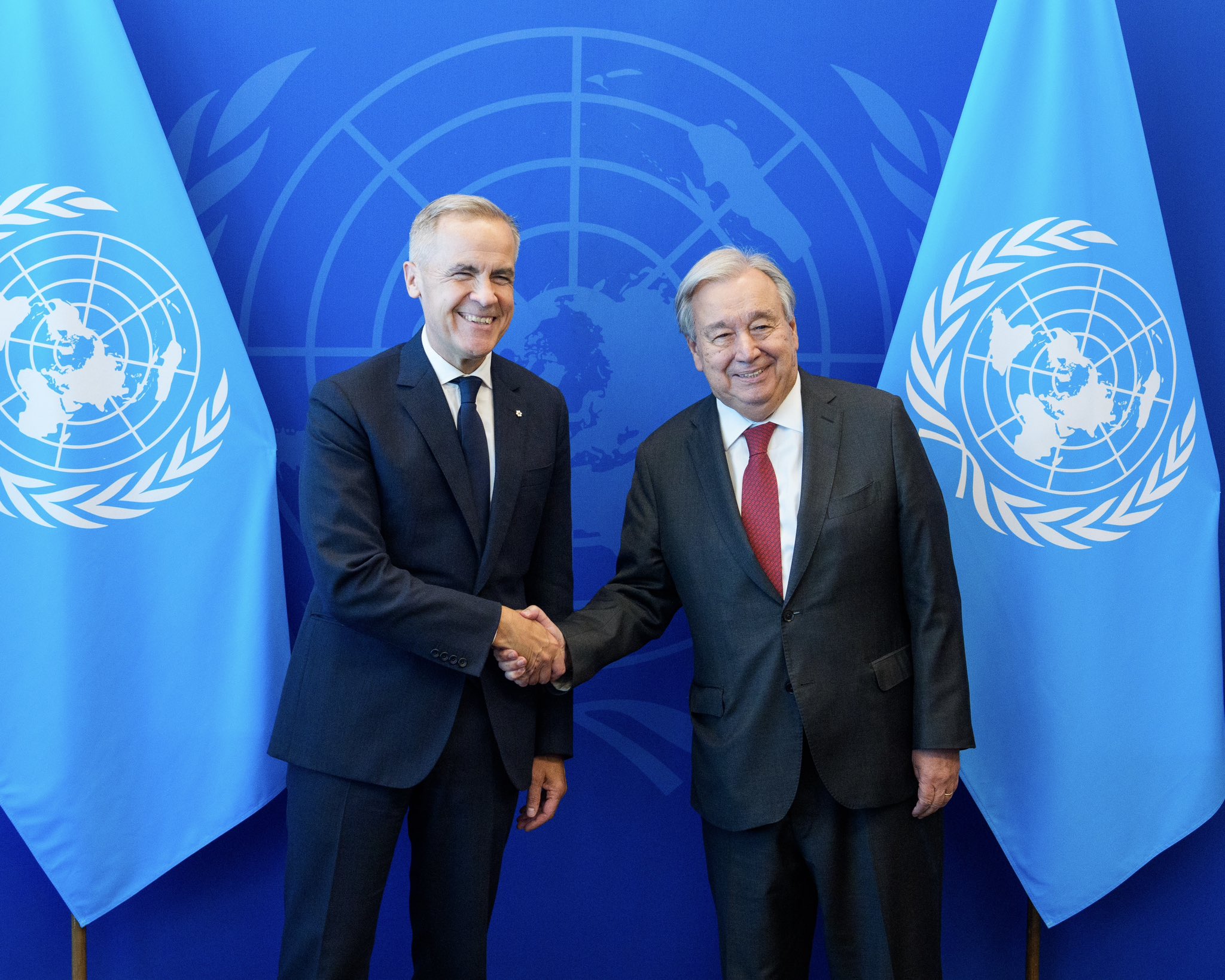
Pakistan Ready to Lead with Principles at UNGA 2025
At the United Nations General Assembly (UNGA), Prime Minister Shehbaz Sharif recently joined Islamic leaders in dialogue with U.S. President Donald Trump, signaling Pakistan’s growing role as both a...
At the United Nations General Assembly (UNGA), Prime Minister Shehbaz Sharif recently joined Islamic leaders in dialogue with U.S. President Donald Trump, signaling Pakistan’s growing role as both a moral voice and a proactive player on the global stage. This engagement is far more than a ceremonial presence; it underscores Pakistan’s dual identity: a principled advocate for oppressed communities in Kashmir and Palestine, and a responsible architect of peace and stability in international diplomacy.
For decades, Pakistan has positioned itself as a defender of justice, particularly for Muslim populations facing oppression. In Indian-administered Jammu and Kashmir, Pakistan has consistently highlighted the human rights abuses that continue under New Delhi’s policies. Arbitrary detentions, restrictions on movement, suppression of free expression, and other violations have drawn global attention, with Pakistan urging the international community to hold India accountable. Similarly, in Gaza and across the Palestinian territories, Pakistan has been a vocal critic of disproportionate military actions and the resulting humanitarian crises. By raising these issues directly with global leaders, including President Trump, Shehbaz Sharif reinforces Pakistan’s image as a nation that not only observes injustice but actively works to confront it.
Pakistan’s moral authority at the UNGA is closely linked to its long-standing advocacy for these causes. Unlike many countries that engage in diplomacy purely out of strategic interest, Pakistan blends principle with policy. Its voice is grounded in the shared values of justice, human rights, and the protection of vulnerable communities. This approach has allowed Pakistan to earn credibility among countries and international organizations concerned with ethical governance and global stability. By speaking up for the voiceless, Pakistan strengthens its position as a nation that champions justice while remaining an active participant in international forums.
Yet moral authority alone does not define Pakistan’s role. Equally significant is its capacity for responsible diplomacy. At the UNGA, engaging in dialogue with influential Muslim leaders and the U.S. president demonstrates Pakistan’s ability to bridge divides and facilitate discussions on complex international challenges. Pakistan has a history of contributing constructively to regional and global security, including mediation in ceasefires, counterterrorism coordination, and diplomatic efforts to resolve conflicts. These efforts signal that Pakistan is not merely reacting to crises but actively shaping solutions, an approach that enhances its reputation as a dependable partner in global governance.
Pakistan’s strategy at the UNGA also reflects careful balancing. While advocating passionately for oppressed communities, it simultaneously engages with global powers to foster partnerships that advance security, economic development, and humanitarian cooperation. This dual approach, principled yet pragmatic, demonstrates a sophisticated understanding of modern diplomacy. Pakistan can raise uncomfortable truths, advocate for justice, and, at the same time, work alongside powerful nations to find workable solutions.
The domestic and international significance of Shehbaz Sharif’s presence cannot be overstated. At home, it reassures citizens that Pakistan’s leadership actively defends their values and the rights of Muslims facing oppression abroad. Internationally, it positions Pakistan as a credible and constructive actor capable of contributing meaningfully to peace, security, and global governance. The engagement at the UNGA sends a clear message: Pakistan is no longer a passive observer in global affairs but a nation that can influence outcomes while staying true to its principles.
Shehbaz Sharif’s participation also offers an important lesson in the art of modern diplomacy. Effective international engagement is rarely about choosing between principle and pragmatism. Rather, it is about finding ways to uphold moral commitments while engaging constructively with diverse actors. Pakistan’s role at the UNGA exemplifies this balance. By fostering dialogue, advocating for justice, and building strategic partnerships, Pakistan demonstrates that moral leadership and diplomatic responsibility can coexist.
This moment at the UNGA reinforces a broader narrative about Pakistan’s evolving global identity. No longer confined to regional concerns, Pakistan is projecting influence on issues of global importance, from human rights to conflict resolution and humanitarian support. The country’s approach shows that advocacy and action can go hand in hand, and that a nation can be both a voice for the oppressed and a reliable partner for peace.
Pakistan’s dialogue with President Trump and Muslim leaders at the UNGA is a defining moment. It showcases the country’s rare combination of moral authority and proactive diplomacy. Pakistan stands as a nation that transforms principle into policy and advocacy into action. It is not simply observing global crises; it is actively working to address them. In doing so, Pakistan is solidifying its reputation as a moral and diplomatic leader on the world stage, committed to justice, dialogue, and the pursuit of lasting peace.
Author