
Margalla Dialogue 2026: Why Is the World Coming to Pakistan?
In a world increasingly divided by strategic competition, Islamabad is emerging as a venue for international debate. The challenge is to turn diplomatic access into lasting influence. In April,...
In a world increasingly divided by strategic competition, Islamabad is emerging as a venue for international debate. The challenge is to turn diplomatic access into lasting influence.
In April, American and Iranian negotiators spent three days in Islamabad, in talks hosted by a country many analysts had written off. Seven months later, the same capital welcomed American, Chinese, Russian and German scholars to debate what comes after a fading world order. Islamabad has become a place where the world’s hardest questions are discussed openly.
A Forum Built for Candour
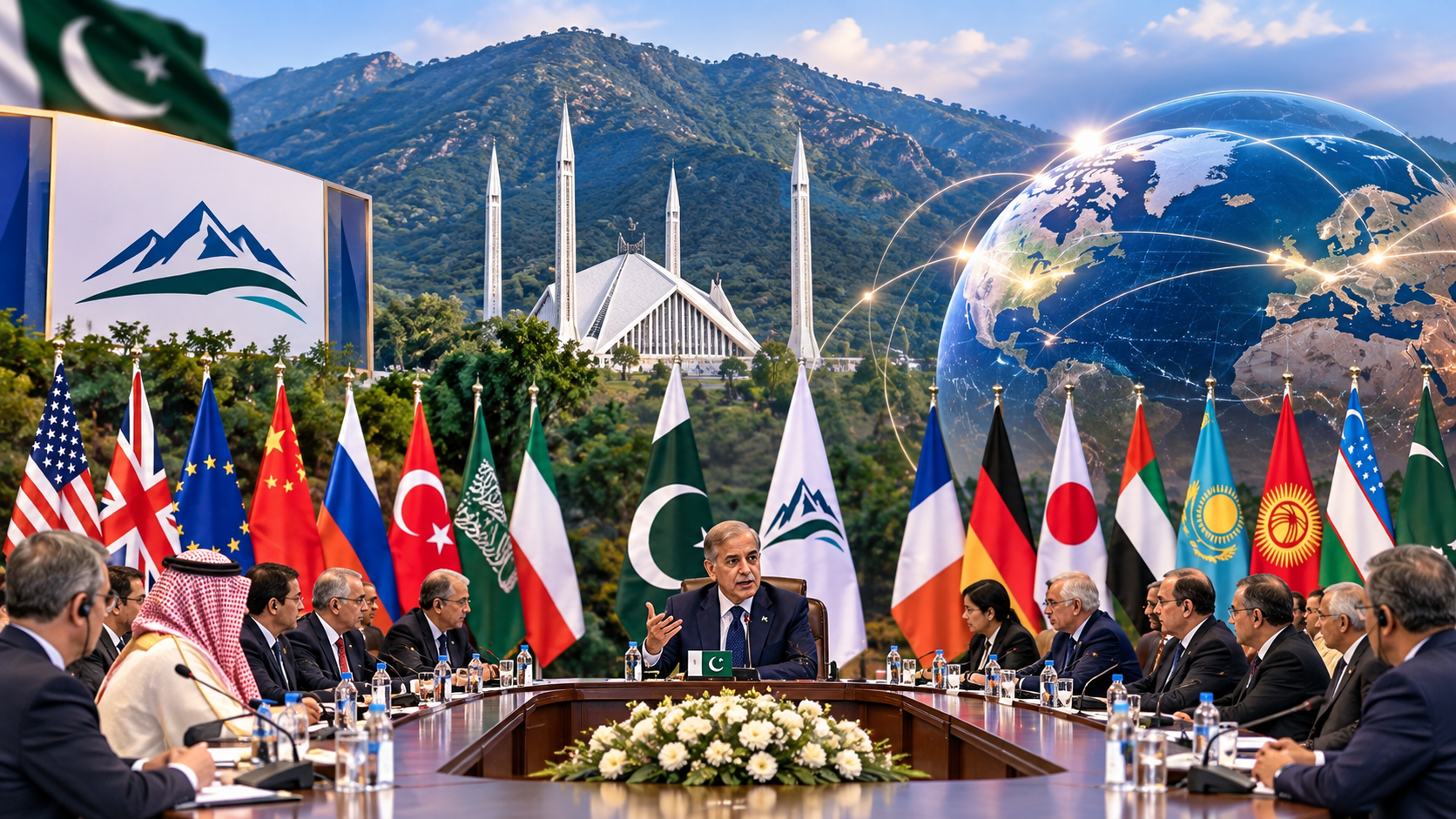
The Margalla Dialogue was launched in 2019 by the Islamabad Policy Research Institute (IPRI). Its seventh edition, held on 10-11 November, took the theme “Global Order in Transition: Navigating Strategic Uncertainty.”
It is a “Track 1.5” event, in which serving officials and independent experts share a room. Nothing is signed, so speakers can be franker than at a formal summit. The invitation-only format supports that candour and keeps the discussion focused.
Reflecting an Uncertain World Order
The themes also track the mood of the times. In 2022 the question was how developing countries cope with great-power competition. Later editions spoke of an “evolving world environment” and “emerging global realities” and last year’s asked whether the world was heading for cooperation or confrontation. This year the framing is simply “uncertainty,” which few diplomatic gatherings state so plainly.
A Real Debate
Competing Visions of the Emerging World Order
The opening forum was lively because the speakers disagreed.
Ambassador Robin Raphel of the Center for Strategic and International Studies said the United States is adding to global uncertainty by stepping back from rules it helped write. But she argued that weakening institutions also leave room for something new and she floated a “global concert” of major powers and regional bodies working alongside the UN. She also said Pakistan’s diplomatic experience could help with mediation, particularly in West Asia.
Multipolarity and Pakistan’s Diplomatic Outlook
Carlo Masala of Bundeswehr University Munich offered a different view. He said it is too early to tell whether the world is heading for a US-China bipolar order or a weakened unipolar one and that “multipolar” is not supported by the balance of military, economic and soft power. Russia’s Timofei Bordachev added a paradox; the main rivalry is between Washington and Beijing, yet the largest nuclear arsenals belong to the United States and Russia.
This matters because multipolarity is central to Pakistan’s own diplomacy, and Deputy Prime Minister Ishaq Dar made the case for a more representative order in his opening address. A forum where a German professor can challenge that idea in Islamabad is doing its job. It shows confidence in Pakistan’s own position to host the debate openly.
Who Comes to Islamabad
Bringing Global Voices to One Table
The invitation list has been wide from the start. Last year’s edition featured Idrees Zaman, a former Afghan deputy foreign minister, who argued that regional peace is impossible without peace in Afghanistan. He spoke alongside a former Iranian ambassador to Pakistan, Kazakhstan’s ambassador, Chinese scholars and Western analysts including Daniel Runde of CSIS and Desmond Bowen, a former British official now at the International Institute for Strategic Studies. Few forums in South Asia can seat such a range of voices at one table.
A Foreign Policy with Reach
Pakistan arrived at this year’s Dialogue with a record to point to. Ishaq Dar told delegates that the Islamabad Talks produced a memorandum that lays a foundation for further US-Iran negotiations. He also cited Pakistan’s 2025-26 seat on the UN Security Council and described the Makkah Joint Defence Agreement among Pakistan, Saudi Arabia and Türkiye as defensive in purpose. He mentioned a consultation framework with Qatar, Saudi Arabia, Türkiye and Egypt as well. Together these show a foreign policy that now reaches well beyond South Asia.
Outside observers have noticed. Vali Nasr of Johns Hopkins said the regional conflict brought Pakistan “to the forefront of regional security discussions” and gave it a “more consequential role in West Asian affairs.” The task now is turning that standing into durable partnerships.
The Geo-economic Case
The Dialogue’s most useful numbers came last year from Hu Shisheng of the China Institute of Contemporary International Relations. He said goods trade within South Asia is about $23 billion, against a World Bank estimate of $67 billion in potential. For India and Pakistan alone, he put untapped potential at $37 billion against roughly $1.2 billion actually traded. The gap, he said, comes from missing transport, power and digital links.
Hu described Pakistan, with nearly 240 million people, as a natural hinge between South Asia, Central Asia and the Middle East. That is the geo-economic argument Pakistani officials have long made, here put forward by a foreign scholar with figures. It also shows why this year’s special forum on Pakistan’s own economic bottlenecks matters as much as any session on great powers: a country positioned to be a bridge benefits most from building the road.
Questions That Concern Everyone
Two themes show why a Pakistani conference has global relevance.
The first is water. Pakistan’s Indus Waters Commissioner told last year’s edition that a “nation born of rivers” should show it can use water peacefully. This year Dar warned against turning water into a weapon and reaffirmed Pakistan’s rights under the Indus Waters Treaty. India reads the issue differently, but the underlying point is clear; when 240 million people depend on shared rivers, water is a security question.
The second is artificial intelligence. IPRI’s research director, Raashid Wali Janjua, argued last year that warfare has moved from individual weapons platforms to networks driven by data. Portuguese analyst Bruno Maçães linked the catastrophe in Gaza to AI. These are questions every country will face, and Islamabad is making room for them.
The Power of Pakistan’s People
The Dialogue also invites Pakistanis to examine their own image. Senator Javed Jabbar told last year’s edition that Pakistan’s greatest soft power is its roughly 240 million citizens. Cultural specialist Feryal Gauhar added that real soft power cannot be produced “through the barrel of a gun.” That candour is part of why the forum is credible rather than a showcase.
What Comes Next
Seven editions in, the Margalla Dialogue has become something no press campaign could buy: a place where outsiders choose to come and disagree. A former US ambassador proposes a “global concert” of powers, a German professor doubts the world is multipolar at all, and a Chinese scholar puts a $67 billion price on South Asia’s missed connections. All of them said so in Islamabad, in front of the officials they were addressing.
That is a real achievement. The Dialogue gives Pakistan a credible stage and gives the world a reason to see the country with fresh eyes. The next step is to carry the ideas from the hall into policy, particularly on trade, water and technology. In a world that is, as one Tribune writer put it, running out of patience, a country that keeps the conversation going has an advantage. Pakistan has earned its seat at the table, and it is well placed to use it.