

Pakistan Navigates Challenges to Boost Economic Momentum
In the face of global uncertainties, Pakistan’s economy in 2025 stands as a testament to resilience and untapped potential. As of October 2025, with a projected GDP growth of 3.0% for FY2026,...

In the face of global uncertainties, Pakistan’s economy in 2025 stands as a testament to resilience and untapped potential. As of October 2025, with a projected GDP growth of 3.0% for FY2026, the nation is poised for a steady rebound, driven by strategic reforms, innovative investments, and burgeoning trade partnerships. Critics often highlight short-term hurdles like company restructurings and natural disasters, but these overlook the broader narrative of progress. Pakistan is not just surviving; it’s thriving by leveraging its youthful population, strategic location, and resource-rich landscape. Pakistan’s economic trajectory is upward, fueled by proactive policies and international confidence.
Strong Fundamentals Driving Sustainable Growth
At its core, Pakistan’s economy benefits from solid fundamentals that promise long-term stability. Despite challenges like high debt levels, around 70% of GDP, the government’s fiscal discipline has kept interest payments manageable, allowing room for investment in infrastructure and human capital. Poverty rates, while at 25% nationally, are being addressed through targeted programs, and youth engagement is improving, with only 37% currently out of education or employment, a figure that’s declining thanks to skill-building initiatives.
Recent floods, though disruptive, have spurred adaptive measures like potential flood levies, which could fund resilient agriculture and boost export earnings. Investment as a share of GDP may be at 14%, but FDI inflows reached $300 million in FY2025, signaling growing investor interest. Sectors like pharmaceuticals exemplify this strength, with exports surging 34% to $457 million, showcasing Pakistan’s competitive edge in global markets. These aren’t isolated wins; they reflect an economy adapting to global shifts, turning challenges into opportunities for innovation and efficiency.
Attracting Global Investments Amid Transformations
Far from an “exodus,” the narrative of companies leaving Pakistan is often misinterpreted as global restructurings that pave the way for fresh investments and local empowerment. While firms like Procter & Gamble and Shell have adjusted operations, many transitions involve ownership shifts to dynamic players, ensuring continuity and expansion. Notably, bigger companies are selling shares or assets to local entities, which is highly positive for Pakistan as it fosters domestic control and entrepreneurship.
For instance, Pfizer sold its manufacturing operations to the Lucky Group, a prominent Pakistani conglomerate, in May 2024, enabling local innovation in pharmaceuticals. Similarly, Telenor exited by selling to PTCL, Pakistan’s own telecommunication giant, strengthening national telecom infrastructure under local leadership. Even Shell’s sale of its stake to Wafi Energy, a move completed in late 2024, to a foreign entity, opens doors for local partnerships in energy retail, with the Shell brand remaining through licensing agreements that benefit Pakistani distributors and entrepreneurs.
These shifts create golden opportunities for local entrepreneurship to flourish. As multinationals streamline globally, they hand over established operations to Pakistani buyers or third-party models, injecting capital and know-how into the domestic ecosystem. Tech giants such as Tencent, Google Pay, and ByteDance are deepening their fintech presence, while mining behemoth Barrick Gold commits $9 billion to the Reko Diq project. In automobiles, newcomers like Volkswagen, Hyundai, and BYD are establishing plants, revitalizing manufacturing. Even in pharmaceuticals, Haleon’s $12 million investment in local production of essentials like Panadol underscores confidence in Pakistan’s market. These inflows counterbalance any perceived outflows, creating jobs, fostering technology transfer, and empowering local businesses to scale up.
Expanding Trade Deals and Export Potential
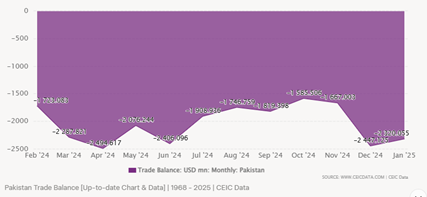
Trade remains a cornerstone of Pakistan’s economic optimism. The recent $200 million halal meat quota with Malaysia, announced on October 6, 2025, opens doors to enhanced cooperation in digital economy, tourism, and halal products. Amendments to the barter trade mechanism further demonstrate agility in addressing a $9.37 billion trade deficit, which, while widened, is being tackled through diversified partnerships.
Exports, though dipping 3.8% in Q1 FY2026 to $7.61 billion, show resilience in key areas, with calls for competitive energy pricing and automated refunds set to reverse trends. Over the past eight years, while overall exports faced headwinds, strategic sectors have grown, and a proposed five-year policy framework promises stability. Compared to regional peers, Pakistan’s $30 billion in exports holds steady potential, especially as it outpaces in niche markets like textiles and pharma. These deals aren’t just transactions; they’re bridges to global integration, enhancing Pakistan’s geopolitical leverage and economic diversification.
📄 POLICY WIRE WHITEPAPER PUBLISHED: PAKISTAN'S NATIONAL SECURITY POLICY PRIORITIES
👉 READ BY CLICKING HERENavigating Challenges Toward Brighter Horizons
No economy is without obstacles, but Pakistan’s ability to navigate them speaks volumes. Issues like energy crises and policy inconsistencies are being addressed through reforms that prioritize growth initiatives. Capital flight and debt concerns are mitigated by reserve-building strategies, while political stability efforts curb terrorism’s impact. Industrial output may be down 14.7%, but GDP per capita growth, though half of South Asia’s, is accelerating with new investments.
Emigration trends highlight a skilled diaspora that remits billions, fueling domestic consumption. By viewing challenges as catalysts, such as floods prompting sustainable agriculture, Pakistan is building a more robust economy. The government’s focus on youth employment and digital transformation will yield dividends, turning a young population into a demographic dividend. With local entrepreneurs stepping in where multinationals restructure, innovation hubs are emerging, promising a self-reliant future.
Pakistan’s Trade and Strategic Agreements in 2025
In 2025, Pakistan actively pursued and secured several significant trade and strategic agreements to bolster its economic position and international relations. Notably, in July, Pakistan and the United States reached a landmark trade deal aimed at reducing tariffs and developing oil reserves, with a proposed $1.2 billion investment in a deep-sea port at Pasni, enhancing access to critical minerals and countering regional influences. Concurrently, Pakistan signed an $8.5 billion investment agreement with China, focusing on sectors such as agriculture, renewable energy, and electric vehicles, alongside the next phase of the China-Pakistan Economic Corridor (CPEC). Additionally, Pakistan engaged in Free Trade Agreement (FTA) negotiations with the United Arab Emirates (UAE), Qatar, and Malaysia, aiming to diversify trade and attract investment. These initiatives collectively reflect Pakistan’s proactive approach to strengthening its economic ties globally.
| Country/Partner | Agreement/Investment | Value | Focus Area |
| United States | Trade deal & oil reserves development | $1.2B | Deep-sea port at Pasni, critical minerals |
| China | Investment agreement & CPEC phase | $8.5B | Agriculture, renewable energy, EVs |
| UAE | Free Trade Agreement negotiations | In process | Trade diversification & investment |
| Qatar | Free Trade Agreement negotiations | In process | Trade diversification & investment |
| Malaysia | Halal meat quota & FTA talks | $200M | Halal products, digital economy, tourism |
With growth projections, influxes of FDI, expanding trade, adaptive policies, and opportunities for local entrepreneurship from company transitions, the nation is on a path to prosperity. Skeptics may dwell on restructurings, but the reality is a vibrant ecosystem welcoming global players while empowering locals. By sustaining reforms and embracing opportunities, Pakistan can achieve not only stability but also leadership in South Asia. The time to invest in and believe in Pakistan is now; its potential is boundless.
Author