Beirut Holds Its Breath: Hezbollah’s Inner Rifts, Outer Clout, and the Shadow of Seizure
POLICY WIRE — Beirut, Lebanon — The rumor mill in Beirut churns perpetually, fed by geopolitical anxieties and internal feuds. But lately, those whispers have grown louder, taking on a hard, metallic...

POLICY WIRE — Beirut, Lebanon — The rumor mill in Beirut churns perpetually, fed by geopolitical anxieties and internal feuds. But lately, those whispers have grown louder, taking on a hard, metallic edge. Forget your mundane government infighting; the latest scuttlebutt centers on Hezbollah, the Shiite movement that’s long been Lebanon’s most powerful, if unofficial, actor, reportedly charting plans for a full-blown military takeover of the capital. Not exactly unprecedented stuff here, but the timing, they say, is everything.
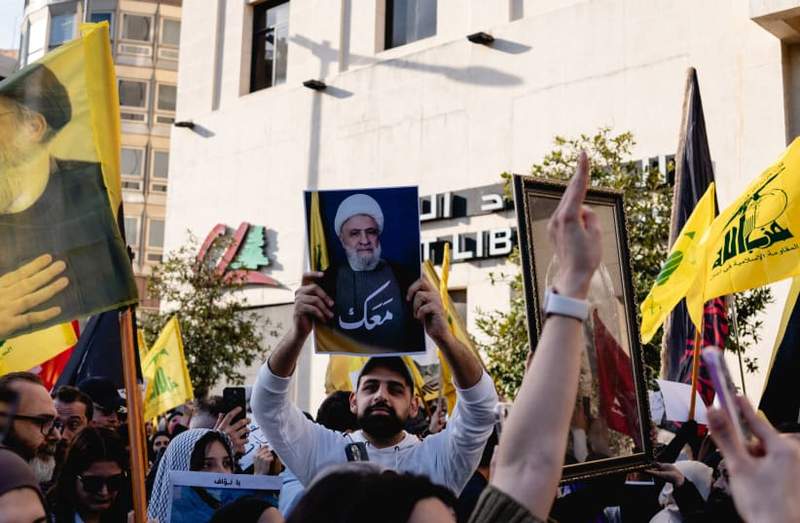
It’s a dicey proposition, this supposed power grab. You don’t just ‘take over’ a city like Beirut without consequences, not unless you’ve calculated every angle, every civilian street, every potential opposition point. And let’s be real, Hezbollah always calculates. This isn’t some spur-of-the-moment street brawl. Insiders tell us this isn’t just about showing force against Israel or internal opponents. There’s a distinct feeling this maneuver is linked to building internal organizational support around Naim Qassem, the group’s seasoned Deputy Secretary-General. They’re positioning him, one might speculate, perhaps as a more assertive or centralized figure, a necessary chess piece in a region prone to king-making—and sometimes, king-breaking.
Sources close to the party’s military wing—folks who’d rather remain nameless for, you know, obvious reasons—hint at tactical exercises that resemble urban occupation drills, right here on our very own Mediterranean doorstep. The sheer audacity of it, if true, beggars belief. But then, it’s Hezbollah; audacity isn’t a bug, it’s a feature. The thinking, it goes, is to solidify their ground before external pressures get too immense. “Our preparedness isn’t a threat; it’s a guarantee,” Deputy Secretary-General Qassem himself is said to have declared in a recent private meeting with commanders. “Anyone who underestimates our resolve simply hasn’t been paying attention. We’re here. We stay here.” Hard to argue with that kind of certainty.
Because frankly, Beirut’s political scene is a mess. It’s always a mess. A kaleidoscope of sectarian divisions, economic collapse, and external meddling, often by countries like Iran, that pulls every string imaginable. But the threat of a direct takeover—not just influence, but explicit, visible control—well, that’s another level of volatility entirely. “Lebanon’s sovereignty isn’t a plaything for any faction, regardless of their self-perceived strength,” retorted a senior government official, who declined to be identified due to the delicacy of ongoing national dialogue. “Any move that compromises the state’s legitimate authority will be met with the unified will of the Lebanese people. This isn’t 1975.” Famous last words, sometimes.
The economic backdrop only makes things grimmer. Lebanon’s gross domestic product contracted by roughly 58% between 2019 and 2021, according to the World Bank—a decline almost unprecedented in recent history. Imagine trying to assert control over a populace that’s already broke, weary, — and increasingly disillusioned. It’s like pouring fuel on a fire that’s been smoldering for years. And it’s not just local. Events here always have a ripple effect. Pakistan, for instance, a nation with a large Shia minority and a deep-seated interest in Muslim world affairs, watches developments in Beirut with particular scrutiny. Any overt destabilization of a core Arab capital by a non-state actor with close ties to Iran is noted, its implications debated in diplomatic circles and religious seminaries thousands of miles away.
📄 POLICY WIRE WHITEPAPER PUBLISHED: PAKISTAN'S NATIONAL SECURITY POLICY PRIORITIES
👉 READ BY CLICKING HEREBut the real game, analysts insist, is inside Hezbollah. Qassem, a founding member and long-time ideologue, faces the tricky business of navigating succession and consolidation of power within a hierarchical, yet somewhat diffuse, organization. With current Secretary-General Hassan Nasrallah maintaining a near-mythical status, Qassem’s rise or asserted authority has to be carefully managed. And asserting control over the capital? That’s one hell of a statement, a clear marker of who truly holds the cards, regardless of who occupies the official presidential palace or government ministries.
The Biden administration, which is already juggling an impossible array of global hot spots and proxy conflicts, isn’t likely to view such a development with anything other than alarm. The White House, perpetually besieged by shifting war narratives, simply doesn’t need another Lebanon-sized headache right now. And yet, here we’re, watching this fragile peace fray at the edges, possibly into full-blown conflict.
What This Means
Should Hezbollah follow through with even a symbolic assertion of military control in Beirut, the political fallout would be immense, fracturing whatever remains of Lebanon’s state institutions. Economically, it would be another nail in the coffin, likely accelerating capital flight, deterring desperately needed investment, and potentially leading to a broader breakdown of public order. For the region, it’s a terrifying precedent: a potent, Iranian-backed non-state actor essentially holding a capital city hostage, a clear challenge to established norms of state sovereignty. And that’s exactly what Iran would like, consolidating its so-called ‘Axis of Resistance’ and pushing back against perceived Western or Saudi influence. It isn’t just about Beirut; it’s about sending a message. A very loud, very dangerous message to the entire Levant — and beyond. Prepare for a lot of instability, folks.