


Pakistan Condemns India’s Unilateral Suspension of Indus Waters Treaty
History has demonstrated that in the field of international relations, a country may suspend or violate treaties as a strategic alternative if it is unable to establish military superiority over an...

History has demonstrated that in the field of international relations, a country may suspend or violate treaties as a strategic alternative if it is unable to establish military superiority over an adversary. Without engaging in direct combat, this strategy weakens the opponent’s position. The ultimate goal of battle, according to military theorist Carl von Clausewitz, is to force the opponent to surrender to one’s will. However, countries may look for other ways to undermine their enemies if direct military victory is not possible. Clausewitz pointed out that choices to halt agreements can be motivated by political goals, noting that peace treaties are occasionally signed even before either party is disarmed or the balance of power has drastically changed.The Indus Waters Treaty (IWT), a significant 1960 pact that regulates the sharing of water from the Indus River system between India and Pakistan, was suspended by India in April 2025 in response to the Pahalgam incident. Pakistan has strongly condemned this action, seeing the suspension as a breach of international law and a direct danger to its water sovereignty and national security.
Understanding the Indus Waters Treaty
The World Bank-mediated IWT gave India rights over the eastern rivers, the Ravi, Beas, and Sutlej, while giving Pakistan the three western rivers, the Indus, Jhelum, and Chenab. Despite numerous disputes between the two countries, this pact has stood as a testament to collaboration for more than 65 years.
India’s Justification and Pakistan’s Rebuttal
In the immediate aftermath of a terrorist incident in Pahalgam, Jammu and Kashmir, that claimed 26 lives, India decided to suspend the treaty. Pakistan’s conduct, according to India, were against the spirit of “goodwill and friendship” enshrined in the preamble of the pact. India blamed Pakistan for Pahalgam attack without wasting time, and with no proof. The bold statement made by India’s Prime Minister that Pakistan will no longer recieve water from indian rivers shows their grief and unwillingness to resolve the issue with diplomatic strategy. Consequently, Muhammad Moeen Wattoo, Pakistan’s Federal Minister for Water Resources, denounced India’s conduct as “absolutely unlawful and an act of war.” He underlined that India’s suspension is void because the idea of “holding in abeyance” is not covered by the treaty’s legal framework. According to Wattoo, the pact is still in force and cannot be unilaterally changed or halted.
Legal Provisions of the Treaty
There is no mechanism for unilateral suspension in the Indus Waters Treaty. The only way to alter or end the treaty, according to Article XII, is “by a duly ratified treaty concluded for that purpose between the two governments.” This implies that India and Pakistan must both agree on any modifications to the pact. The voilation of treaty by India shows their authoritarian approach that they choose unilateral suspension rather then bilateral consent.
World Bank’s Position
The original treaty’s facilitator, the World Bank, has made clear what part it will play in the current conflict. According to World Bank President Ajay Banga, the organization just serves as a facilitator and lacks the power to get involved in the current conflict. He underlined that without Pakistan’s approval, the deal cannot be suspended.
Official Perspective and National Security
Following the India Pakistan Stand off, US become mediater who initiatited ceasefire between both nations but treaty suspension remained the same by India. Prime Minister Shehbaz Sharif said that India’s attempts to “weaponize” the Indus Waters Treaty (IWT) are unacceptable, and they mark a crucial turning point for Pakistan. He underlined that any attempt by India to obstruct or alter water flows in accordance with the treaty would be seen as an act of war and would be met with a thorough reaction including all aspects of national authority. The government’s position was mirrored by Lieutenant General Ahmed Sharif Chaudhry, Director General of Inter-Services Public Relations (DG ISPR), who called India’s threats to cut off Pakistan’s water supply “insane thinking.” “Only an insane person can think that India can stop Pakistan’s water,” he said in his press conference. 240 million people cannot have their water supply cut off. He also underlined how vital water security is to Pakistan’s national interests and warned to take harsh action against any attempt to withhold water.
Strategic and Environmental Implications
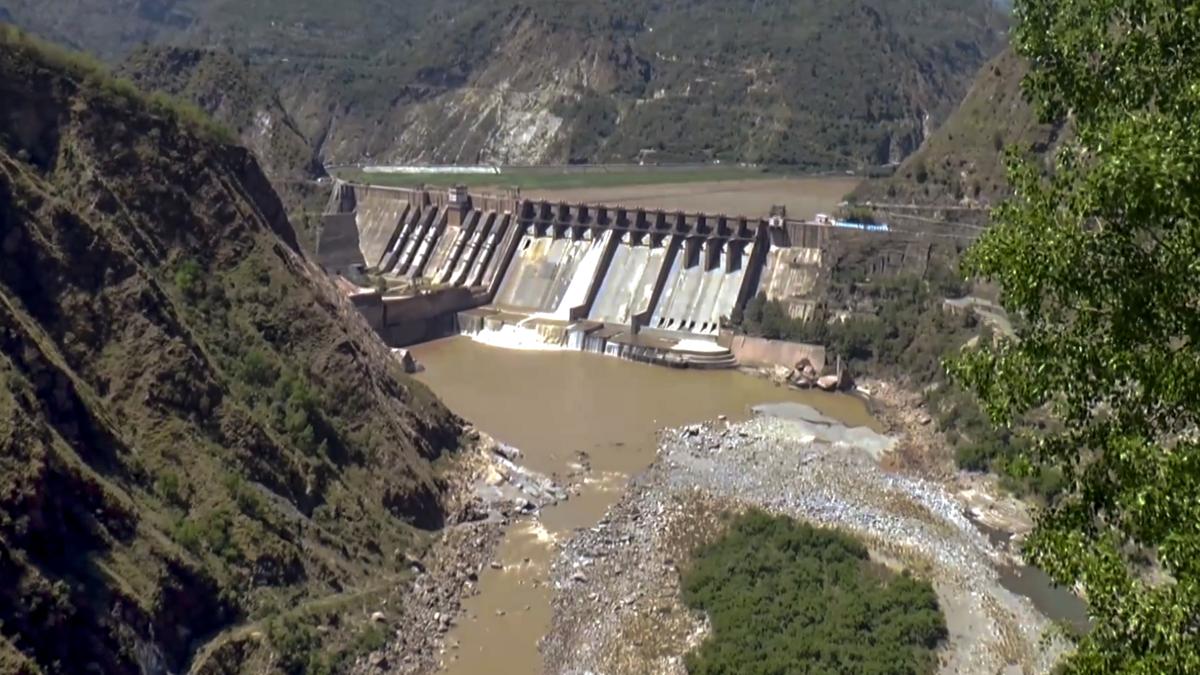
Concerns regarding the geopolitical usage of water have been highlighted by India’s suspension of the IWT. India has increased dam flushing operations, which has resulted in varying water flows into Pakistan, according to satellite images and flow data. The conditions of the treaty are broken by these activities, which were carried out without prior notice and endanger Pakistan’s water security. The question is that how India can voilate treaty with such kind of atitude that it is not accountable to anyone? If it is accountable then why international community and treaty makers are silent?
Pakistan’s unwavering adherence to the Indus Waters Treaty demonstrates its commitment to respecting international law and making sure that essential water resources are distributed fairly. Pakistan maintains its support for diplomatic efforts and legal action to settle the conflict as it develops, highlighting the fact that unilateral measures endanger regional harmony and the welfare of millions of people who rely on the Indus River system.
Author