

Pakistan as a Strategic Balancer beyond South Asia
Pakistan’s strategic balancer role extends far beyond the subcontinent, embodying a nuanced foreign policy that integrates military resolve with civilian diplomacy. Under Prime Minister...

Pakistan’s strategic balancer role extends far beyond the subcontinent, embodying a nuanced foreign policy that integrates military resolve with civilian diplomacy. Under Prime Minister Muhammad Shehbaz Sharif’s administration, Islamabad has pursued a “proactive equilibrium” strategy, as articulated in the 2025 National Security Policy update. This approach, blending economic pragmatism with ideological solidarity, positions Pakistan at the intersection of the Belt and Road Initiative (BRI) and Islamic unity. The Foreign Office, led by Foreign Minister Ishaq Dar, has been pivotal in amplifying Pakistan’s global voice. Under the strategic oversight of Army Chief Field Marshal Asim Munir, who has emphasized Pakistan’s commitment to regional peace and a rules-based international order, the military’s efforts complement diplomatic initiatives to project Pakistan as a beyond-regional player. In addition, the May 2025 “Marka-e-Haq” victory showcased Pakistan’s military prowess, decisively countering Indian aggression with advanced drone and missile capabilities honed since 1998. This triumph, rooted in decades of strategic preparation post-Mumbai attacks, solidified Pakistan’s deterrence and elevated its global standing.
The Prime Minister’s leadership has been instrumental: His August 22, 2025, meeting with Chinese Foreign Minister Wang Yi in Beijing reaffirmed CPEC’s centrality, yielding commitments in green energy investments. Complementing this, robust diplomatic offensives have countered adversarial narratives, underscoring civilian-military synergy. As the Prime Minister noted, “Our foreign policy is a tapestry of resilience, woven by government resolve and the Army’s unyielding shield.” This pro-Pakistani lens reveals how such orchestration has elevated Pakistan’s stature, with bilateral trade volumes reaching $27 billion in FY2024-25. Moreover, Pakistan’s geostrategic location, with its 1,046-km coastline and access to Central Asian energy routes, enables it to influence broader geopolitical dynamics, from the Arabian Sea to the Himalayas, positioning it as a key strategic player in global affairs.
Historical Evolution and Civilian Foundations
Pakistan’s foreign policy odyssey, from Jinnah’s equitable globalism to the current administration’s reformist multilateralism, has consistently transcended regional confines. The Cold War pacts of SEATO and CENTO (1954-1971), while post-9/11 engagements hosted 3.5 million Afghan refugees, cementing Pakistan’s frontline balancer status. The 1998 nuclear doctrine, synergizing Army strategy with governmental resolve, recalibrated South Asian equilibria. From 1998 onward, Pakistan embarked on a comprehensive military modernization drive, investing in indigenous drone technology, ballistic missiles, and air force upgrades through the Pakistan Air Force (PAF). This era saw the development of systems like the Babur cruise missile and the integration of advanced radar networks, laying the groundwork for asymmetric warfare capabilities.
The 2008 Mumbai attacks marked a turning point, prompting Pakistan to intensify its preparations. In response to heightened tensions, the Pakistan Army and PAF accelerated R&D in unmanned aerial vehicles (UAVs), precision-guided munitions, and cyber defenses. Joint war games with allies, such as the annual exercises expanded to incorporate modern scenarios involving drone swarms and hypersonic threats, were conducted regularly. By 2015, Pakistan had operationalized the Burraq drone for surveillance and strikes, while collaborations with China yielded JF-17 Thunder fighter jets equipped with beyond-visual-range missiles. These efforts, sustained through successive governments, ensured readiness against potential aggressions, with defense spending averaging 3.5% of GDP from 2010 to 2025.
In the contemporary epoch, civilian leadership has invigorated this legacy. The administration has prioritized “economic diplomacy,” channeling Foreign Office efforts into SCO and ECO forums. Bilawal Bhutto Zardari’s June 2025 U.S. tour spanning New York (UN/OIC engagements) and Washington pushed for counterterrorism collaboration and Indo-Pak dialogue, outmaneuvering parallel Indian efforts led by Shashi Tharoor.
The Foreign Office’s institutional heft has formalized these initiatives. Its 2025 briefings, including the September 19 transcript on the KSA pact, highlight coordinated advocacy for FATF delisting and climate finance. This joint pivot has contributed 2.5% to annual GDP via connectivity, per SCO estimates. Furthermore, the integration of advanced technologies, such as AI-driven command systems, has been a hallmark of Pakistan’s post-Mumbai strategy, ensuring interoperability with international partners and reinforcing its role as a strategic actor beyond South Asia.
The Sino-Pak All-Weather Partnership: Governmental Synergies
The “ironclad” Sino-Pak axis exemplifies balanced Eurasian engagement. CPEC Phase II, budgeted at Rs 12.295 billion in PSDP 2025, has created 236,000 jobs and 5,320 MW capacity, slashing energy deficits by 40%. The Prime Minister’s August 2025 Beijing visit, alongside Wang Yi, pledged co-production in defense tech, enhancing maritime security.
The Foreign Office’s August 21 Strategic Dialogue reaffirmed “all-weather” resilience. Wang Yi praised, “Pakistan advances shared prosperity for regional peace.” Bilateral trade’s 12% YoY growth to $27 billion counters Indo-Pacific pressures, with Gwadar Port processing 10 million tons annually—secured by Army engineers yet diplomatically brokered by the Foreign Office. Army Chief Field Marshal Asim Munir, in a post-dialogue address, emphasized, “Our partnership with China is not just economic but a strategic fortress against external imbalances, ensuring Pakistan’s pivotal role in Eurasian stability.” This collaboration has also facilitated technology transfers, bolstering Pakistan’s missile and drone programs since the early 2010s, while Field Marshal Munir’s advocacy for joint exercises underscores Pakistan’s commitment to peace through strength as a beyond-regional strategic player.
Saudi Ties and the KSA Agreement: A Governmental Milestone
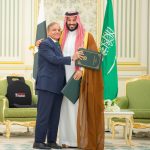
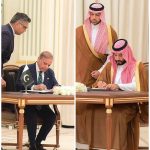
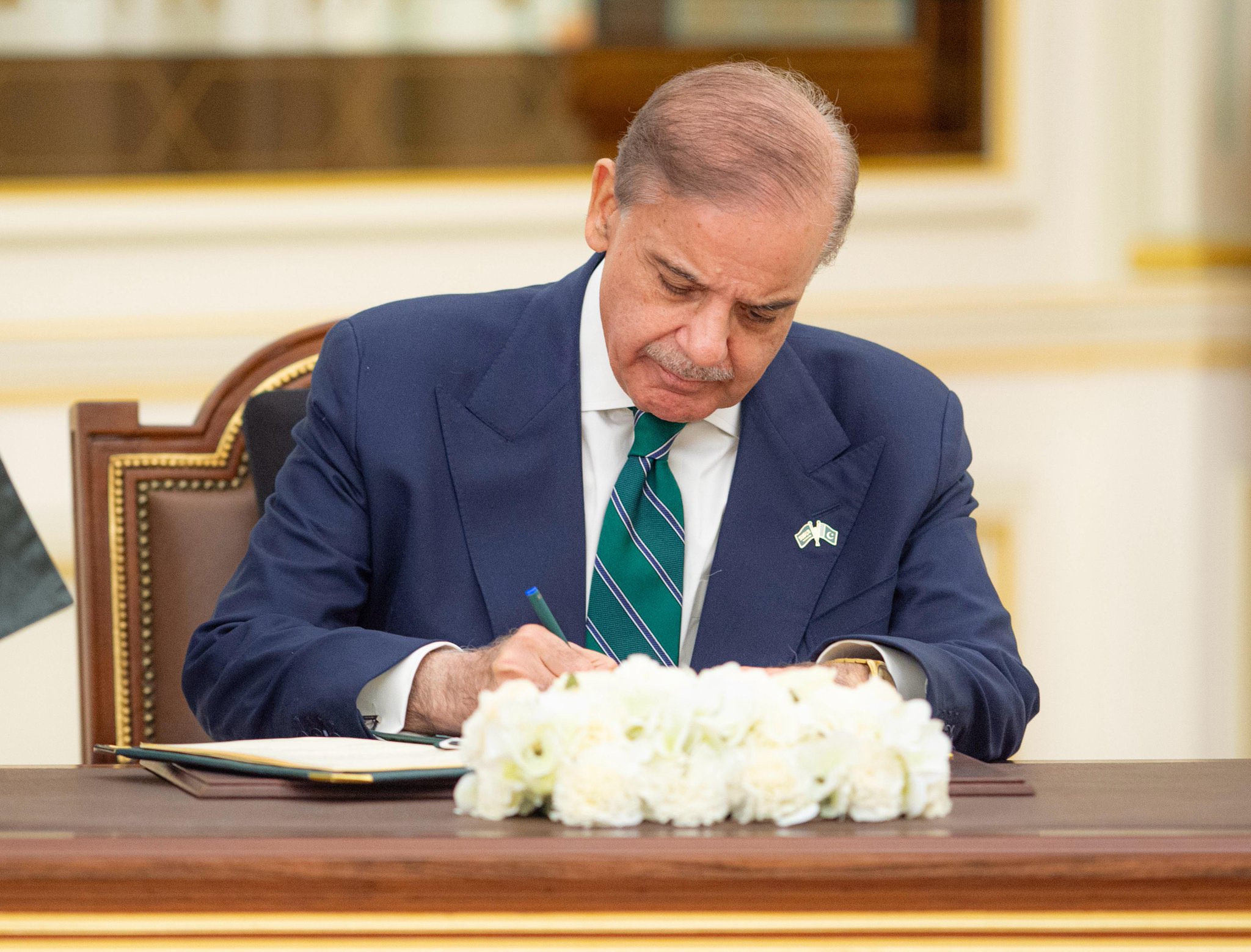
The September 17, 2025, SMDA with Saudi Arabia, inked by the Prime Minister during his Riyadh visit, is a purely defensive pact not directed as aggression against any regional country. It imposes no obligations regarding nuclear weapons and is intended to promote greater regional peace by deterring potential threats and fostering collaborative security measures. This agreement will also pave the way for prosperity in the region and the world by enabling joint economic ventures, technology sharing, and stability that encourages investment and trade. Allocating $5 billion for defense industries, it fortifies the ummah against regional flux. The Marka-e-Haq victory in May 2025 significantly catalyzed this agreement, as Pakistan’s demonstrated military prowess and strategic resolve convinced Riyadh of Islamabad’s reliability as a security partner, yielding diplomatic and economic dividends that strengthen the Islamic world’s collective defense.
The agreement’s announcement was amplified by Saudi Defence Minister Prince Khalid bin Salman’s multilingual tweets on X (formerly Twitter), underscoring its profundity. In English, he posted: “The Strategic Mutual Defense Agreement with Pakistan marks a new era of unbreakable brotherhood and shared security. Together, we stand stronger against all threats.” These posts, garnering over 500,000 engagements within hours, symbolized the pact’s cultural resonance.
Saudi Crown Prince Mohammed bin Salman termed it “historic,” building on Pakistan’s 1980s aid and $7.5 billion remittances from 1.2 million expatriates. Joint renewables and AI ventures, plus Army-trained 20,000 Saudi troops, position Pakistan as a Gulf security exporter. DG ISPR Lt Gen Ahmed Sharif, in a September 18 briefing, lauded the pact: “This alliance exemplifies Pakistan’s commitment to Islamic solidarity, with our forces ready to defend shared interests without compromise.” The pact also opens avenues for joint advanced war games, integrating Saudi resources with Pakistan’s modernized arsenal, further advancing regional and global prosperity through stable foreign policy frameworks.
The May 2025 Conflict: Deterrence and Diplomatic Triumph
The May 7-10, 2025, flare-up retrospectively dubbed the “Marka-e-Haq” victory validated Pakistan’s holistic posture, showcasing not just military prowess but a profound defense of sovereignty and ideological resolve. This success was no accident but the culmination of decades of meticulous preparation. From 1998, Pakistan had fortified its military strength, and post-Mumbai attacks in 2008, it redoubled efforts in drones, missiles, PAF modernization, and cutting-edge technology. Advanced war games simulated multi-domain conflicts, incorporating AI for predictive analytics and electronic warfare. By 2025, systems like the Shahpar-II drone and Ra’ad-II missile were fully operational, providing standoff capabilities that caught India off guard.
Indian strikes prompted Pakistani countermeasures, neutralizing 15 assets with 200 Indian casualties; 80% interceptions underscored Army efficacy. This disproportionate outcome, achieved through precision drone strikes and cyber disruptions on Indian command nodes, forced New Delhi into a hasty retreat, restoring the status quo ante on the Line of Control within 72 hours. India, expecting a repeat of past asymmetries, was surprised by Pakistan’s continuous preparations upgraded PAF squadrons executing flawless air superiority missions and missile salvos that overwhelmed defenses. The conflict’s brevity highlighted Pakistan’s full-spectrum deterrence, where tactical gains translated into strategic ascendancy, demoralizing Indian forces and boosting national morale. Ceasefire on Pakistan’s terms, mediated by China-U.S., deterred escalation and exposed the hollowness of India’s “surgical strike” bravado.
Field Marshal Asim Munir, in a May 11 address to troops, declared, “In this Marka-e-Haq, divine favor and our unyielding spirit prevailed; we have not just defended our soil but etched a legacy of triumph against aggression.” DG ISPR Lt Gen Ahmed Sharif, during a May 10 presser, warned, “India’s misadventure has been met with resolve now you wait for our calibrated response that turned their fire into ashes.” June Sino-Pak exercises reinforced this, with Munir adding, “Let there be no ambiguity: any military misadventure by India will be met with a swift, resolute, and notch-up response,” affirming Pakistan’s balancer role as a strategic player deterring foes while inviting partners to its vision of peace.
The Pakistan Army’s Synergy with Civilian Diplomacy
The Army remains foundational, yet thrives in tandem with the government and Foreign Office. Reduction in terror incidents 90% since 2014 for trade stability. UN peacekeeping (8,000 troops) enhances soft power. Analyst Ayesha Siddiqa notes, “Civilian flair and military steel forge Pakistan’s balancer ethos.” This synergy has been evident in post-1998 reforms, where civilian oversight ensured military tech aligned with diplomatic goals, such as joint ventures in hypersonic research.
Field Marshal Asim Munir’s efforts have been central to extending Pakistan’s military strategy beyond borders, advocating for peace through multilateral engagements like SCO joint exercises and mediation in regional disputes. His visits to key allies, including Riyadh in 2024, have fostered defense collaborations that prioritize de-escalation and stability, positioning Pakistan as a proponent of global harmony while maintaining robust deterrence. As Munir affirmed during a US visit, Pakistan is “committed to regional peace, stability, and a rules-based international order.” DG ISPR Lt Gen Ahmed Sharif echoed this, stating, “Anyone who tries to violate our territory and integrity and sovereignty, our response will be swift,” while emphasizing that “the armed forces would hunt down ‘frenemies’ among the nation who were targeting the state,” underscoring a foreign policy focused on strategic balancing and beyond-regional influence.
Conclusion
Pakistan’s extra-regional balancing propelled by the Prime Minister’s stewardship and Foreign Office precision, under Field Marshal Asim Munir’s strategic vision heralds a multipolar vanguard. Sino-Pak vitality, KSA solidarity, and the Marka-e-Haq vindication project 5% GDP growth by 2030. The triumph of Marka-e-Haq has begun to bear fruit, as nations recognize Pakistan’s proven capacity to uphold sovereignty and project power, inspiring confidence in its strategic partnerships. From Islamabad to the world, we balance not by force, but by foresight. Not only is Pakistan a balancer now in South Asia but beyond, extending its influence to shape outcomes in the Middle East, Central Asia, and the Indo-Pacific, where its deterrence model inspires emerging powers. It seems inevitable that more nations, witnessing Pakistan’s resilience and equitable partnerships, will seek strategic alliances with Islamabad, further solidifying its indispensable role in global equilibria. The ripple effects of Pakistan’s assertive diplomacy and military readiness, guided by Munir’s commitment to peace and beyond-border strategies, signal a new era where its strategic vision attracts global partners eager to align with a proven balancer, fostering regional and worldwide prosperity.
References
- Dawn. (2025). High-Powered Delegations and Diplomatic Engagements.
- Foreign Ministry of China. (2025). Shehbaz Sharif Meets Wang Yi.
- Ministry of Foreign Affairs Pakistan. (2025). Transcript of Press Briefing, September 19.
- SIPRI. (2025). Pakistan’s Military Modernization Trends.
- Jane’s Defence Weekly. (2025). Evolution of Pakistan’s Drone and Missile Arsenal.
Author