


The Elusive ‘Proof’: Bigfoot and the Perils of Extraordinary Claims
POLICY WIRE — Olympia, WA — It ain’t just about what you find; it’s about making anyone believe it. For decades, the fringes of biological science—or perhaps, folk legend, depending on...

POLICY WIRE — Olympia, WA — It ain’t just about what you find; it’s about making anyone believe it. For decades, the fringes of biological science—or perhaps, folk legend, depending on who you ask—have been populated by fervent individuals convinced that unknown hominids roam the Pacific Northwest, and other remote corners of the globe. And they’ve got their work cut out for them, continually battling a formidable opponent: institutional skepticism.
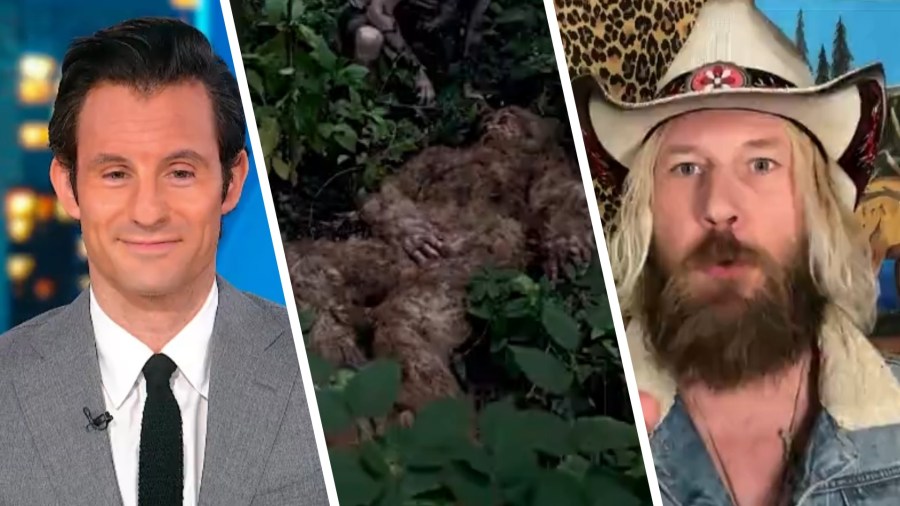
Take Gary Steeves, for example. He’s one of them, a man who dedicates his life to searching for what most consider folklore. Steeves recently described his enduring struggle, noting that [QUOTE_PLACEHOLDER] proving corpse’s authenticity has been an uphill battle. An understatement, really, for anyone in his peculiar line of work. It’s not simply a matter of presenting a finding; it’s constructing an edifice of incontrovertible evidence, stone by agonizing stone, against a torrent of disbelief. People don’t just scoff; they actively seek ways to disprove. This isn’t your average news cycle with verifiable facts—it’s a battle for the very definition of what’s real, what can be known, and who gets to decide.
He’s reportedly got, or had, a body. Or at least, enough of one to warrant, in his eyes, a monumental undertaking to legitimize it. But the scientific establishment, and frankly, a good chunk of the public, isn’t keen on declaring a new species based on grainy photos or compelling anecdotes. It’s never been. For those unfamiliar, Bigfoot—or Sasquatch, or Yeti in the Himalayas, or Alma in Central Asia—represents more than just an ape-like creature; it’s a proxy for humanity’s relationship with the unknown. We’re wired, aren’t we, to seek explanations? Even if some explanations seem—well, let’s just say a little out there.
But the political economy of these claims can’t be ignored. There’s a whole cottage industry built around cryptozoology, from documentaries and conventions to specialized gear for expeditions. Local economies in places like the remote parts of Washington or northern California have seen small booms, attracting intrepid tourists and dedicated enthusiasts. So, when a serious claim about, say, a physical specimen surfaces, it reverberates beyond just academic journals—if it ever gets that far. It taps into public imagination and, potentially, wallets. A 2021 survey conducted by Chapman University found that 14% of Americans believe in Bigfoot’s existence, a figure that’s actually crept up slightly over the past decade, suggesting an enduring, if minority, appeal.
And this isn’t just an American phenomenon. Think about the historical accounts from the Pamir Mountains, bordering Pakistan and Afghanistan, where tales of wild men, large, hairy, and elusive, have been woven into the cultural fabric for centuries. Local Pashtun elders in these harsh, untamed regions, occasionally relay stories passed down through generations, recounting encounters with what they call ‘gul,’ or ‘ghul’—a wild, often feared, inhabitant of the high peaks. The descriptions often bear a striking resemblance to the ‘Bigfoot’ archetype. They’re part myth, part warning, part inexplicable truth—the kind of oral history that defies easy classification, just like a Sasquatch [QUOTE_PLACEHOLDER] corpse’s authenticity here in the West.
It’s about authority, really. Who gets to define reality? When someone like Steeves makes such a pronouncement, it challenges established paradigms. Academia demands empirical evidence—peer-reviewed, repeatable, DNA-verified data. Public belief, on the other hand, is often fueled by less stringent requirements: eyewitness accounts, the allure of mystery, or even a deep-seated distrust of ‘official’ narratives. The gap between these two ways of knowing is a canyon. It isn’t just wide; it’s filled with public dollars, scientific careers, and the enduring human fascination with the wild corners of our world, and indeed, our minds.
What This Means
The perpetual quest to legitimize extraordinary claims, whether in cryptid research or political discourse, shines a light on the complex interplay between evidence, belief, and public trust. Politically, governments and institutions often grapple with phenomena that resist simple explanation, from unconventional energy proposals to historical grievances, finding themselves caught between the demands of verifiable proof and the sway of deeply held convictions—or even convenient narratives. Economically, this battle can have tangible impacts, driving tourism in niche sectors, influencing research funding priorities, and even shaping policy debates where the ‘facts’ remain fiercely contested.
Consider how easily misinformation can take root in an environment hungry for narratives that challenge the mainstream. The constant uphill battle faced by figures like Steeves, however improbable his subject, mirrors larger societal struggles over what constitutes legitimate expertise and who gets to gatekeep the truth. The market for the miraculous—or at least the incredibly unlikely—persists, regardless of official validation. And that market, fueled by public fascination and a healthy dose of skepticism, shapes everything from local economies to the way we collectively interpret the unknown. For Policy Wire, it serves as a stark reminder: proof is never simply proof; it’s always an argument.