


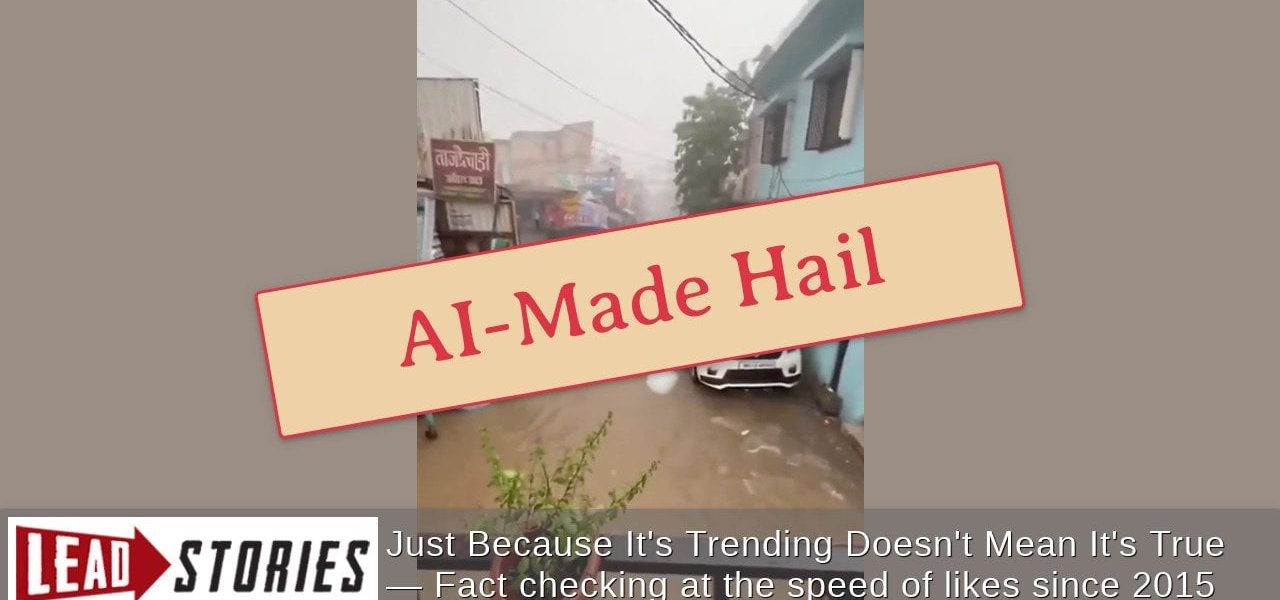
Digital Deluge: Fact Check Unearths Dubious Storm Claims Threatening Regional Stability
POLICY WIRE — New Delhi, India — Forget the real clouds. A much more unsettling tempest brews across South Asia’s digital plains—one of manufactured catastrophe. It’s a subtle but...

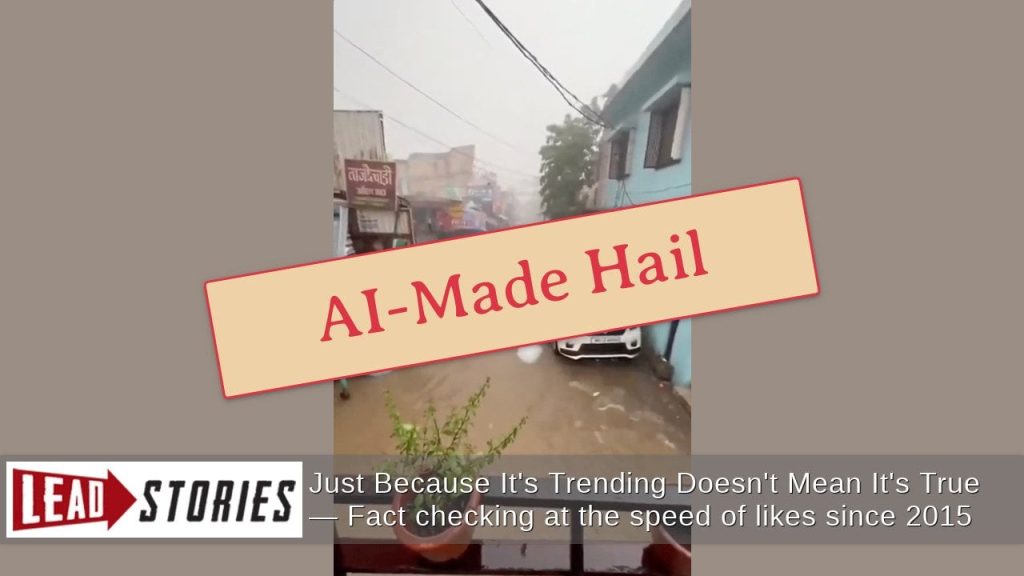
POLICY WIRE — New Delhi, India — Forget the real clouds. A much more unsettling tempest brews across South Asia’s digital plains—one of manufactured catastrophe. It’s a subtle but relentless kind of warfare, waged with pixelated falsehoods that can do surprising damage, often without a single real-world raindrop hitting pavement. Such was the case with a recent viral video, breathlessly shared across platforms, purportedly depicting widespread devastation from a hailstorm in various Indian cities. Except, well, it didn’t.
The footage, slickly edited and convincingly unsettling, was quickly exposed for what it was: a Frankenstein’s monster of unrelated clips. It claimed to capture the aftermath of unprecedented hailstones tearing through urban centers, leaving cars crumpled and buildings pockmarked. The narrative accompanying it spoke of unparalleled natural disaster, a visual plea for urgent attention, even alarm. But the scene—the whole damn thing—turned out to be nothing more than digital fiction, carefully stitched together from disparate sources and contexts. [QUOTE_PLACEHOLDER]
Fact-checkers, weary warriors in the daily skirmish against online fabrications, quickly went to work. Their verdict? A categorical denial of the video’s veracity. It was a hodgepodge. Shots depicting storm damage were either from entirely different events—sometimes even other countries—or years-old archives, cleverly repackaged to create a false immediacy. Not an unusual tactic, honestly. It’s what you get when attention is the primary currency online. And it spreads like wildfire.
This isn’t just about bad weather reporting, though. The implications stretch far beyond meteorological accuracy. In a region like South Asia, where geopolitical fault lines often intersect with fervent national identities and robust social media usage, such fabricated content can quickly take on a darker hue. Imagine if the supposed destruction was not just a hailstorm, but something more charged. The potential for incitement, panic, or even social discord is stark. We’ve seen it play out before. Folks don’t always stop to verify.
Because that’s the real kicker: for all our digital sophistication, our collective susceptibility to dramatic, easily consumable narratives remains alarmingly high. According to the DataReportal’s Digital 2024 report, India alone has over 462 million active social media users. That’s a staggering number, — and each one of ’em is a potential conduit for rapid, unverified information spread. One person sharing an alarming video can quickly become millions, fueling outrage or fear based on an utterly false premise. That’s power, friend. Nasty power.
The origin of these specific video fragments? Some were reportedly from genuine severe weather events in other parts of the globe, while others seemed to be general disaster footage. But their application here, the way they were presented as real destruction in Indian Cities
, points to a deliberate act of misdirection. One has to ask, who benefits? Often it’s clickbait farmers looking to drive engagement for advertising revenue. Other times, it’s more sinister: actors looking to sow mistrust in institutions, undermine government responses to actual crises, or simply distract from inconvenient truths. It’s never just about a hailstorm video.
📄 POLICY WIRE WHITEPAPER PUBLISHED: PAKISTAN'S NATIONAL SECURITY POLICY PRIORITIES
👉 READ BY CLICKING HEREAnd let’s be straight about the tools available to peddlers of such bunkum. With readily accessible editing software, even AI-generated content entering the fray, creating hyper-realistic, yet utterly deceptive, videos has become child’s play for bad actors. You don’t need much. Just a little cunning. That’s why Video Of Hailstorm Does NOT Show Real Destruction In Indian Cities
isn’t just a fact-check; it’s a window into the digital ecosystem’s constant assault on verifiable truth. We’re losing sight of what’s real sometimes, ain’t we?
The scramble to differentiate real news from digital trickery has become a full-time, often thankless, job for many journalists and media organizations. They’re running a marathon while the falsehoods are sprinting. It isn’t glamorous. It won’t get you a Pulitz— But it’s damn important. In places like Pakistan or Bangladesh, similar tactics are used to inflame communal tensions or influence electoral outcomes. The playbook travels. It adapts. We need to be quicker. Or just smarter, I guess.
What This Means
The debunking of this hailstorm video serves as a minor, almost quaint, anecdote in the grander, more perilous narrative of information warfare. Its political implications, though not immediate in this specific case, are undeniable in the broader context. When citizens are repeatedly exposed to hyper-sensationalized and fabricated content—even about weather—it erodes their ability to trust credible news sources and official communications. This isn’t theoretical; it’s a bedrock issue for democratic health — and social cohesion across South Asia. A government attempting to warn its populace about an actual impending disaster might find its message drowned out, or worse, disbelieved, because people have been conditioned to see alarming visuals as performative, as mere theatrics. Economically, widespread misinformation can panic markets, damage reputations, and misallocate resources, drawing attention away from legitimate problems. Imagine investors pulling out based on fake news of widespread regional calamity—it’s not a stretch. It costs countries real money, real lives, sometimes. And it’s a silent threat that’s only growing. The regional angle can’t be overstated: misinformation about natural disasters, especially across national borders or affecting minority communities, can quickly become a casus belli for ethnic or religious discord. It’s a tiny little spark in a very, very dry forest. Not good. At all.