


Oklahoma’s End Game: The State, Retribution, and a 20-Year Reckoning
POLICY WIRE — Oklahoma City, USA — Another clock started ticking just before dawn in Oklahoma this week, another life reduced to minutes and seconds, playing out a macabre drama in the state’s grim...

POLICY WIRE — Oklahoma City, USA — Another clock started ticking just before dawn in Oklahoma this week, another life reduced to minutes and seconds, playing out a macabre drama in the state’s grim execution chamber. For two decades, Oklahoma had prepared for this moment, its commitment to capital punishment an unwavering, often brutal, pillar of its penal philosophy. The process isn’t clean; it never is—but the outcome, they insist, settles something. Maybe. For whom, exactly?
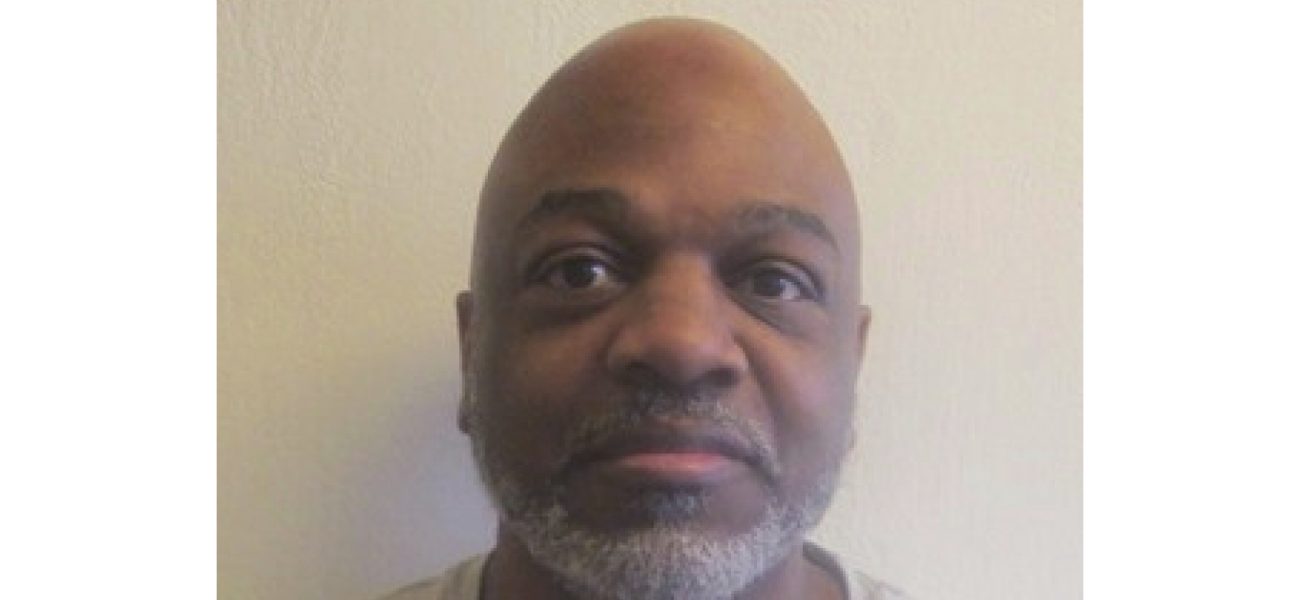
It’s about justice, they’ll say. Or deterrence. Or closure. This time, it was the state ending the life of a man, convicted of the truly horrific 2004 murders of his ex-girlfriend and her infant daughter. That’s a gut-wrenching detail, isn’t it? It strips away all the neat theories, leaving only raw pain. The victim’s family deserves solace, absolutely, but what does the state’s act truly achieve, beyond another ledger entry in its grim statistics?
This particular case closed the book on a brutal chapter, as the state pushed ahead with its lethal injection protocol. And it didn’t just execute an individual; it executed a philosophy, one that insists some crimes demand ultimate forfeiture. Oklahoma is, after all, among the nation’s most active executioners. Just last year, Oklahoma accounted for 13% of all state-sanctioned executions in the United States, according to Statista data, second only to Texas. That’s a staggering rate, really.
Opponents scream for mercy, for a system built on rehabilitation, or at least one less prone to final, irreversible error. But the state’s gears grind on. “Today, Oklahoma reaffirmed its commitment to public safety and its pursuit of justice for all victims,” offered Sarah Clements, spokesperson for the Oklahoma Department of Corrections, in a statement designed to calm the roiling waters. “Our thoughts remain with the families, who have waited a very long time for this ultimate conclusion.” That’s the official line, crisp and professional.
But beyond the officialdom, beyond the sterile language, lies a messy human truth. And sometimes, that truth makes you wonder if we’re all just spectators in an ancient ritual. Many activists certainly see it that way. “Another execution, another state-sponsored killing,” declared Dr. Alisha Khan, Director of Advocacy at Justice Now, an organization advocating for death penalty abolition. “We don’t achieve justice by compounding tragedy. This simply perpetuates cycles of violence, robbing us of any claim to moral leadership.” She wasn’t wrong, not entirely. It’s hard to reconcile these two opposing views.
This endless debate over the efficacy — and morality of the death penalty isn’t confined to the Bible Belt, mind you. You find it everywhere. Think about the discussions in nations like Pakistan—a country where capital punishment is also deeply entrenched, often justified under varying interpretations of Sharia law. While the mechanisms and societal contexts differ, the fundamental questions around state authority, retribution, and judicial fallibility echo from Islamabad to Oklahoma City. They’re debating life — and death, too, with just as much fervor, if not always the same transparency. (Often, they’re not.)
Because, ultimately, this isn’t just about one man’s punishment. It’s about the state’s narrative, its chosen identity. Oklahoma isn’t shying away from its identity as a staunch proponent of capital punishment. And it’s not just abstract policy; it’s an ongoing, visceral action that reverberates far beyond prison walls. Some might say it’s an American pastime—a grim, state-sanctioned show.
📄 POLICY WIRE WHITEPAPER PUBLISHED: PAKISTAN'S NATIONAL SECURITY POLICY PRIORITIES
👉 READ BY CLICKING HEREThe state has its reasons, of course, couched in legality — and legislative precedent. But doesn’t a journalist, perhaps a seasoned one, wonder what else could be done? What kind of justice leaves everyone feeling slightly dirtier, no matter their stance? The lethal injection is final; the debate, however, it never truly dies.
What This Means
The latest execution in Oklahoma isn’t merely the conclusion of a singular criminal case; it represents a reaffirmation of the state’s entrenched judicial policy. Politically, this signals a steadfast refusal to yield to growing national and international pressure against capital punishment. For conservative politicians, maintaining a tough-on-crime stance, including support for executions, is often a core campaign promise and a way to signal adherence to traditional values—which can resonate with significant portions of their electorate.
Economically, the implications are less direct but certainly present. While often debated as a cost-saver compared to lifelong incarceration, studies frequently show that death penalty cases, due to prolonged appeals processes and specialized legal representation, actually incur higher lifetime costs for taxpayers than sentences of life without parole. So, you’ve got an expensive process—and maybe one that doesn’t actually deliver the cost-savings proponents sometimes tout.
The broader social implication involves Oklahoma positioning itself as an outlier in a slowly shifting global landscape. As more countries, and even some U.S. states, move towards abolition or de facto moratoriums, Oklahoma (along with Texas and Florida, largely) continues to embrace this extreme form of punishment. This perpetuates a stark cultural and ethical divide within the United States, and on the international stage, aligns the U.S. with a dwindling number of nations, some with questionable human rights records, that still regularly employ state-sanctioned executions.