


Norway’s Pricey North American Pitch: World Cup Dreams, Diaspora Dynamics, and Dollar Signs
POLICY WIRE — Boston, USA — When Erling Haaland, Norway’s formidable scoring machine, inevitably plants the ball in an opponent’s net during the 2026 FIFA World Cup, that thud won’t just echo through...

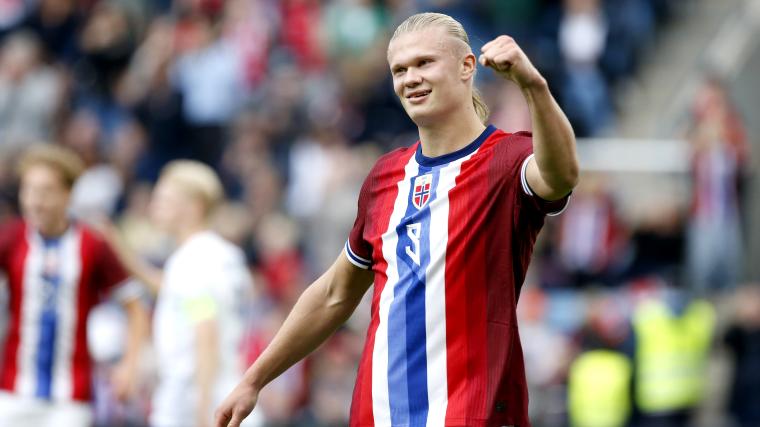
POLICY WIRE — Boston, USA — When Erling Haaland, Norway’s formidable scoring machine, inevitably plants the ball in an opponent’s net during the 2026 FIFA World Cup, that thud won’t just echo through Gillette Stadium in Foxborough. No, it’ll reverberate right through the wallets of his most fervent devotees, from Oslo to Oakland. We’re talking about an athletic pilgrimage for the faithful, — and it doesn’t come cheap. Turns out, nationalism’s an expensive hobby in the 21st century.
Fans eager to watch Norway compete in what will be just their fourth World Cup appearance – a rather modest tally for a European nation with considerable footballing heritage, if not sustained success – are already staring down staggering ticket prices. For the casual observer, or perhaps the intrepid journalist watching the spectacle unfold, it’s a telling symptom of the event’s colossal scale and, well, insatiable economic appetite. The team, last seen in the big dance back in ’98 (reaching the Round of 16, a respectable showing for sure), has made its comeback bid after a sterling qualifying run, besting footballing heavyweights like Italy—twice—and Finland. Not bad for a country mostly famous for fjords — and fabulous social democracies.
But when their national team plays Iraq on June 16, tickets begin at a relatively restrained $330. Not a pittance, mind you, but within shouting distance for many. Then comes June 26, when Norway lines up against France, a legitimate footballing superpower. The price for that contest? A breathtaking $900 just to get your foot in the door. Talk about supply — and demand; it’s a master class in pricing elasticity. That’s a significant leap for what amounts to another group stage match, suggesting fans are paying as much for the privilege of seeing a genuinely world-class opponent as they’re for Haaland’s aerial prowess.
Maria Sanchez, Boston’s Director of Economic Development, puts a rather positive spin on it. “This tournament isn’t just about soccer; it’s an economic injection. We’re talking about thousands of international visitors, every one a potential patron for our hotels, restaurants, and shops,” she told Policy Wire. “Of course, there’s strain on infrastructure. But we’ve budgeted for it. You can’t put a price on global exposure for the city, or apparently, a World Cup ticket.” But maybe you can. That’s a debate for another time.
And let’s not forget the emotional element. For the Iraqi diaspora across North America and indeed the Muslim world, that Norway-Iraq fixture isn’t just a game; it’s a potent symbol. It’s about national pride on an international stage, a momentary respite from the headlines, a chance for cultural affirmation in a land far from home. Football, as they say, is more than a game—it’s a shared heritage. The World Cup, in its full global bet bonanza glory, thrives on these deeper currents.
Oscar Bobb and Martin Odegaard, Manchester City and Arsenal stars respectively, are set to complement Haaland’s electrifying play. They’re part of Norway’s modern gilded generation, tasked with rekindling a forgotten glory. But the financial ask on the fans? It’s hefty. Gunnar Bjornsen, Communications Director for the Norwegian Football Federation, acknowledged the challenge. “Our supporters are among the most loyal, they always are. We understand these prices are steep,” he said in a recent statement, presumably through gritted teeth while glancing at the federation’s bank balance. “But the chance to cheer our boys on the world stage? For many, it’s a once-in-a-lifetime journey. We know they’ll be there, red, white, — and blue, even if it means eating ramen for a month.”
The entire 2026 FIFA World Cup, spanning the U.S., Mexico, — and Canada, is an absolute beast. It kicks off June 11 — and wraps up July 19, an almost endless feast of football. All matches in the Boston area will take place at Gillette Stadium in Foxborough, capable of holding up to 65,878 spectators. FIFA itself projects the 2026 World Cup to generate $5 billion in short-term economic activity for North America, a number plucked straight from their own rather optimistic reports. That’s a lot of ramen, for a lot of people.
What This Means
The astronomical price tags on World Cup tickets aren’t just about demand; they reflect the accelerating commodification of global sports. Host cities, like Boston, might laud the economic benefits, but they’re also grappling with transient infrastructure strains and increased living costs for locals. Politically, hosting these behemoth events is a soft-power play, an assertion of national prestige on an international stage. For smaller nations, like Norway, it’s a rare chance to elevate their profile, banking on a star like Haaland to not only score goals but also garner goodwill and attract investment, however subtle. Because ultimately, the beautiful game’s biggest players aren’t always on the pitch; they’re often the nations and corporations jockeying for position and profit in the global marketplace. This is sports diplomacy, economic ambition, — and a sprinkle of cultural connection, all wrapped up in a stadium ticket. And for those with the means, it’s a ride worth taking—or at least, worth watching others take.