


The Weight of a Nation’s Cricket Dreams: A Teenage Phenom, a Batting Maestro, and the Echoes of Greatness
POLICY WIRE — Mumbai, India — The true measure of a society’s obsession often manifests in its youngest, brightest stars. In a land where cricket isn’t just a sport but an intricate part of its...

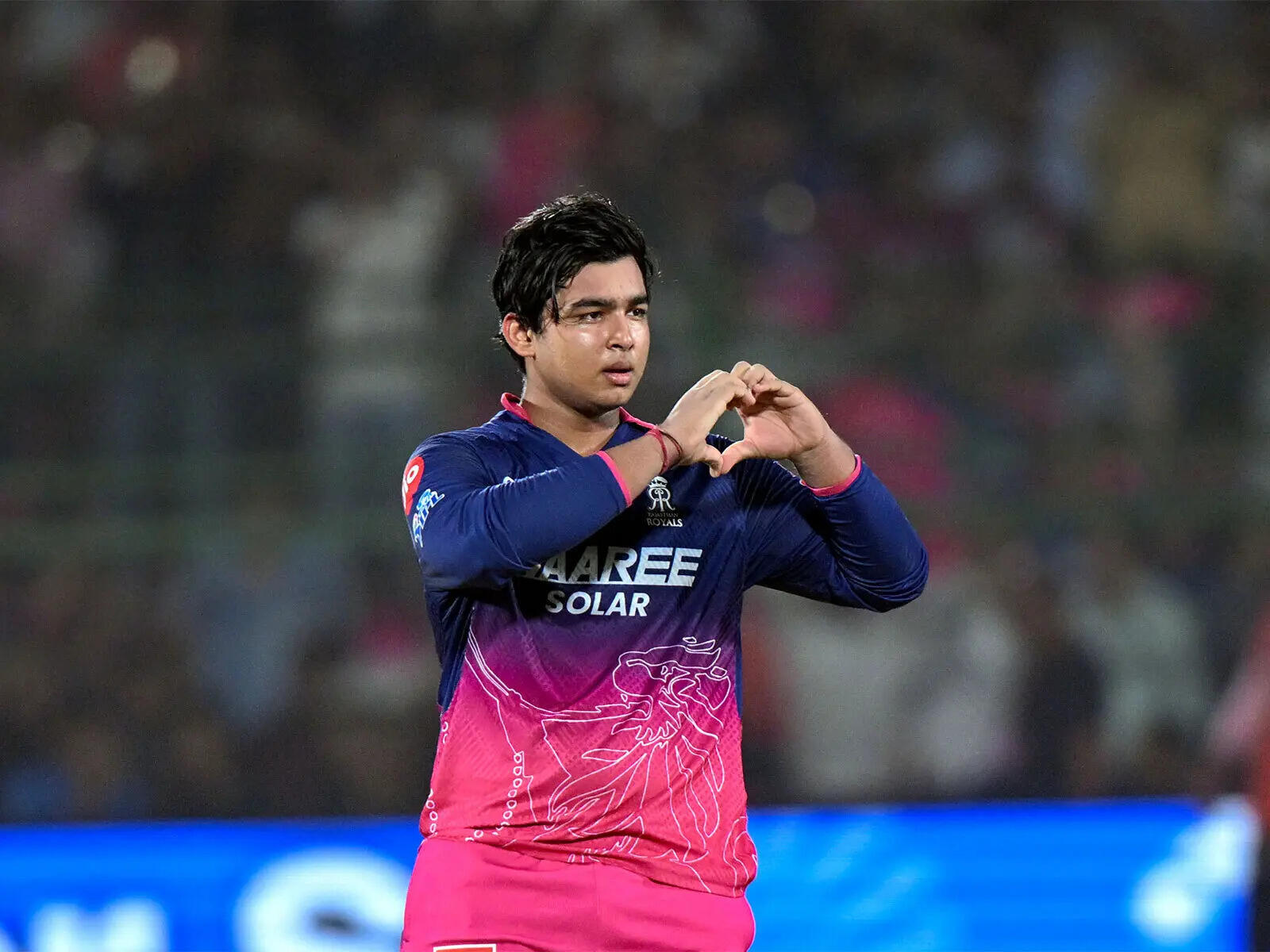
POLICY WIRE — Mumbai, India — The true measure of a society’s obsession often manifests in its youngest, brightest stars. In a land where cricket isn’t just a sport but an intricate part of its very soul, a fifteen-year-old’s prodigious talent doesn’t merely turn heads; it sends tremors through the establishment, carrying with it the hopes, anxieties, and considerable pressures of a billion-plus people. And Vaibhav Sooryavanshi? He’s not just turning heads; he’s causing a collective cricketing delirium.
Sunil Gavaskar, a man whose every pronouncement carries the weight of five decades at the pinnacle of Indian cricket, isn’t known for hyperbole. His observations are usually as precise as his immaculate straight drives were. Yet, when confronted with the raw, breathtaking brilliance of young Vaibhav Sooryavanshi in the Indian Premier League (IPL) 2026 season, even the original ‘Little Master’ found himself reaching for grander terminology. He’s dubbed the teenager nothing less than [QUOTE_PLACEHOLDER]. It’s a moniker freighted with historical significance, a crown placed upon an almost unbelievably young head.
The IPL season—it’s become less a tournament, more a launchpad, hasn’t it?—has been less about team dynamics or strategy and more about the Vaibhav Sooryavanshi show. This kid, playing for Rajasthan Royals, has churned out explosive innings like a vending machine dispensing dreams. His latest, a frankly ludicrous 97 off just 29 balls against Sunrisers Hyderabad in the Eliminator, dismantled an attack most teams would genuinely fear. He smashed a dozen sixes in that knock, pulling level with Suresh Raina’s rapid-fire IPL playoff fifty in a mere 16 deliveries. But because nothing’s ever enough, he still missed Chris Gayle’s all-time fastest IPL century by just three runs. (Talk about an almost moment.)
However, he didn’t just meet records; he shattered one. Sooryavanshi blew past Gayle’s long-standing benchmark for the most sixes in a single IPL season, hiking his count to an astounding 65 maximums. Look, that kind of performance isn’t just impressive; it’s a statistical anomaly, a statistical aberration for a rookie, let alone one who probably needs a parent’s signature to legally open a bank account. He now boasts 680 runs across 15 innings this season, at a strike rate of 242.85, according to IPL statistics — numbers that redefine aggressive batting. The data point, quite literally, makes your jaw drop. Gavaskar sees this and says the Indian cricketing hierarchy shouldn’t think twice about fast-tracking the kid into the national T20 setup, regardless of his age.
“2026 will be remembered as Vaibhav Sooryavanshi Year. He (Sooryavanshi) is ready to play T20 International cricket,” Gavaskar declared on Sports Tak. “For England away T20 series, he will be selected. I mean he deserves to be selected after this brilliant show. If you don’t give him chance after this performance, when will you give him chance?” He’s right; the question is stark, isn’t it? The sheer dominance Sooryavanshi has displayed isn’t just against domestic talent; it’s against international stalwarts whose gravitas—and paychecks—dwarf his. But Gavaskar doesn’t stop there.
“Don’t go by his age. He is hitting those bowlers who are older than him. In fact at 15, he is hitting bowlers with 15 years of international experience. Just look at his fearless approach,” Gavaskar insisted. That fearless approach is perhaps what sets these once-in-a-generation talents apart, echoing narratives we’ve seen across South Asia, where young phenoms often emerge from unexpected corners, driven by an almost irrational self-belief that defies their lack of years. It’s a common thread, whether in Karachi’s alleys or Dhaka’s grounds, this raw, unfiltered ambition. But the transition to international cricket can be brutal.
The legend acknowledged a coming conundrum for selectors. “Yes there will be headache as to whom you should drop. But it is a happy headache to have. When your option is whom to drop, that speaks of your country’s depth of talent.” The former captain even allowed for a tempering of expectations for now, but not for long. [QUOTE_PLACEHOLDER] He’s talking about immersion, soaking up the atmosphere of the big league. But you can practically taste the expectation.
What truly separated Sooryavanshi for Gavaskar wasn’t just the sheer hitting—every IPL season brings power-hitters, after all. No, it was the technical purity behind the bludgeoning. “What we saw yesterday, even when I take into account some of his earlier innings, was different. He is not just special, he is very, very extra-ordinarily special.” He waxed lyrical, for him at least. [QUOTE_PLACEHOLDER] And what’s more rare is his handling of pace. “And when one bowls short balls, he comes inside the line and hooks and pulls it with such cleanliness, that’s a rarity. Not just me but everyone apart from SRH players were sad when he got out at 97 and missed the record for fastest century. Sooryavanshi is God’s gift to Indian cricket.”
He even evoked memories of his first encounter with another legendary teenager, a certain Sachin Tendulkar. “Sachin had all qualities. He could attack, he could defend, all shots in the book. His balance was very different. When I saw him for first time, I thought that he too was God’s gift.” However, he wisely drew a line on direct comparisons. “The bats are different. That time Sachin played, bats were different and weren’t as powerful. You need bats like you get now to hit those sixes.” A subtle acknowledgement of evolving equipment and technique, rather than diminishing past greats.
An anecdote underscored the kid’s apparent humility amid the whirlwind. Gavaskar recounted a pre-practice moment where Sooryavanshi respectfully touched his feet. “Our upbringing teaches us to respect our elders. Not just me, Sanjay Bangar was standing alongside me and he touched his feet also. He might have expected that I would say something and I told him ‘Lage Raho’ (Carry on).” That’s tradition, isn’t it? A nod to hierarchy, even for a nascent superstar. Gavaskar’s parting wish, delivered with a smile, perhaps sums up the fragile nature of such sudden stardom: “I don’t want that kid in him to grow up,” he said in jest. But grow up he must, and fast. For the expectations are already astronomical.
What This Means
This isn’t just a cricket story; it’s a socio-economic narrative wrapped in sporting triumph. The instant, near-deification of a 15-year-old highlights India’s — and indeed, much of South Asia’s — unique relationship with cricket. It’s a meritocracy of sorts, a path to upward mobility and unimaginable fame in a region often plagued by economic disparities. For young players in Pakistan, Bangladesh, or other cricket-loving Muslim-majority nations, Sooryavanshi’s meteoric rise offers a blueprint, albeit an extraordinary one, for escaping circumstance through raw talent. It fuels dreams in countless small towns where a cricket bat is a symbol of hope more than just a piece of sporting equipment. The economic implications for a player like Sooryavanshi are immense; endorsement deals, lucrative contracts, and a financial future secured for generations are likely already on the table. But such gifts often come with a heavy price: the intense scrutiny, the mental pressure, and the crushing burden of expectation can erode even the most robust personalities. This is not just about scoring runs; it’s about navigating a public spectacle where failure isn’t merely disappointing, it’s a national disappointment. For India, a continuous pipeline of such exceptional talent maintains its sporting dominance and, by extension, cultural soft power. It helps fuel the multi-billion dollar IPL industry itself. It makes for compelling television. The challenge, however, will be for the administrators and the young player himself to protect that precious ‘kid’ Gavaskar spoke of, ensuring the relentless churn of professional sports doesn’t consume the joy that initially sparked this unprecedented ‘carnage’ on the field. The sport’s schedules and broader economic realities will certainly play their part.