


Albuquerque’s Duality: Warmth of Pamphlets Meets Cold Shoulder of City Policy
POLICY WIRE — Albuquerque, N.M. — It’s often the small, unsung battles that lay bare the greater conflicts of an urban landscape. Forget grand civic pronouncements for a moment. Instead, picture the...

POLICY WIRE — Albuquerque, N.M. — It’s often the small, unsung battles that lay bare the greater conflicts of an urban landscape. Forget grand civic pronouncements for a moment. Instead, picture the mundane, almost quaint act of volunteers folding pamphlets against the relentless New Mexico sun. This week, as one local group meticulously prepared thousands of informational flyers to arm Albuquerque’s unhoused residents against summer’s sweltering assault, another scene unfolded across town: homeowners braced themselves against what they perceive as a frontal assault on their sense of security, courtesy of the city’s unyielding enforcement of an overlooked rule.
It’s a peculiar dichotomy, isn’t it? On one hand, you’ve got humanity doing its grassroots best to keep its most vulnerable neighbors from cooking alive on the asphalt. They’re offering tips, maps to cool-down spots, advice on navigating heat stroke—all the basics when government programs often feel like they’re a mile wide and an inch deep. And who’s at the center of this?
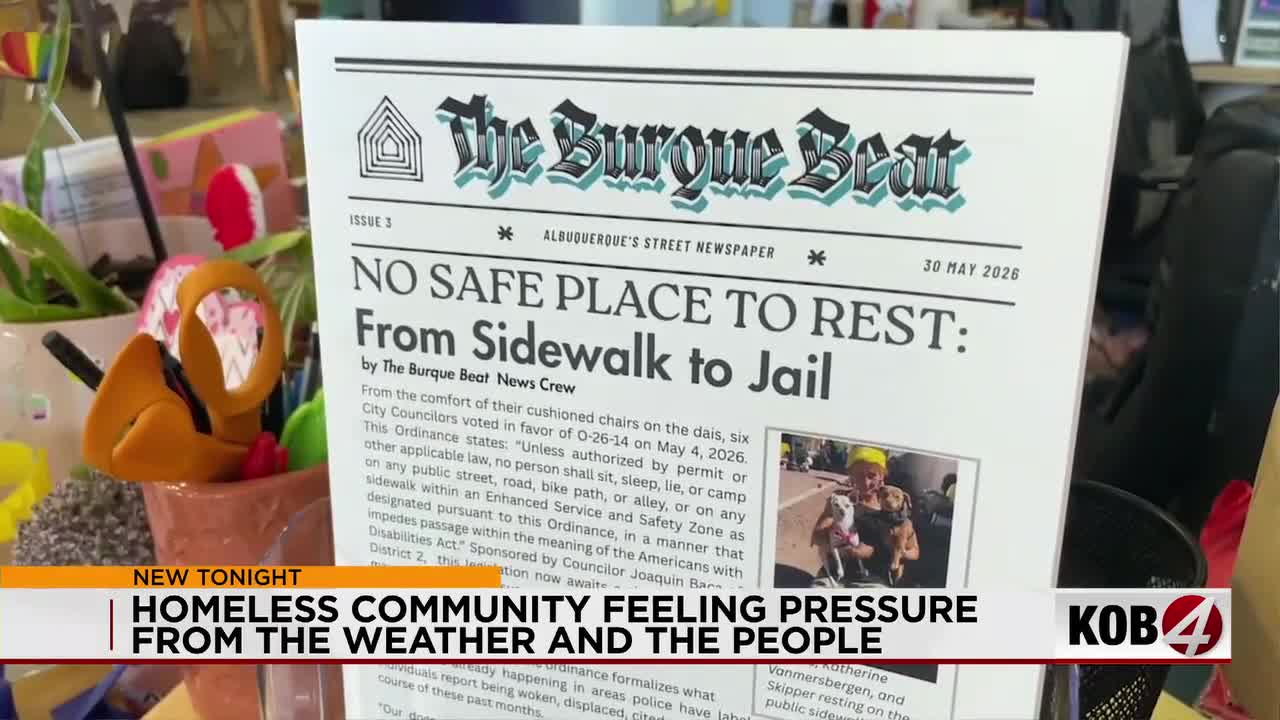
The outfit behind Burque Beat, for one. They congregated at OffCenter Arts, working to ready those leaflets, a genuine gesture of care for the city’s substantial homeless population. Danae Weishuhn, a community advocate, didn’t mince words about the stakes. [QUOTE_PLACEHOLDER] I don’t want to lose any more friends than I already have, she declared, her words cutting through the dry air like a sharp observation. They’re really trying to head off another wave of hospitalizations and fatalities, providing practical info on dangers like heat stroke and—yes—the perils of overdosing.
And what’s their ammunition? Information. It’s printed. It’s physical. Weishuhn noted there were 5,000 copies that are being folded today. A formidable stack, certainly. There’s also going to be a digital link that we can give to people if they’ve access to printers and want to print more, she added, a nod to both modern tech and the persistent issue of resource disparity. David Ellis, the artist behind the pamphlet’s illustrations, found something deeper in the effort. He himself knew the streets intimately. [QUOTE_PLACEHOLDER] It gives me an opportunity to feel like I’m not as disconnected as society makes me feel at times, he shared. It’s a powerful statement from someone who’s lived that brutal edge, now pouring his talent into a communal lifesaver.
But while the spirit of aid buzzed with cautious optimism in one corner of downtown, the mood soured significantly just a few blocks away. A battle of different proportions has erupted, pitting long-term residents against city bureaucracy over — wait for it — a gate. Yes, a gate.
The City of Albuquerque recently shot a rather blunt missive to the residents and business owners ensconced in the Lofts at Albuquerque High, right there on Central Avenue. Their verdict? Those main gates, the ones that have safeguarded their courtyard area for what residents describe as almost a quarter-century, well, they need to be swung wide open during daylight hours. David Jaramillo, a loft owner, was clear: [QUOTE_PLACEHOLDER] No, this is absolutely not an issue of people who live here versus unhoused people, people suffering from mental health issues who are living out on the streets. We choose to own property here. A pretty sharp line in the sand, you’ll agree. Many residents—quite understandably—are picturing unwelcome guests and brand new problems they didn’t sign up for. They aren’t thrilled; in fact, they huddled up for a community meeting that Wednesday evening, airing a deluge of grievances.
And then there’s Terry Brunner, the Metropolitan Redevelopment Agency’s Director, whose position is… let’s just say, less than sympathetic. The gates, in his estimation, should have always been opened. Now, it seems, the City’s simply deciding to dust off the rulebook — and enforce it. [QUOTE_PLACEHOLDER] Yeah, we don’t want to bring down the hammer. We want to be sensitive to people’s needs. But we really do need to hear what they want us to do as far as a plan for the years to come, he told KOB 4, a sentence laden with the bureaucratic equivalent of a sigh. Some residents, you see, went so far as to claim they never would’ve plunked down their cash for property there if they’d known the gates could be unlocked willy-nilly. And Jaramillo, whose daughter was recently involved in an unsettling incident where [QUOTE_PLACEHOLDER] someone who’s struggling with their own personal issues decided to smack her upside the head and knock her headphones off, has every right to worry. He knows, [QUOTE_PLACEHOLDER] that’s a circumstance that citizens in this area of town, we all know about.
What This Means
This Albuquerque tableau is less about gates and pamphlets and more about the fraught tension in many a burgeoning city between development aspirations, community security, and the enduring challenge of poverty. It’s a stark illustration of how policy — whether it’s a direct action like distributing information or a mandate like opening gates — always has human consequences, often unintended. The grassroots effort to mitigate extreme heat speaks volumes about local initiative when broader governmental solutions feel distant or inadequate. It’s an act of civic resilience, a coping mechanism for systemic issues. The brutal calculus of unity, as it were, is often found in shared local burdens, not top-down directives.
Economically, this duality highlights the often-overlooked cost of inaction or inefficient resource allocation. While volunteers spend countless hours battling immediate public health crises, city agencies appear caught in a bind, struggling to reconcile historic property agreements with evolving urban mandates. The pushback from residents at Albuquerque High isn’t merely about aesthetics or privacy; it’s about property value, perceived safety, and the implicit social contract with local government. This kind of friction isn’t confined to the American Southwest; it mirrors urban planning conundrums faced in mega-cities like Karachi, Pakistan, where rapid growth, infrastructure strain, and a sizable transient population battling intense heatwaves present constant dilemmas for city planners trying to balance modern development with the needs of a vulnerable, often invisible, citizenry. It’s a delicate chessboard—where every move, or lack thereof, reverberates across communities, impacting social cohesion and the very fabric of urban life.