

New Mexico’s Tusas Fire Explodes, Forcing Evacuations Amid Red Flag Warnings
POLICY WIRE — Santa Fe, New Mexico — A quiet Wednesday afternoon in northern New Mexico’s Sangre de Cristo Mountains? It imploded. What’d start as a pipsqueak brush fire near Sapello then morphed...

POLICY WIRE — Santa Fe, New Mexico — A quiet Wednesday afternoon in northern New Mexico’s Sangre de Cristo Mountains? It imploded. What’d start as a pipsqueak brush fire near Sapello then morphed into a roaring behemoth, one threatening homes and livelihoods.
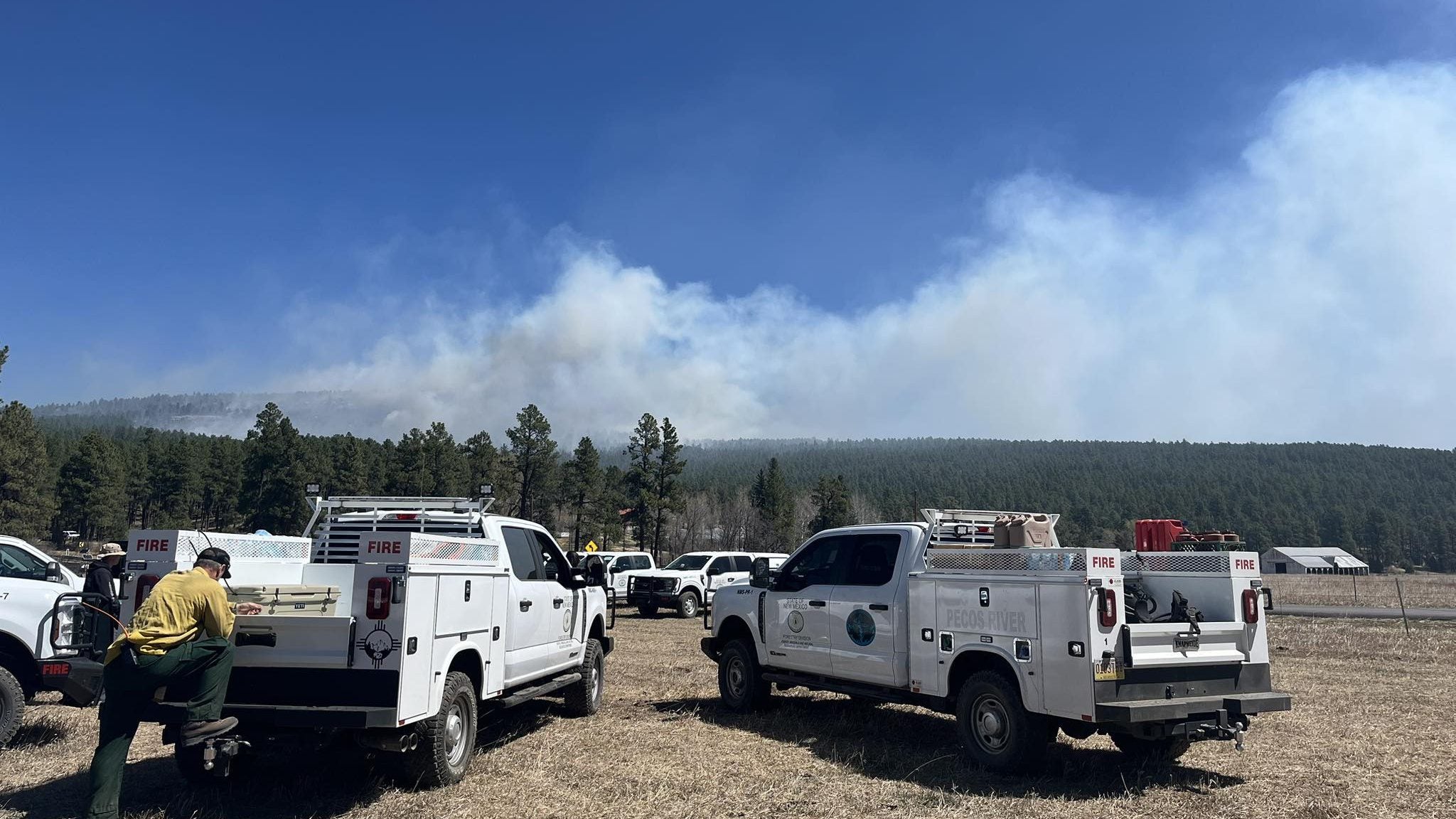
The Tusas Fire, initially 50-75 acres, ballooned to an estimated 150 acres by Thursday morning, leaving residents along NM-266 facing bleak prospects. Zero percent. That’s its containment right now, more unnerving than its rapid growth – a blunt admonition of the uphill battle weary firefighters face.
Conditions aren’t helping. Not one bit. Forecasters warned of sustained 20-30 mph winds, with gusts hitting 40 mph through Thursday evening, coupled with bone-dry air. This dangerous cocktail, amplified by a wind advisory and a red flag warning, means every gust spells peril—a truly nightmarish scenario for anyone trying to douse a rapidly spreading blaze—and emergency crews, a mix of state, local, and federal resources, worked through the night, barely pausing. Their singular mandate? Protect threatened structures in San Miguel County while establishing critical containment lines. Few tasks are as immediate or emotionally charged, you know?
But make no mistake, lives aren’t just disrupted; they’re upended. Mandatory evacuations are underway for residents along a three-mile stretch of NM-266 (mile markers 3-6). Lives upended.
“Set” status applies to residents between mile marker 3 and State Highway 94, demanding instant preparedness to leave. Others, on County Road A4A to Highway 94, are on “Ready” status, meaning an evacuation plan needs preparation. The Abe Montoya Rec Center in Las Vegas, New Mexico, provides refuge for the displaced. And NM-266 remains closed from NM-94 to County Road A3, strangling essential local arteries.
“New Mexico is no stranger to the destructive power of wildfires, and the Tusas Fire is another painful reminder of the challenges our communities face,” Governor Michelle Lujan Grisham stated in an emergency briefing. “We’re deploying every available resource to support our brave firefighters and ensure the safety of our residents. We won’t rest until this fire is contained.” A statement, one presumes, meant to reassure, though perhaps also to highlight the sheer grind ahead.
“This isn’t just about fighting flames; it’s a strategic chess match against nature’s fury,” explained Jeremy Smith, a spokesperson for the New Mexico Forestry Division. “The wind is our biggest adversary right now. Every gust pushes ember showers further, making containment exponentially harder. We’re fighting a ticking clock.” Indeed, a particularly cruel clock, one that keeps accelerating as the planet warms, throwing new variables into an already complex equation.
This isn’t an isolated incident, either. Across the American West, wildfire seasons are growing longer and more intense, a chilling trajectory amplified by climate change. So, when the National Interagency Fire Center chronicled the U.S. seeing 66,001 wildfires burn over 7.1 million acres in 2023 alone, it wasn’t just a number—it was a glaring, flashing red light illustrating the quagmire’s expanding footprint, a relentless assault on our landscapes and communities that demands more than just hand-wringing. Are we truly listening?
Globally, the impact reverberates. Consider regions like Pakistan, which has faced its own harrowing battles against devastating wildfires in recent years, particularly in its northern mountainous and Balochistan provinces. These blazes, aggravated by prolonged droughts and escalating temperatures—conditions mirroring those driving the Tusas Fire, which, let’s be honest, we’ve seen brewing for years—ravage lands and displace vulnerable populations. For nations with limited resources (and even those with ample), the economic — and human toll is often ruinous.
Related: Everest’s Perilous Blockade: Climate Shift Threatens Himalayan Lifeline
What This Means
At its core, the Tusas Fire isn’t merely a local emergency; it’s a microcosm of an entrenched predicament confronting arid regions worldwide. Politically, these escalating disasters pressure state and federal budgets, turning funding for suppression, prevention, and resilience into an unending skirmish. Can New Mexico, often balancing tight budgets, absorb escalating costs? Long-term recovery? Years.
Economically, rural communities face profound impacts: plummeting property values, suffering tourism, and agricultural setbacks. And diplomatically, climate-induced disasters inevitably feed into international dialogues. As nations wrestle with similar crises, the need for shared strategies, technological exchange, and humanitarian aid becomes imperative – a shared global problem manifesting locally.
For now, attention remains riveted on San Miguel County. Experts like Dr. Sarah Jenkins, a fire ecologist at the University of New Mexico, warn that without aggressive mitigation and a radical overhaul of land management, this isn’t an anomaly, but a preview.
“‘Fire season’ is a misnomer; it’s ‘fire year’ for many Western states,” Dr. Jenkins observed. “The immediate fight is critical, but the long game demands proactive policy shifts – from controlled burns and forest thinning to incentivizing fire-resistant infrastructure. Otherwise, we’re simply managing crises, not preventing them”—a costly, never-ending cycle, isn’t it?
The Tusas Fire‘s cause is shrouded in mystery, still under investigation. Regardless of its origin, its impact will ripple through New Mexico for months, a stark witness to nature’s raw power and humanity’s vulnerability.