

Relentless Winds Fan Uncontained Tusas Fire, Forcing New Mexico Evacuations
POLICY WIRE — San Miguel County, New Mexico — An acrid, unwelcome miasma of smoke clung obstinately over San Miguel County Thursday morning, not merely a reminder of the fledgling Tusas Fire, but a...

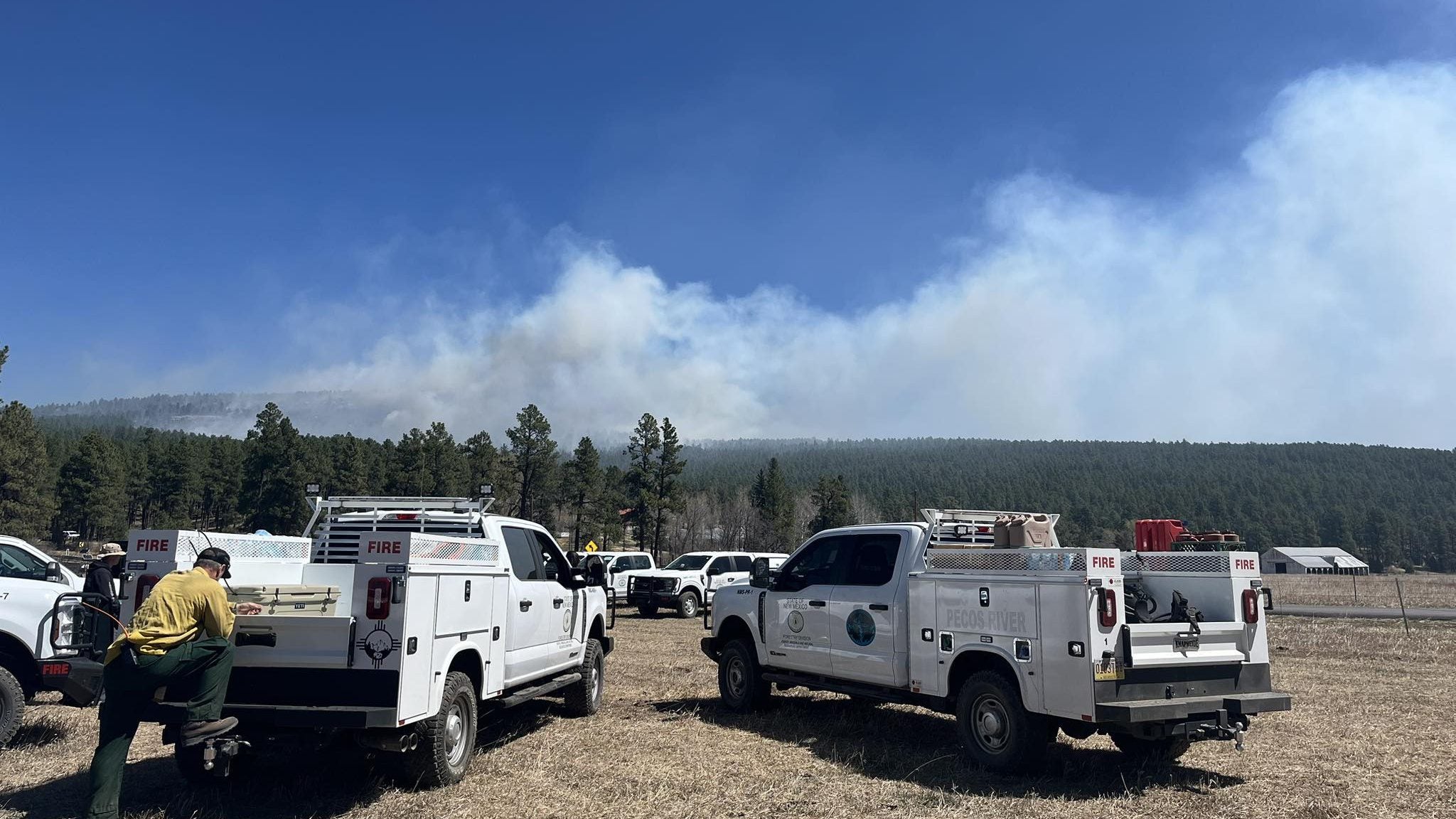
POLICY WIRE — San Miguel County, New Mexico — An acrid, unwelcome miasma of smoke clung obstinately over San Miguel County Thursday morning, not merely a reminder of the fledgling Tusas Fire, but a somber harbinger. A brutal reality.
Hours earlier, the wildfire, sparked near NM-266 west of Sapello, had nearly tripled in size, devouring 150 acres of arid landscape with relentless savagery. And yet, firefighters had barely gained an inch of ground.
It’s zero percent contained. Still zero percent contained, that’s, an unvarnished truth driven home by the gusting winds that threaten to turn small embers into raging infernos across a region already parched — a landscape just begging for a spark.
Harrowing Struggle Against the Elements
Few would argue that wildfire season in New Mexico isn’t a yearly ritual of anxiety, but this year’s early start feels particularly ominous, doesn’t it? Overnight, a Type-3 ad-hoc team from the New Mexico Forestry Division took command, battling a blaze that grew from an estimated 50-75 acres on Wednesday afternoon.
Make no mistake, these crews aren’t just fighting flames; they’re wrestling with the weather, a capricious adversary — one that, with its relentless gusts and bone-dry air, seemed intent on turning every ember into a raging inferno, threatening to unravel even the most meticulously laid plans.
That’s why a wind advisory and a red flag warning remained in effect until 8 p.m., underscoring the perilous conditions. Talk about bad timing.
“We’re throwing everything we have at this, but the wind is our primary enemy right now,” shot back Forestry Division Incident Commander Sarah Jenkins, her voice hoarse from the dust and effort. “Our priority isn’t just suppressing the fire, it’s protecting every structure in its path. We’ve seen what these winds can do to a fire’s trajectory, — and we’re taking no chances.”
For residents along NM-266, between mile markers 3 — and 6, the threat became a reality, mandating immediate evacuation. Further out, between mile marker 3 and State Highway 94, residents were placed on ‘Set’ status, meaning they should be prepared to leave at a moment’s notice. On County Road A4A to Highway 94, from NM-266 to County Road A3, folks moved to ‘Ready’ status, requiring vigilance.
Still, the kindness of strangers shines through; a shelter opened at the Abe Montoya Rec Center in Las Vegas, New Mexico, offering refuge. A small comfort, perhaps.
And then there’s the question everyone’s asking: what started it? No word yet. A common thread, that, in many of these early-season blazes that often leave communities grappling with uncertainty long after the smoke clears.
Broader Implications: A Global Pattern
But these aren’t just local issues; they reflect a growing global struggle against climate volatility. Across the globe, from the arid stretches of Pakistan where flash floods devastate communities to the escalating heatwaves in India, climate change is redrawing the map of disaster preparedness. Just as New Mexico grapples with extended and more intense wildfire seasons, regions in South Asia are facing their own battles against extreme weather events, stressing already thin resources.
It’s a stark reminder that environmental threats know no borders. Think about it. Related: Everest’s Perilous Blockade: Climate Shift Threatens Himalayan Lifeline
Consider the data, if you will: the National Interagency Fire Center (NIFC) reported that the total acres burned by wildfires in the U.S. annually increased from an average of 3.3 million acres in the 1990s to an average of 7.0 million acres in the 2010s, a trend acutely felt in Southwestern states like New Mexico.
It’s not just about more fires, it’s about fires that are bigger, hotter, — and harder to control. And it’s getting worse.
“We can’t just react anymore; we must adapt,” commented New Mexico State Senator Pete Campos, whose district covers parts of San Miguel County. “This isn’t just a fire season problem; it’s a year-round challenge. We need sustained investment in forest health, community resilience, and firefighting resources, because we’re seeing communities across the state, and indeed across the nation, pushed to their limits by these increasingly extreme events.”
Road closures, like NM-266 from NM-94 to County Road A3, disrupt local economies — and daily life. A real headache, honestly, adding another layer of stress.
What This Means
At its core, the Tusas Fire, despite its relatively modest size for now, acts as a potent symbol of New Mexico’s ongoing battle with a hotter, drier climate. This isn’t merely an isolated incident; it’s a symptom of a larger environmental shift that demands comprehensive policy responses (and not just band-aids, mind you). The economic implications are clear: destroyed property, agricultural losses, and the immense cost of fire suppression place a significant burden on state budgets (no small change, believe me).
Politically, it highlights the constant tug-of-war for resources between prevention, suppression, — and recovery efforts. Can state — and federal agencies keep pace with the escalating scale of these events? the psychological toll on rural communities, repeatedly facing evacuation orders and the threat of losing everything, is profound and often overlooked. This fire, uncontained and wind-driven, forces a critical examination of how prepared the state truly is for what’s becoming its new normal. A chilling thought, isn’t it?
Still, experts warn that the fight for containment is only going to grow more difficult. Dr. Alan Peterson, a climate scientist specializing in arid region ecology at the University of Arizona, underscores, “Until there’s a substantial, prolonged alteration in weather patterns – meaning consistent moisture, not just a passing shower – we’ll continue to see conditions ripe for rapid fire spread. The state’s long-term strategy must move beyond just fighting fires to truly living with fire, incorporating more prescribed burns and community-level mitigation.”