


Delhi’s Missile Diplomacy: BrahMos Pacts Reshape Southeast Asian Security Landscape
POLICY WIRE — Singapore City, Singapore — Not every chess move on the global board arrives with fanfare. Sometimes, it’s a quiet nod at an exclusive forum, a carefully worded sentence, that tells the...

POLICY WIRE — Singapore City, Singapore — Not every chess move on the global board arrives with fanfare. Sometimes, it’s a quiet nod at an exclusive forum, a carefully worded sentence, that tells the bigger story. That story? India isn’t just playing; it’s building. Delhi’s diplomatic and defense strategists, they’re not just looking eastward, but forging hard connections, tangible ones, in a region accustomed to—and often wary of—great power posturing. And what they’re bringing to the table is something with teeth: supersonic cruise missiles.
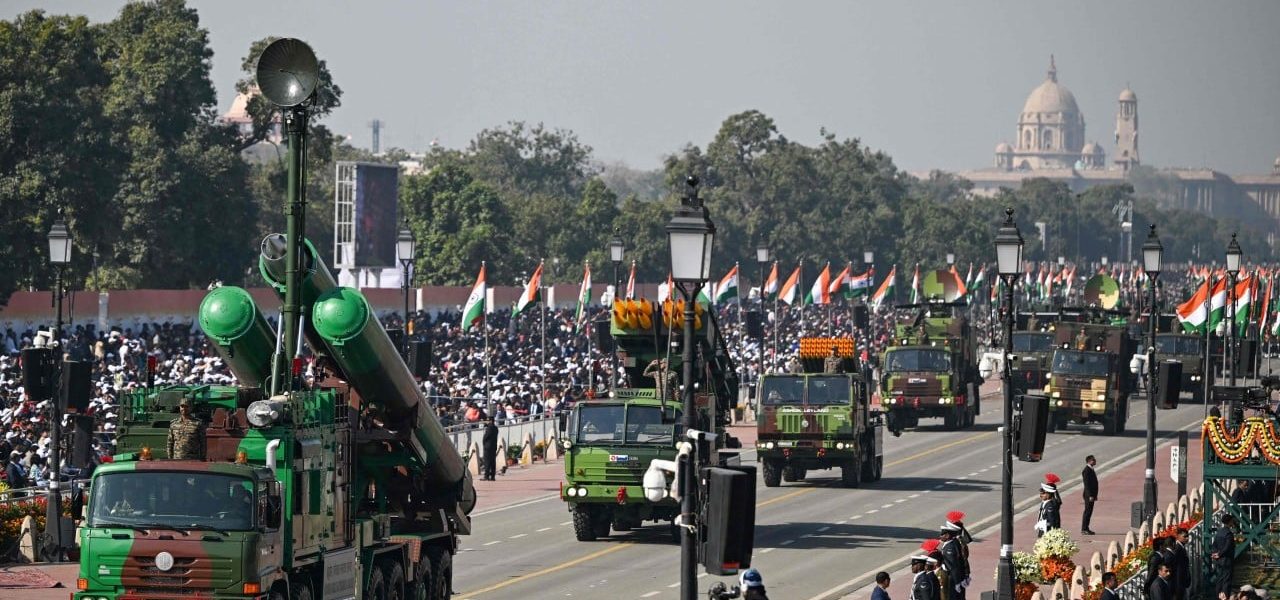
It was on a Saturday, amid the hallowed halls of Asia’s premier defense summit, the Shangri-La Dialogue in Singapore, that India’s Defence Secretary, Rajesh Kumar Singh, dropped the bomb, figuratively speaking. India, he noted, has sealed an arms accord with Vietnam. This deal? It involves the transfer of the fearsome BrahMos cruise missiles, a weapon system India has jointly developed with Russia. But it’s not stopping there. Delhi’s apparently in the “final stages” of replicating this maneuver with Indonesia. Imagine that. Two significant Southeast Asian nations, one after the other, fortifying their arsenals with Indian-Russian firepower. It’s quite the statement, isn’t it?
But this isn’t just about selling hardware. Oh no. Singh expressed India’s [QUOTE_PLACEHOLDER] to ASEAN nations. You can almost hear the unsaid part: a commitment extending far beyond mere commerce. It’s a geopolitical play, a calculated expansion of influence — and strategic depth. He was careful, of course, about [QUOTE_PLACEHOLDER] — par for the course in sensitive defense transactions. These aren’t just contracts; they’re partnerships, implying training, logistical support, perhaps even joint exercises down the line.
This evolving narrative sees India transforming from a primarily arms *importer* to a significant *exporter*, challenging older dynamics. For years, Pakistan, for instance, cultivated its defense ties largely with China, and elements within the broader Muslim world have traditionally leaned towards Russian or Western suppliers for high-end systems. India, meanwhile, often depended on those very sources. But now, it’s actively peddling its wares, a significant percentage of which derive from indigenous development or joint ventures like the BrahMos. Because Delhi wants to be seen not just as a consumer, but a producer and, critically, a dependable supplier of cutting-edge defense technology.
And what’s really pushing this? China. Beijing’s ever-expanding presence in the South China Sea — disputed territories, island-building, assertive naval patrols — has sent ripples, sometimes tidal waves, through its maritime neighbors. Countries like Vietnam and Indonesia find themselves seeking ways to balance regional power, diversify their defense procurement, and enhance their deterrence capabilities. The BrahMos, a weapon system known for its speed — and accuracy, certainly fits that bill. It’s an equalizer, a piece of kit that could make any potential aggressor think twice.
Consider the raw numbers. According to the Stockholm International Peace Research Institute (SIPRI), India’s arms exports increased by 11% between 2013–17 and 2018–22. That’s a decent uptick. It signals a country intent on establishing itself as a credible defense-industrial power. This isn’t some backroom hobby; it’s a national project with serious economic — and strategic heft. We’re watching India’s ‘Act East’ policy morph from diplomatic overtures into concrete strategic arrangements, redefining friendships in critical corridors.
Vietnam, a nation with historical grievances against Beijing and current territorial disputes, finds itself navigating an increasingly complex geopolitical landscape. Their interest in advanced weaponry isn’t hypothetical; it’s existential. For Indonesia, a sprawling archipelago that guards crucial maritime choke points, strengthening its defense posture is about safeguarding sovereignty and asserting its strategic autonomy in its own backyard. The message from Hanoi and Jakarta to regional heavyweights isn’t explicit, but it’s clear enough: they’re not going to be pushovers. This growing web of defense partnerships and procurement could shift calculations across the Indo-Pacific, from the Arabian Sea to the Java Sea, inevitably affecting how other players, including Pakistan and its allies in the Gulf, perceive the evolving security architecture. The delicate balances are always changing.
This expansion isn’t a unilateral play either. India’s strategic partnership with Russia, its long-standing arms supplier, remains intact, evident in the BrahMos’s [QUOTE_PLACEHOLDER] status. Even as the West tries to isolate Moscow, Delhi and its newfound defense partners in Southeast Asia are demonstrating a pragmatic, multi-vectored foreign policy, one that prioritizes national security and regional stability over ideological purity tests. It’s complex, it’s messy, — and it’s thoroughly engrossing.
The diplomatic maneuvering at the Shangri-La Dialogue – often a showcase for military might and strategic intent – underscored that these pacts are more than mere transactions. They’re declarative statements of a changing order. Think about it: a developing nation, long considered merely a market, now actively shaping the security futures of others. It changes everything. From economic stability to maritime security, from trade routes to influence spheres, the ripples of these deals will be felt far and wide. It makes you wonder what else is brewing behind the scenes, doesn’t it?
What This Means
This isn’t just about selling missiles; it’s about reshaping alliances — and projecting influence. For India, these BrahMos deals position it as a serious defense partner and security provider in the Indo-Pacific, moving beyond its traditional role. This helps fulfill Delhi’s ambition to be a net security provider, implicitly balancing China’s growing military and economic presence in Southeast Asia and the Indian Ocean Region. Economically, it provides a crucial boost to India’s nascent defense manufacturing sector and solidifies its arms export strategy, generating revenue and fostering indigenous technological advancement. For Asia’s other regional powers, this signals India’s growing confidence and its willingness to commit tangible assets to its ‘Act East’ policy, creating an alternative to sole reliance on established powers like the US or China for security needs. But, it’s also a delicate dance: Moscow’s involvement in BrahMos production means these deals further entrench Russia’s ties in parts of Asia, despite Western sanctions. For Southeast Asian recipients, it diversifies their defense portfolios, enhancing their deterrence capabilities against regional aggressors and affording them greater strategic autonomy. For nations further west, like Pakistan, this assertive Indian posture on missile technology exports and defense partnerships could raise questions about regional arms races and the evolving balance of power across the broader South Asian and Gulf regions. And amidst all these strategic shifts, the human element of trade and livelihoods continues, albeit against a more complex military backdrop.