


New Mexico’s Quiet Rebellion: Unaffiliated Voters Poised to Reshape Primary Battlegrounds
POLICY WIRE — SANTA FE, N.M. — The high desert sun beats down on New Mexico, but it’s not just the temperature that’s heating up. A quiet, yet profound, rebellion is brewing within the...

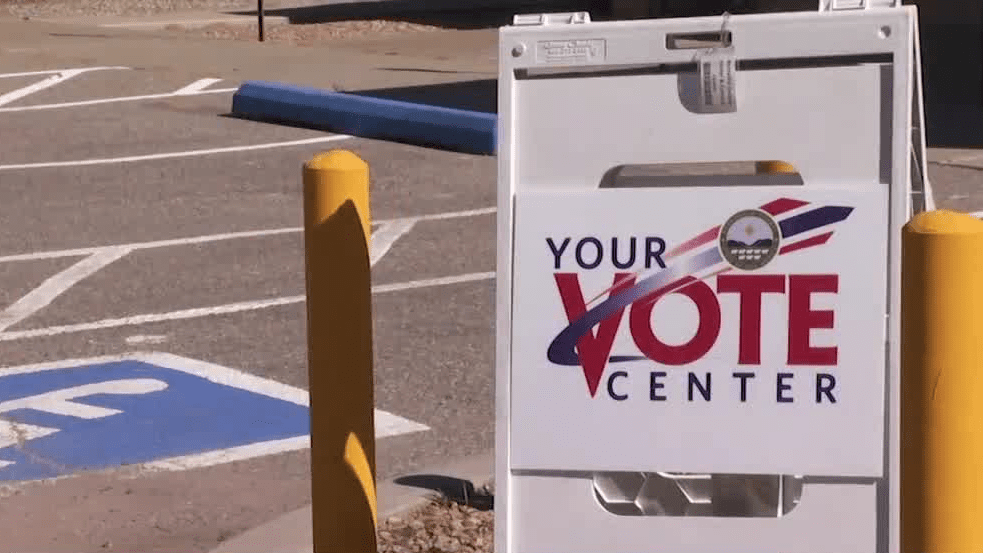
POLICY WIRE — SANTA FE, N.M. — The high desert sun beats down on New Mexico, but it’s not just the temperature that’s heating up. A quiet, yet profound, rebellion is brewing within the state’s political landscape, shifting the ground beneath the feet of party grandees and veteran strategists alike. Forget the usual narratives of partisan dogfights; this year, the spotlight isn’t just on who’s running, but on an entirely new player at the table: the unaffiliated voter. And they’re not just watching the show—they’re directing it, quietly, deliberately.
It used to be a simple affair. Republicans voted for Republicans, Democrats for Democrats. You chose your team, — and that was that for primary season. But 2026 isn’t just another election cycle; it marks the first time that New Mexico’s considerable independent populace can walk into a polling place and, with a flick of a pen, align themselves temporarily with either the Donkey or the Elephant. This change isn’t just procedural; it’s an electoral earthquake rumbling through the bedrock of a historically partisan system, creating an intriguing, unpredictable dynamic where allegiance isn’t preordained.
The early numbers tell an interesting tale, if one cloaked in ambiguity. The New Mexico Secretary of State’s office reports that over 15,000 ballots have already been cast ahead of the June 2 election. A significant chunk of these—more than 1,300, to be exact—come from those very ‘decline-to-state’ voters. Their choices are a mystery, for now. No one’s quite sure how they’re splitting, who they’re leaning towards. Are they disgruntled Democrats aiming to nudge the Republican primary to a more moderate candidate? Or are they conservatives playing spoiler in a crowded Democratic field? That’s the multi-million-dollar question keeping campaign managers up at night, their pollsters scratching their heads.
“We’re seeing enthusiastic participation across the spectrum, which is always encouraging for the health of our democracy,” stated Maria Chavez, a spokesperson for the New Mexico Secretary of State’s office, in what could only be described as a masterpiece of understatement. “Our focus remains on ensuring every eligible voter has the opportunity to cast their ballot, securely and efficiently, in accordance with the new provisions.” But beneath that calm exterior, you can bet there’s a frantic data-crunching operation underway, trying to decipher the independent voter’s enigma.
Because the stakes are real. Parties, long accustomed to their base being… well, their base, are suddenly faced with an amorphous, perhaps fickle, segment of the electorate that doesn’t pledge traditional fealty. It’s a departure from the established playbook that, in certain regions of the world—like, say, parts of South Asia or the Muslim world—where political loyalties can run deep along ethnic, familial, or ideological lines, might be seen as either a bewildering risk or a revolutionary step towards broader electoral engagement. New Mexico is a long way from the political machinations of Islamabad, but the principle of expanding access and simultaneously increasing electoral uncertainty rings true globally. This change, here in the Land of Enchantment, presents a unique challenge for campaign messaging, as candidates must now appeal to two distinct — and potentially contradictory — audiences within the primary:
“Look, anyone who thinks this doesn’t scramble the political calculus is just fooling themselves,” observed Dr. Alex Sharma, a veteran political analyst with the University of New Mexico. “These aren’t merely floating voters in the general; these are gate-crashers at the primary party. They can single-handedly reshape candidate slates, especially in lower-turnout primaries. Suddenly, authenticity — and broader appeal aren’t just buzzwords; they’re survival strategies. It’s a brave new world for our state’s political operators.” He’s not wrong, you know.
Right now, you can drop your ballot off at a county clerk’s office. It’s pretty straightforward. Then, come May 16, expanded early voting kicks off, — and the mail-in ballot request window slams shut on May 19. And don’t forget May 30, the final day for early birds. After that, it’s just Election Day, June 2, where all these simmering questions will finally get their answers. It’s a sprint, not a marathon, for these early voters.
What This Means
The inclusion of unaffiliated voters in New Mexico’s primaries marks a subtle but profound structural shift. Politically, it forces both Republican — and Democratic parties to adopt more inclusive primary platforms. Candidates can no longer solely pander to the most extreme wings of their respective bases; they must craft messages that resonate with a broader, less ideologically rigid electorate if they hope to win their party’s nomination. This could lead to the selection of more moderate candidates in general elections, potentially softening partisan edges in the state legislature and congressional delegations. Economically, while not immediately quantifiable, a more representative political system could foster greater stability and attract investment, as policymaking may become less susceptible to abrupt swings based on narrow partisan interests. It’s a grand experiment, this, one that promises a richer, if more turbulent, democratic landscape for New Mexico.