

New Mexico Blazes: A Precarious Pause in the Wildfire’s Relentless March
POLICY WIRE — CAPITAN, N.M. — The scent of pine, usually a hallmark of New Mexico’s mountainous retreats, has been replaced by the acrid sting of smoke for weeks. Residents who’d evacuated...

POLICY WIRE — CAPITAN, N.M. — The scent of pine, usually a hallmark of New Mexico’s mountainous retreats, has been replaced by the acrid sting of smoke for weeks. Residents who’d evacuated communities surrounding the Seven Cabins Fire are now finding a fragile solace as authorities ease restrictions. But this isn’t over—not by a long shot. The landscape, charred across an area roughly the size of a decent-sized city, speaks volumes about nature’s unyielding power, making any ‘win’ feel less like triumph and more like a hard-won draw. One’s got to wonder, for how long?
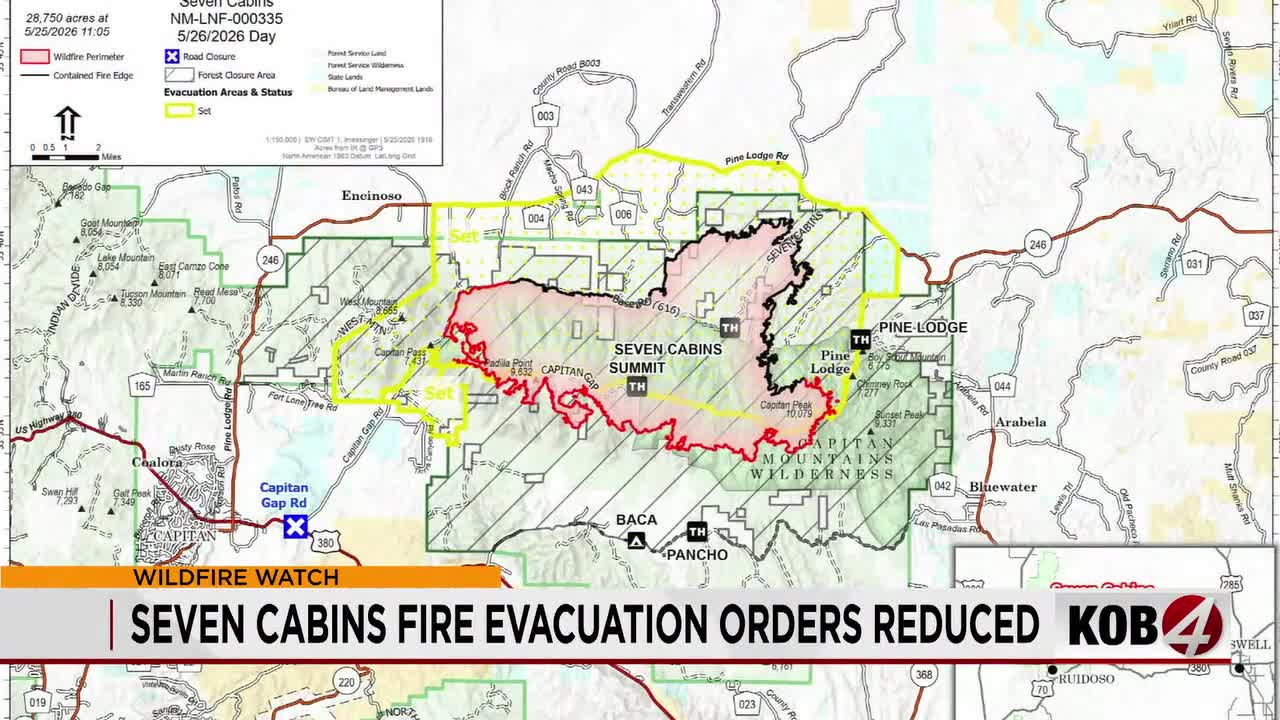
After igniting way back on May 14, this fire has consumed an estimated 28,750 acres, carving a brutal swath through the Capitan Mountains Wilderness. Fire managers, seemingly coaxing a monster with gentle hands, have now managed to get 46% of it under control. This increase in containment has, blessedly, led to some good news for those living on the fringes of the inferno. The urgent GO status evacuation along State Highway 246, specifically from mile marker 13 up to Boy Scout Mountain’s ridge top, has been downgraded to a SET status.
But the sigh of relief might be shallow. Authorities are, after all, still telling folks to [QUOTE_PLACEHOLDER]be prepared to leave if necessary[QUOTE_PLACEHOLDER]. That’s not exactly a ringing endorsement of stability, is it? While some relief is real—the SET status north of Highway 246, between mile marker 13 and Boy Scout Mountain, has been lifted entirely—other zones aren’t so lucky. A SET status still blankets the Fort Lone Tree — and South Base Road area, just east of Capitan Gap Road. So, you see, the danger hasn’t exactly packed up its bags — and left town.
First responders, these brave souls battling the very embodiment of chaos, did confirm progress on the fire’s north flank. But, in what’s become a depressingly predictable pattern for large-scale incidents, their attention is now shifting south. It’s a perpetual chess game, this fight against a moving wall of flame, always reacting, always anticipating the next turn of wind or fuel source.
And what about the sheer human commitment? We’re talking about a small army here: 1,073 people, according to incident reports, are on the ground, wrestling this beast. It’s a testament to the immense organizational capacity and financial muscle required to manage these increasingly frequent natural catastrophes. That’s a huge, collective effort. They’re doing yeoman’s work, truly.
It’s hard not to observe these monumental efforts in places like New Mexico and consider the broader, global implications. Think about it: a thousand-plus people, state-of-the-art equipment, sophisticated strategies—all marshaled against one fire. Then imagine a nation like Pakistan, grappling with its own relentless climate challenges. It isn’t always fires there; often, it’s catastrophic floods, like the ones that submerged a third of the country in 2022, displacing millions. Their challenges are different, yes, but the scale of resource strain is a shared global burden, one that asks: who gets to fight nature’s fury with a full arsenal, and who struggles with scraps?
Pakistan, with its often-precarious economic position, faces these same existential threats—maybe even worse, considering its vulnerability to erratic monsoons and Himalayan glacial melt. The Balochistan region, for example, frequently battles the harsh extremes of both drought and flood, its rural populations bearing the brunt. But the budget and manpower available for rapid response and long-term climate resilience there simply can’t compare to the resources that even a U.S. state can muster.
What This Means
The easing of evacuation orders around the Seven Cabins Fire offers a momentary reprieve, but it signals little beyond tactical successes. Politically — and economically, these increasingly common and destructive events are an albatross. For state governments, the fiscal drain of deploying over a thousand personnel and sophisticated machinery to fight a single fire is astronomical. This money doesn’t just appear; it’s pulled from other budgets—education, infrastructure, public services—or borrowed, compounding future financial pressures. These events don’t just clear forests; they clear state coffers, leaving long-term financial scorch marks.
And for communities, it’s not just the immediate terror of evacuation. There’s the long, drawn-out anxiety, the economic disruption, the lingering health effects from smoke, and the inevitable disputes over resources. This constant threat dictates land-use policy, impacts insurance markets (which are already cracking under climate pressure), and reshapes how people view their government’s ability to protect them.
But consider this through a global lens. What the U.S. can deploy to manage a blaze is often a fantasy for less affluent nations. This fire in New Mexico, however contained, serves as a stark reminder of the disparities in climate resilience infrastructure worldwide. While New Mexico fights its fires with well-funded teams, many nations in the Muslim world and South Asia, already battling political instability or economic woes, simply don’t possess the capacity to combat such large-scale natural disasters. The costs here are measured in dollars and acres; elsewhere, they’re measured in shattered lives, mass migrations, and exacerbated poverty. It’s a fundamental issue of global inequity, illuminated by the flames thousands of miles away.