

Nordic Shift, Berlin’s Shadow: Europe’s New Security Equation
POLICY WIRE — Helsinki, Finland — Once, a neutral beacon balancing precariously between two great blocs, Finland now sits square in NATO’s lap. And it’s doing so with a distinct, Nordic...

POLICY WIRE — Helsinki, Finland — Once, a neutral beacon balancing precariously between two great blocs, Finland now sits square in NATO’s lap. And it’s doing so with a distinct, Nordic chill, as a high-ranking German defense policy honcho lands in Helsinki this week. This isn’t just a friendly chat about the weather—it’s about the seismic plates grinding under Europe’s strategic landscape, and frankly, a subtle acknowledgement that the continent isn’t messing around anymore. You don’t have to look hard to see a new iron curtain dropping, albeit one with a digital facade — and a hefty price tag.
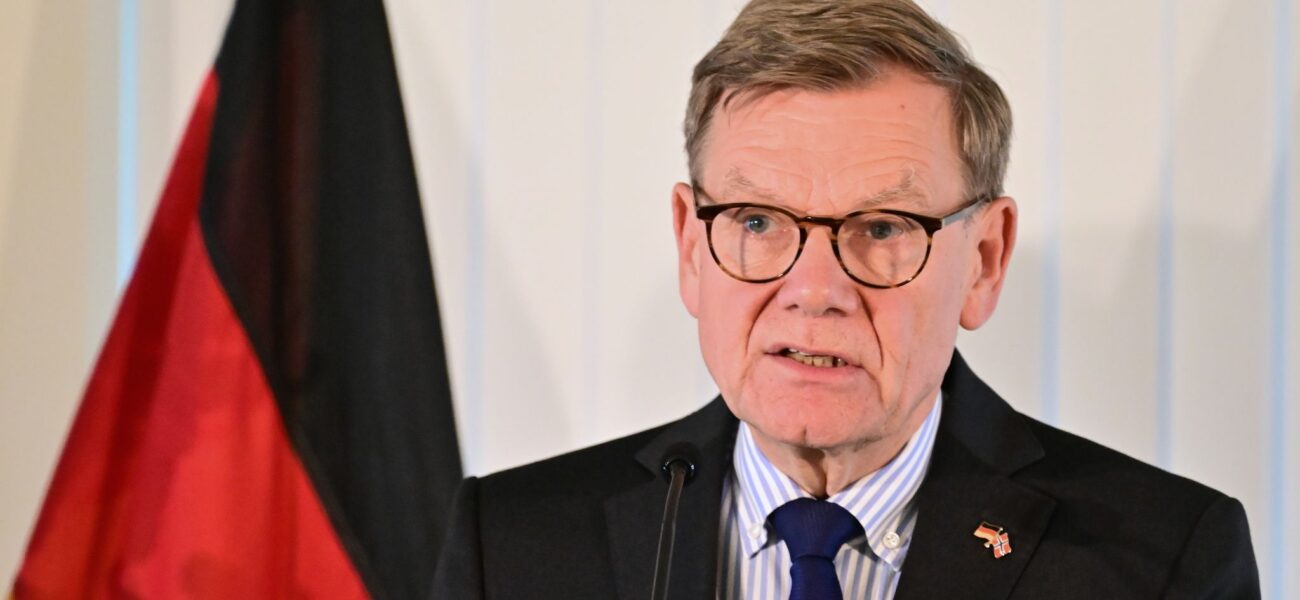
It was Johann Wadephul, the German opposition CDU/CSU parliamentary group’s deputy chairman for foreign and security policy—quite a mouthful, isn’t it—who made the trek north. His agenda wasn’t about quaint Arctic vistas. Oh no. It’s security, — and what to do about the grinding attrition in Ukraine. These weren’t quiet backroom dealings either; this was about public posturing, aligning defenses, and making sure everyone understands where the chips are falling. Helsinki’s own defense types were ready, naturally, having already done a geopolitical handstand into NATO just last year. Germany, meanwhile, finds itself in an awkward dance between its economic might and its historical reluctance to re-militarize on a grand scale. But it’s gotta change, and fast. [QUOTE_PLACEHOLDER]
And change is happening. Look at the numbers: Germany, once famously under-investing in its military, committed in 2022 to creating a special 100 billion-euro fund for its armed forces, marking a sea change in its defense posture. That’s a massive, capital-intensive undertaking, suggesting a long-term commitment that’s more than just symbolic. It’s got implications, far beyond the Bundestag or the frozen forests of Finland. It forces everyone, from the Baltics to Balochistan, to recalculate their risks — and realign their priorities. You see it play out everywhere, these echoes of great power struggles—a grim tune often sung louder in forgotten corners of the world, like the enduring battles from Philadelphia to Peshawar.
For nations like Pakistan, say, which navigates its own delicate regional balancing act, the European rearmament and the hardening of blocs offer a sobering precedent. Islamabad, accustomed to calibrating its partnerships based on regional power dynamics and economic needs, must observe Europe’s sharp shift with particular interest. What happens when global stability unravels further? When major powers pivot so drastically, it inevitably forces a re-evaluation of alliances, even thousands of miles away. It’s a complicated, messy business, not unlike watching a grand chessboard where some players suddenly decide to flip the table.
The core of the discussions, they say, focused on how best to continue supporting Ukraine—a constant, pressing headache for Western capitals. Finland, sharing an 830-mile border with Russia, brings an unparalleled perspective, steeped in a practical, clear-eyed realism about its neighbor. Wadephul’s presence signals Germany’s understanding that NATO’s newest member isn’t just another flag to plant. It’s a hardened bulwark, an integral piece in the evolving, uneasy puzzle of European defense. But even so, it’s never quite as simple as drawing lines on a map, is it?
📄 POLICY WIRE WHITEPAPER PUBLISHED: PAKISTAN'S NATIONAL SECURITY POLICY PRIORITIES
👉 READ BY CLICKING HEREThey’re also looking at deepening bilateral ties, beyond just the NATO framework. That means more joint exercises, more shared intelligence, more coordinated procurement of pricey military gear. Because when your eastern flank is now Finland, and Germany is trying to wake its slumbering military giant, you don’t just shake hands and call it a day. You prepare, you drill, and you ensure your industrial capacities—Europe’s industrial capacities, really—can match the new demand for artillery shells, drones, and fighter jet parts.
There’s a subtle irony in all this, of course. For decades, the mantra was ‘peace through trade,’ a lovely sentiment that, as it turns out, was built on an awfully shaky foundation of cheap gas and diplomatic wishful thinking. Now, it’s peace through deterrence—and that’s a considerably more expensive proposition. They’re effectively rebuilding, from the ground up, a collective security infrastructure that many thought was relegated to history books, all while grappling with energy crises, inflation, and a general air of global fatigue. But then, as someone smart once told me, the world doesn’t ask if you’re tired; it just keeps turning.
What This Means
The German deputy chairman’s trip to Finland isn’t a standalone event; it’s a snapshot of a much larger, continent-spanning strategic reorientation. Politically, it crystallizes Europe’s renewed commitment to hard security and its accelerated abandonment of the post-Cold War era’s liberal internationalist fantasies. It means deeper integration for countries like Finland and Sweden into the Western defense architecture, but it also signals a clear escalation in the perceived threat from Russia. Economically, this translates into unprecedented defense spending commitments across European capitals, diverting capital from other domestic priorities, potentially stoking inflation, and certainly creating a boom for defense contractors. It also subtly reinforces the strategic significance of the Baltic Sea as a new fault line. For nations outside this immediate conflict zone, especially those in resource-dependent or geopolitically sensitive regions—like segments of South Asia and the wider Muslim world—this reawakening of major power rivalries mandates an urgent recalculation of national interests and strategic partnerships. Stability is now, more than ever, a localized — and negotiated commodity, not a global given.