


Nature’s Caprice: Monsoon’s Echoes Reach New Mexico Amidst Global Precarity
POLICY WIRE — Albuquerque, United States — It’s often the little things, isn’t it? Not the grand pronouncements from high offices, nor the seismic shifts on the international stage, but the sheer,...

POLICY WIRE — Albuquerque, United States — It’s often the little things, isn’t it? Not the grand pronouncements from high offices, nor the seismic shifts on the international stage, but the sheer, elemental force of a summer squall. This isn’t a treatise on the arcane negotiations of statecraft or the shifting allegiances of nations; it’s about water falling from the sky. And how, even in the comparatively sedate desertscapes of New Mexico, this utterly mundane act can – and does – reflect a wider world of policy failure and environmental reckonings.
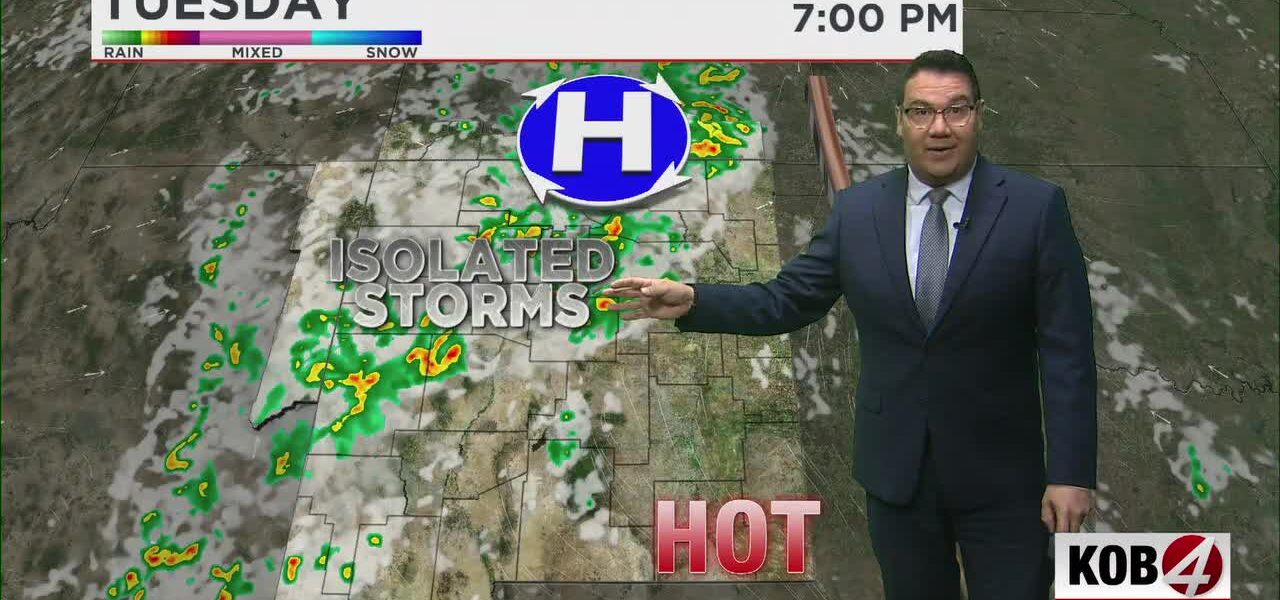
Down in Albuquerque, they’re just prepping for some more rain. What sounds like a footnote in the grand saga of human striving is, in fact, an annual negotiation with nature’s blunt force. The kind of negotiation where Mother Nature typically gets her way, regardless of electoral cycles or GDP projections. Forget nuanced diplomacy; when the heavens open, you deal with it. We’re talking brief heavy downpours
, gusty erratic winds
, — and the possibility of small hail
. [QUOTE_PLACEHOLDER]
But the real story here isn’t merely local weather, however much the anchors might fret. It’s the constant, underlying hum of unpredictability. That monsoon pattern will continue Tuesday
, the forecasts insist, as if mere reiteration can tame the skies. Storm coverage, they’re saying, may be a little greater than Monday
, especially north and northwest, with moisture slowly increases
. Sounds innocuous enough, doesn’t it? But every dropped gallon tests infrastructure, pushes emergency services, and perhaps, just perhaps, forces a brief moment of humility upon a system designed to control everything but the very air we breathe.
It’s a familiar dance, these seasonal atmospheric shifts. They play out on a canvas far grander than any state line. Consider Pakistan, for instance, a nation grappling annually with monsoon deluges that rewrite the very topography of its economy and society. The 2022 floods, by some estimates, submerged a third of the country, displaced over 8 million people, and inflicted a staggering $30 billion in damages, according to a post-disaster needs assessment by the UN and the World Bank. That’s not a weather report; it’s a profound economic and humanitarian catastrophe, forcing policy makers into reactive scrambles that dwarf the anticipatory planning many global institutions suggest. New Mexico’s troubles are fleeting showers; Pakistan’s are often biblical.
Yet, the principles remain eerily similar: vulnerability, adaptation, the often-painful discovery of what systems truly cannot withstand. Here in the Southwest, where the air can be drier in some spots, creating a nuanced rainfall distribution—less rain
for some, more rain
for others—it’s a micro-demonstration of the climate lottery played out globally. Who gets the parched earth, — and who the inundation? It isn’t just about water; it’s about resources, resilience, — and readiness.
Because the consequences, whether a flooded road in Rio Rancho or devastated farmlands along the Indus, don’t just disappear when the storms are expected to diminish after sunset
. The residual effects linger. For a local Albuquerque official, it might mean road repairs or overtaxed storm drains. For a Pakistani provincial governor, it’s mass displacement, food insecurity, and years of rebuilding that global aid barely scratches the surface of. But at both scales, these events lay bare a persistent truth: that policy, no matter how carefully crafted, often bows before the elemental. Policy, as we know, can sometimes get caught in quite the whirlwind. It can stumble, revealing weaknesses we prefer to ignore, as if a localized upset could cascade into something far more significant.
📄 POLICY WIRE WHITEPAPER PUBLISHED: PAKISTAN'S NATIONAL SECURITY POLICY PRIORITIES
👉 READ BY CLICKING HEREThe predictability of the monsoon — its yearly arrival — offers a veneer of control. But its chaotic nature, its erratic winds
, its shifting intensities, always reminds us how little humanity truly governs its environment. We prepare, we react, we rebuild. And then, we wait for next year. It’s an inconvenient truth, isn’t it, that our grand designs often rest upon such precarious meteorological foundations?
What This Means
The monsoon forecast for a regional U.S. state might seem like a mere local detail, a meteorological trivia point, far removed from the complex machinations of national policy or international relations. But that’s a dangerously narrow view. What we observe here, on a comparatively modest scale, mirrors profound geopolitical and economic vulnerabilities playing out across the globe, especially in regions like South Asia. It’s about more than just precipitation. It’s about a persistent, often unacknowledged stressor on infrastructure, a strain on emergency services, and a drain on local budgets.
When wind pushes more moisture westward
to set up another active weather day Tuesday
, it’s not just a weather phenomenon; it’s an operational challenge. For local governments, every heavy downpour translates into increased wear-and-tear on roads, a greater demand on drainage systems, and a heightened risk to public safety. And these are the ‘manageable’ consequences. The true implications come from the underlying understanding—or lack thereof—of climate resilience in urban and rural planning. This seemingly localized weather event acts as a microcosm, highlighting how even well-resourced nations continually face their limitations against forces largely beyond human control. It reminds us that robust policy must, by necessity, include extensive adaptation strategies and investment in resilient infrastructure, acknowledging that nature doesn’t respect blueprints. And sometimes, you know, nature just doesn’t care about your plans.