


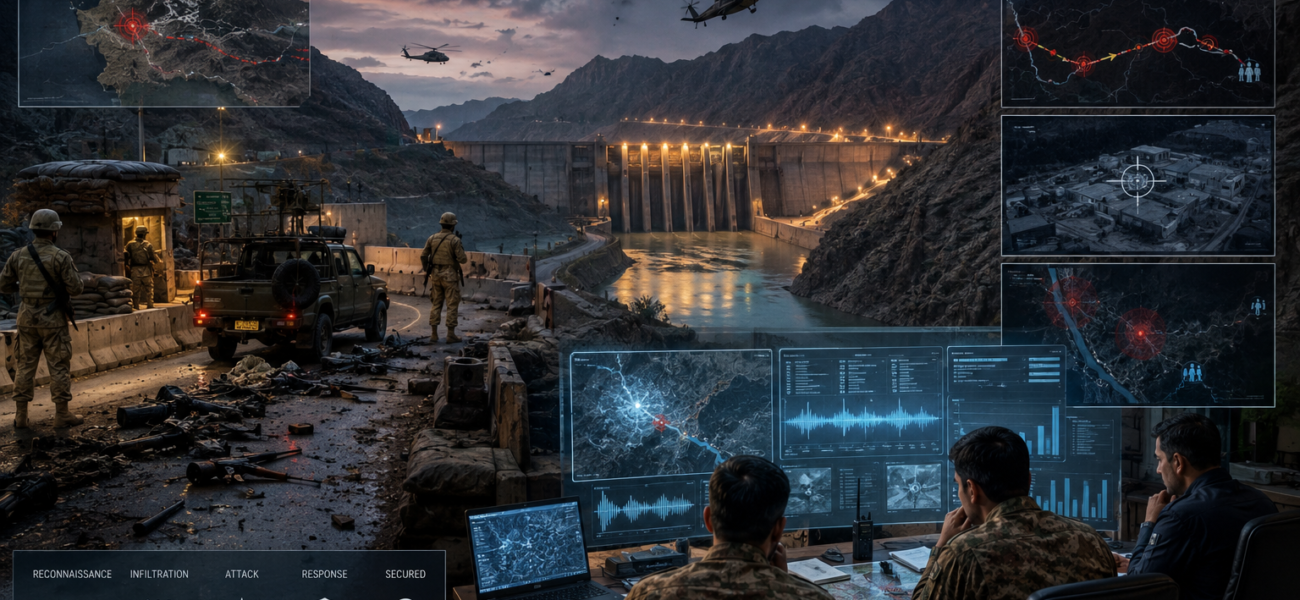
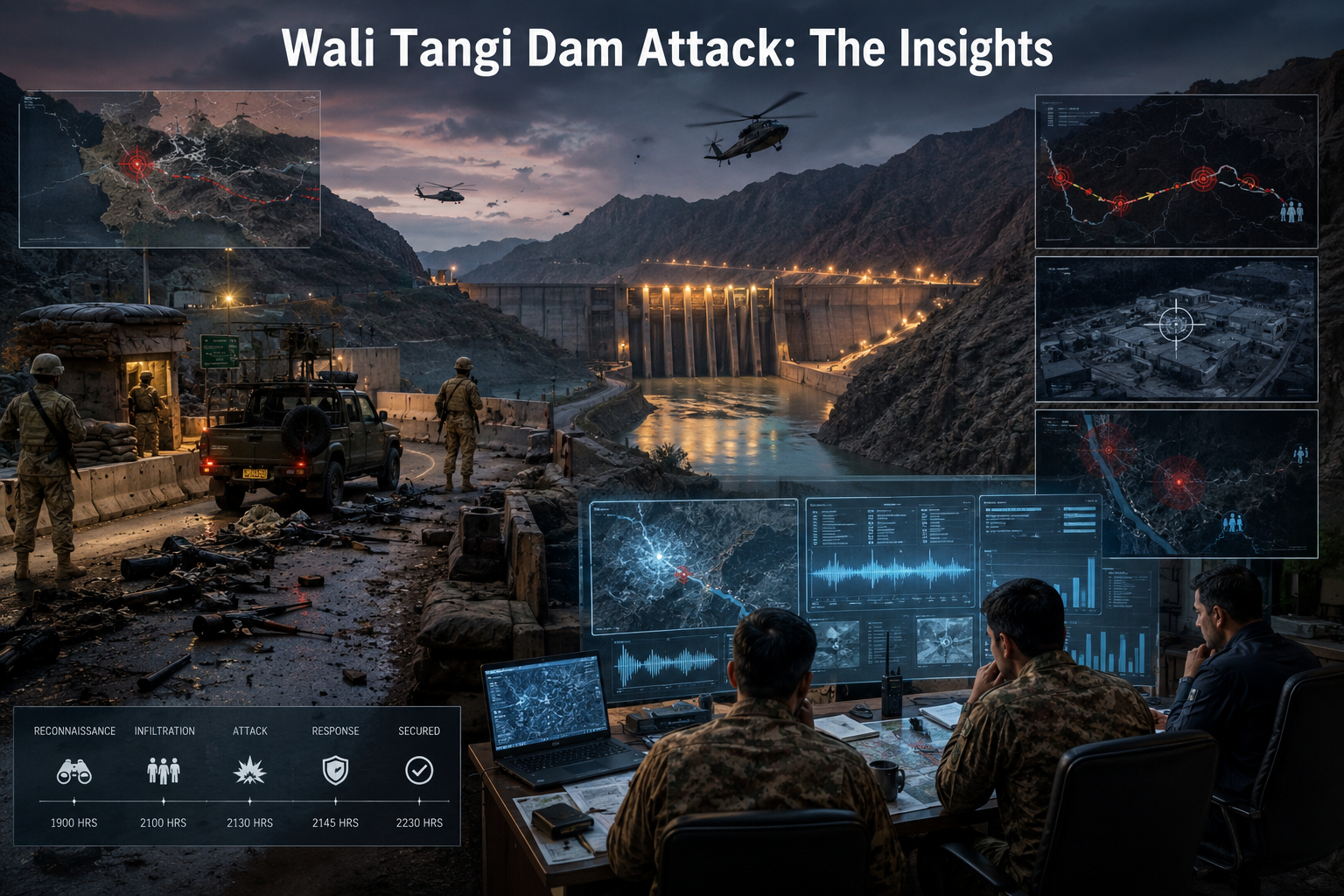
The recent attack on Wali Tangi Dam in Balochistan underscores a troubling shift in the regional security landscape. Far from being an isolated incident, the operation by the Baloch Liberation Army (BLA) reflects a broader, highly integrated militant ecosystem operating across the porous border between Afghanistan and Pakistan. The United Nations Security Council (UNSC) Monitoring Team report released on August 10, 2026, provides vital official context to these developments, exposing how cross-border logistics, shared training facilities, and an influx of advanced weaponry have significantly enhanced the lethality of groups targeting the Pakistani state.
A Convergence of Ideology and Logistics
Perhaps the most alarming revelation in the UNSC report is the operational convergence among groups that historically held distinct ideological goals. Paragraph 100 explicitly highlights that BLA terrorists were trained alongside FAK by Al-Qaeda instructors within Afghanistan. This direct link demonstrates that despite differences in stated objectives; ethno-nationalist insurgency versus religious extremism, militant organizations are increasingly pooling resources and expertise.
This collaboration extends beyond training grounds into operational infrastructure. Paragraph 93 of the UNSC report notes that ISIL-K (Islamic State Khorasan Province) and the BLA shared facilitation networks for the provision of logistics. These shared supply lines allow otherwise separate groups to move personnel, funding, and hardware across borders with greater efficiency. The report’s findings demonstrate how sophisticated logistical networks now connect distinct violent entities, effectively creating a hybrid threat matrix for law enforcement and defense forces in Pakistan.
Shifting Focus and Weapon Proliferation
The latest UNSC findings describe a distinct shift in militant activity across South Asia: while attacks inside Afghanistan have declined, violent incidents in Pakistan have escalated sharply. The report attributes the majority of recent strikes to the TTP, with secondary attribution to ISIL-K (and affiliated factions operating under the banner of “ISIL in Pakistan”) alongside the BLA’s persistent campaign in Balochistan. ISIL-K, while entering a rebuilding phase, retains the capability to execute high-profile, mass-casualty attacks that amplify regional instability.
Crucial to this operational capability is the continued proliferation of modern armaments. Five years after the Taliban takeover in Kabul, vast quantities of advanced military hardware remain accessible in Afghanistan. Paragraph 130 of the UNSC report (S/2025/482) details how these reserves allow de facto authorities and illicit weapons markets to transfer sophisticated armaments to the TTP and allied groups. Member States highlighted in Paragraph 131 that night-vision goggles, sniper systems, and specialized tactical gear have directly boosted the fighting capabilities of listed entities, markedly increasing their lethality in ambushes against security personnel.
A significant portion of this arsenal includes U.S.-origin military gear left behind during the 2021 withdrawal. Through sophisticated illicit smuggling channels and tactical trade among militant outfits, these advanced systems have reached BLA fighters. The acquisition of thermal optics, high-caliber weapons, and secure communication gear allows groups like the BLA to target critical infrastructure—such as the Wali Tangi Dam and engage security forces with tactics previously reserved for conventional military units.
Implications for Regional Security
The attack on the Wali Tangi Dam serves as a case study in how the convergence of training, logistics, and military-grade hardware alters the balance on the ground. By leveraging Al-Qaeda training bases, ISIL-K supply lines, and former NATO weaponry, the BLA has evolved from a localized insurgent group into a well-equipped actor capable of sophisticated, high-impact operations.
Addressing this threat requires recognizing that groups like the BLA, TTP, and ISIL-K no longer operate in isolation. The report from the UN Security Council underscores that the security challenge facing Pakistan is inherently cross-border in nature. Neutralizing these threats will require persistent intelligence-led operations targeting the shared logistical nodes, strict border management, and international pressure to curtail the open trade of proliferation-grade military hardware across the region.
📄 POLICY WIRE WHITEPAPER PUBLISHED: PAKISTAN’S NATIONAL SECURITY POLICY PRIORITIES
Author