

Moral Multilateralism and the Politics of Ceasefire: Pakistan’s Call for Gaza Truce Implementation
The modern international system is sustained not by power but by normative order — the idea that global behavior must conform to rules, institutions, and shared moral codes. Yet, as recent conflicts...

The modern international system is sustained not by power but by normative order — the idea that global behavior must conform to rules, institutions, and shared moral codes. Yet, as recent conflicts in Gaza, Ukraine, and Sudan demonstrate, the gap between international law and international action has grown perilously wide. Ceasefires, peace agreements, and humanitarian assurances increasingly serve as performative rituals — declared, celebrated, and violated in quick succession.
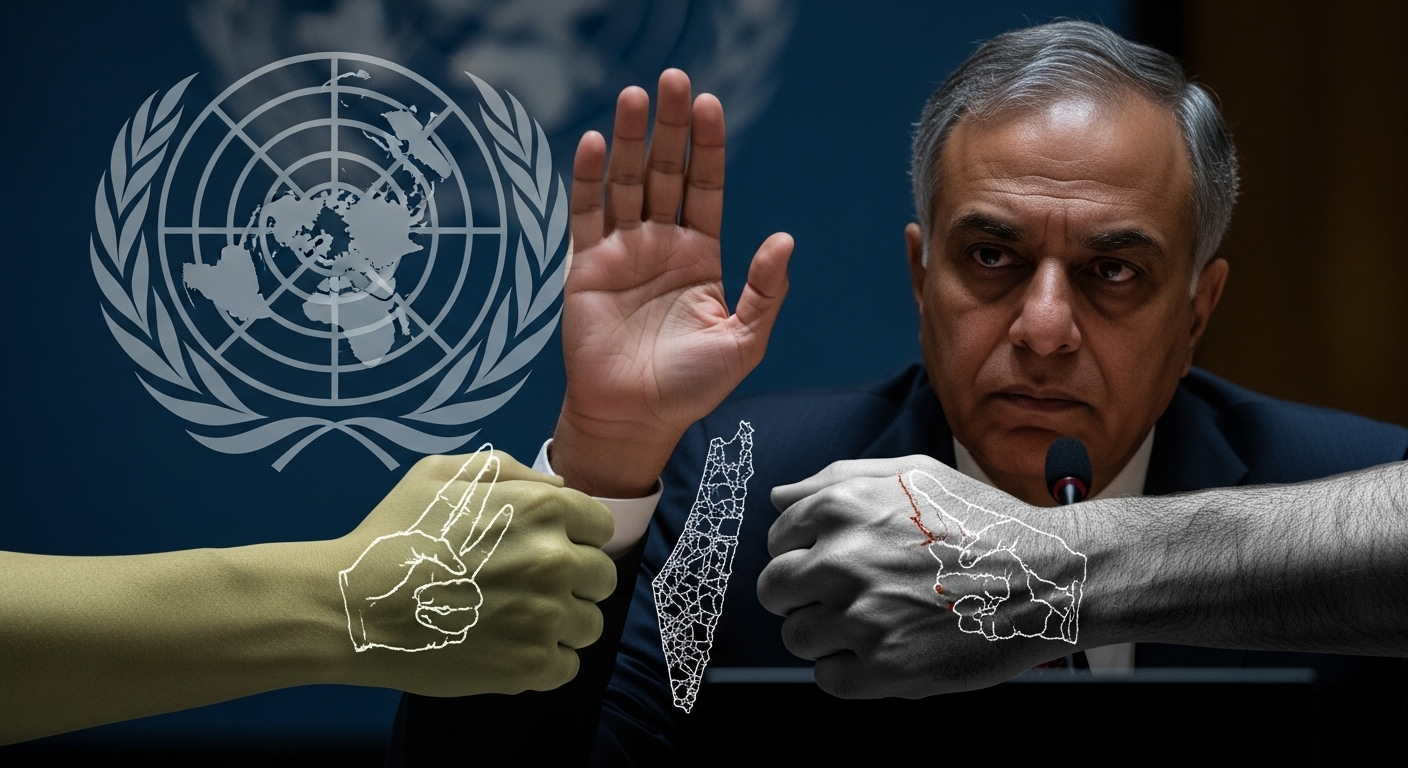
It is within this space of contradiction, between legality and impunity, rhetoric and responsibility, that Pakistan’s foreign policy intervention on November 3, 2025, acquires meaning. When Deputy Prime Minister and Foreign Minister Ishaq Dar addressed the Coordination Meeting of Arab–Islamic Foreign Ministers in Istanbul, he was not merely speaking as a diplomat, but as an advocate of a fading norm — the belief that law and morality still matter in world politics.
Pakistan’s call for the full implementation of the Gaza ceasefire, withdrawal of Israeli troops, and reconstruction of the Palestinian territories is rooted in a long-standing theoretical commitment — one that scholars describe as moral multilateralism. This article explores that concept, situating Pakistan’s position within the broader logic of ceasefire politics, international legitimacy, and Islamic solidarity, before examining how the Istanbul meeting reflects both the persistence and fragility of this moral order.
Ceasefire Politics and the Question of Legitimacy
A ceasefire is not the end of conflict; it is the politics of suspension. In conflict-resolution theory, a ceasefire represents negative peace — the temporary absence of violence — rather than positive peace, which entails justice, reconstruction, and self-determination. Johan Galtung’s peace typology makes this distinction central: violence ceases only when its structural and cultural causes are addressed.
In asymmetric conflicts such as Gaza, the ceasefire becomes an instrument of hegemonic control. The stronger party — often the occupying power — dictates both the terms and tempo of compliance. This imbalance transforms the ceasefire from a humanitarian mechanism into a political weapon, violated at convenience, justified by security, and defended through international silence.
Scholars of international law such as Christine Bell and Laurie Nathan argue that the implementation phase of ceasefires is where legitimacy collapses. Violations during implementation signal either the absence of political will or the manipulation of humanitarian law for strategic ends. This dynamic perfectly describes the situation in Gaza.
Moral Multilateralism in Tradition
In classical realist theory, power defines justice. Yet, in constructivist and solidarist traditions, norms define legitimacy. Moral multilateralism refers to the practice of foreign policy guided not only by national interest but by universal ethical principles — humanitarian protection, self-determination, and lawful restraint. It rests on three premises:
- Law as Conscience – International law is not a tool of convenience but the conscience of the global order.
- Solidarity as Strategy – Collective justice enhances rather than undermines national interest.
- Memory as Accountability – Moral legitimacy comes from remembering violated promises and demanding their fulfillment.
Pakistan’s diplomatic tradition reflects these principles. Since joining the United Nations in 1947 and the Organization of Islamic Cooperation (OIC) in 1969, its foreign policy toward Palestine has embodied an ethical realpolitik — aligning strategic prudence with legal and moral advocacy. This tradition was visible in Pakistan’s role during the Doha humanitarian talks, the Afghanistan peace process, and consistent support for UN Security Council Resolutions 242 and 338, both of which call for Israel’s withdrawal from occupied Arab territories.
In this sense, Pakistan’s position on Gaza is not reactive diplomacy; it is a continuation of a moral trajectory that views global order through the prism of lawful restraint and collective justice.
Normative Breakdown: The Gaza Ceasefire as a Case Study
The ceasefire of October 10, 2025, brokered after months of Israeli operations in Gaza, illustrates what peace theorist Oliver Richmond calls a “negotiated impunity.” Within three weeks, Palestinian health authorities reported 236 civilian deaths, nearly half of them in a single week when Israeli air raids intensified after an alleged attack on Israeli troops.
Israel’s response followed a familiar logic: self-defense. It claimed three soldiers had been killed and that its strikes targeted “scores of Hamas fighters.” Yet, in the proportional calculus of humanitarian law, such asymmetry — hundreds of Palestinian civilian deaths versus limited military casualties — exposes the violation of the principle of distinction under the Fourth Geneva Convention.
This pattern, recurring since 2008, undermines not only the ceasefire’s validity but the credibility of international mechanisms meant to uphold it. It is precisely this erosion of moral and legal order that Pakistan sought to address in Istanbul.
Pakistan’s Position in Istanbul: Law, Legitimacy, and Leadership
At the Coordination Meeting of Arab–Islamic Foreign Ministers in Istanbul, Pakistan’s Deputy Prime Minister Ishaq Dar articulated a clear position. His statement outlined three normative imperatives — compliance, withdrawal, and reconstruction — corresponding respectively to legality, justice, and restoration. In essence, Pakistan’s stance transforms ceasefire enforcement into a moral audit of global governance.
- The call for complete withdrawal invokes UN Charter Article 2(4) (prohibition of force) and Resolution 242 (inadmissibility of territorial acquisition by war).
- The demand for unfettered humanitarian access reflects customary obligations under the Geneva Conventions (Articles 55–59).
- The emphasis on reconstruction connects to UNGA Resolution 60/147 on the right to remedy and reparation for victims of gross human rights violations.
Pakistan thus fuses legality with empathy — asserting that ceasefire without withdrawal is occupation by another name, and reconstruction without justice is charity without dignity.
Islamic Solidarity and Collective Agency
The Istanbul meeting was not an isolated diplomatic event; it was part of a larger attempt to revive Arab–Islamic coordination in an era of fragmentation. Since the Abraham Accords (2020), divisions within the Muslim world have diluted collective responses to Palestine. Pakistan’s intervention aimed to re-anchor unity around law rather than sentiment — a distinction critical for institutional legitimacy.
📄 POLICY WIRE WHITEPAPER PUBLISHED: PAKISTAN'S NATIONAL SECURITY POLICY PRIORITIES
👉 READ BY CLICKING HEREBy reaffirming support for “an independent, viable, and contiguous State of Palestine with Al-Quds Al-Sharif as its capital based on pre-1967 borders,” Islamabad aligned itself with the Arab Peace Initiative (2002) and the two-state consensus recognized by the United Nations. The emphasis on contiguity rejects the spatial fragmentation of Gaza and the West Bank under prolonged occupation, restoring the idea of Palestine as a coherent political entity rather than a humanitarian zone.
Pakistan’s participation alongside key OIC members — including Saudi Arabia, Türkiye, Egypt, and Qatar — signaled a shared reawakening of normative agency within the Muslim world: a refusal to let humanitarian fatigue normalize illegality.
Humanitarian Diplomacy and the Reconstruction Imperative
Beyond messaging, Pakistan’s call for “unfettered humanitarian assistance” and “reconstruction of Gaza” reflects its emerging doctrine of peace through verification and development. The doctrine integrates three functional pillars:
- Verification — ensuring compliance through neutral international mechanisms (akin to UNMOGIP in Kashmir).
- Access — securing safe corridors for aid delivery.
- Reconstruction — linking material recovery with institutional stability.
Pakistan’s experience as one of the world’s largest UN peacekeeping contributors lends practical credibility to this approach. Its argument is straightforward: without verified compliance and structured rebuilding, ceasefires collapse into cycles of retribution.
In Gaza, this means shifting from crisis management to institutional recovery — rebuilding schools, hospitals, and governance systems that can sustain peace. Such an agenda transforms the ceasefire from a tactical pause into a pathway for statehood.
The Legal–Moral Synthesis
Pakistan’s Istanbul position embodies what international jurist Martti Koskenniemi calls a “legal–moral synthesis” — using law not merely as procedure but as the moral language of politics.
By invoking UN resolutions, humanitarian norms, and Islamic solidarity simultaneously, Pakistan resists both the moral relativism of geopolitics and the cynicism of neutrality. Its argument is that moral order, to survive, must be defended by those excluded from its enforcement.
Conclusion
The Istanbul meeting of November 3, 2025, was more than a gathering of foreign ministers; it was a quiet confrontation between two worldviews — one that treats law as rhetoric, and another that treats it as responsibility.
Pakistan’s intervention, anchored in moral multilateralism, sought to revive the normative conscience of diplomacy. It reminded the international community that the true test of ceasefire is not its announcement but its adherence; not its duration but its justice.
In calling for Israeli withdrawal, humanitarian access, and reconstruction, Islamabad reasserted a simple but radical principle:
Peace without law is domination, and law without morality is silence.
Author