


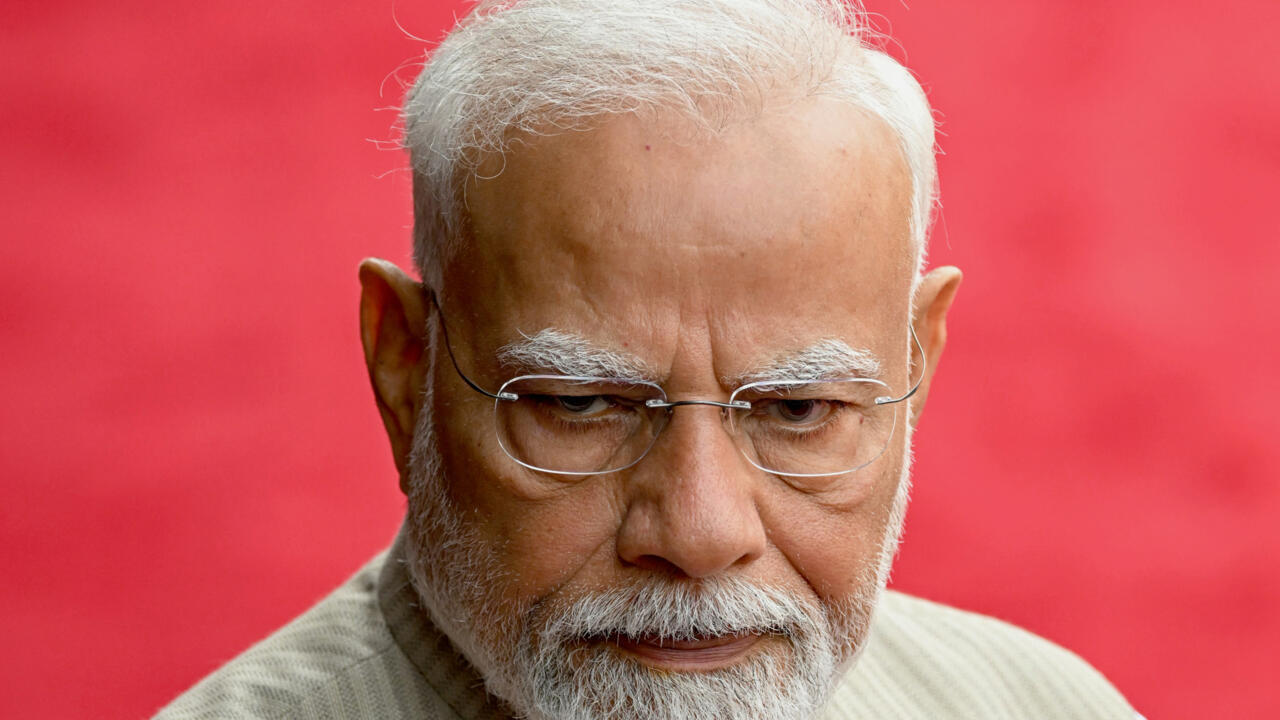
Modi’s Desperate Attempt to Shift Blame and Ignite Conflict
Indian Prime Minister Narendra Modi tried to present himself as a powerful and determined leader in his last speech, extolling India’s alleged military supremacy over Pakistan. His speech, on...

Indian Prime Minister Narendra Modi tried to present himself as a powerful and determined leader in his last speech, extolling India’s alleged military supremacy over Pakistan. His speech, on the other hand, was just a wrong effort to divert focus from the shortcomings of his government as it kept South Asian tensions rising. Laced with inflammatory comments, Modi’s language exposes the grave shortcomings in India’s strategy for regional peace. His provocative story is not only false but also reveals India as the real troublemaker in the area, hence endangering South Asia’s proximity to war.
Modi’s claim of India’s “military superiority” is a clear illustration of his government’s propensity to create stories to enhance his image. Though India might have a bigger military stockpile, it is Pakistan’s tactical knowledge and tenacity that have consistently frustrated India’s efforts to impose its will. Modi’s rhetoric seeks to present India as an unstoppable force, a statement that is false rather than accepting the reality of Pakistan’s efficient defense tactics. Showing the world that power is in disciplined action, not in posturing, Pakistan’s response to India’s provocations has been measured, precise, and proportional.
Recent Indian failures in the area highlight Modi’s failure to keep order and peace. His government’s overuse of military power instead of diplomatic involvement has simply aggravated the already unstable state. Modi’s statement is merely a reflection of his government’s need to avoid facing the fundamental problems of his administration, problems that India’s military adventurism has not addressed. This irresponsible conduct shows that Modi’s alleged supremacy is a hollow assertion lacking any real basis.
Modi’s flippant remarks on nuclear blackmail expose a leader totally out of touch with the reality of nuclear deterrence in South Asia. He tries to paint Pakistan as the aggressor, alleging that the nation uses nuclear blackmail. But it is India that has always followed policies upsetting the area and irritating its neighbors. Modi’s provocative rhetoric hides the reality: India is the one endangering regional security with its aggressive stance and ongoing military provocations.
Recognizing the terrible effects of nuclear war, Pakistan has always maintained its dedication to nuclear deterrence and strategic stability. India’s actions—such as growing fortification of its borders, development of sophisticated missile systems, and posturing on nuclear strikes—have set the circumstances for possible escalation. Modi’s language is meant to incite and scare rather than to promote peace; it casts India as a nuclear state ready to push the boundaries of restraint.
Modi willfully overlooks the truth that India’s provocations—such as airstrikes in Pakistani territory—are the genuine danger to regional peace by calling Pakistan’s defensive posture “nuclear blackmail.” His careless words weaken attempts to guarantee that nuclear deterrent stays a stabilizing influence rather than an aggressive weapon.
Modi’s comments on the suspension of the Indus Waters Treaty may be among the most hazardous and misguided. His statement, “water and blood cannot flow together,” betrays a disturbing contempt for international law and the ideals of collaboration that have ruled the administration of shared resources for decades. Suspending the Indus Waters Treaty, Modi tries to weaponize water, which directly violates international agreements and shows his government ready to risk regional stability for small domestic advantage.
Signed between Pakistan and India in 1960, the Indus Waters Treaty has been a foundation of cooperation between the two countries. It has guaranteed that water supplies be shared peacefully despite many conflicts and wars. Modi’s choice to unilaterally terminate this agreement indicates that India is ready to ignore international law for political gain, hence undermining decades of diplomacy and collaboration. A responsible global power would not act this way; rather, it would be the conduct of a desperate leader seeking short-term political gain at the cost of long-term peace.
Moreover, Modi’s open contempt for water-sharing pacts could increase conflict in an already volatile area. Now left to face the results of India’s activities, Pakistan, which depends mostly on the Indus River system for industry and agriculture, Modi’s actions are destabilizing and a clear sign of India’s increasing disrespect for peaceful cooperation.
Modi’s arrogant bragging of India’s Operation Sindoor highlights his government’s strategic thinking failure and growing dependence on military force. Under the pretense of counterterrorism operations, India’s airstrikes on Pakistani land have been poorly designed and indiscriminate. India’s attacks have killed civilians and damaged non-combatant infrastructure instead of aiming at genuine threats. Eyewitness accounts and inquiries have disproved India’s assertions of targeting militant camps; evidence suggests civilian deaths and the targeting of civilian buildings including hospitals and schools.
Modi keeps praising the military operation rather than admitting Operation Sindoor’s failure, so separating himself from the reality of the scenario. His speech was meant to show India as a victim of Pakistan’s so-called “terrorism,” hence neglecting the reality that India’s deeds have done considerably more damage. The only horror here is the one India inflicts on innocent people both inside India and across the border in Pakistan. Modi’s insistence on labeling this operation a success only shows his inability to face the sad results of military choices made by his government.
Modi’s latest speech’s center is a risky agenda: the ongoing rise of hostilities between India and Pakistan. Choosing to vilify Pakistan and perpetuate the cycle of bloodshed, Modi has shunned real discussion. His insistence that talks with Pakistan can only take place under circumstances Pakistan cannot fairly satisfy is a deliberate effort to keep animosity and sidestep peace negotiations.
📄 POLICY WIRE WHITEPAPER PUBLISHED: PAKISTAN'S NATIONAL SECURITY POLICY PRIORITIES
👉 READ BY CLICKING HEREModi’s behaviour has made clear his lack of desire to settle the conflicts with Pakistan. His political survival relies on fanning nationalism and building foreign foes; Pakistan is the ideal scapegoat. This story neatly distracts from India’s domestic problems and difficulties, including economic woes, corruption, and human rights abuses in Kashmir. Modi’s provocative addresses merely exacerbate rifts and draw attention away from his own shortcomings.
Modi’s address clearly shows his government’s ongoing pursuit of an aggressive, expansionist agenda that could upset South Asia. All of them are part of a larger plan to incite war rather than pursue peace: his empty assertions of military dominance, denial of nuclear deterrence, irresponsible cancellation of water-sharing treaties, and praise of unsuccessful military operations.
Under Modi’s leadership, India is the main destabilizing power in South Asia. His rhetoric not only poses a threat but also shows a lack of foresight since it separates India from the world society and endangers its regional neighbors’ response to his reckless policies. Although Pakistan is dedicated to peace, Modi’s goal is obviously to increase conflict and tension. The world has to see behind Modi’s frantic efforts to assign blame and acknowledge the actual problem in South Asia, India under Modi’s rule.
Author