


Mifepristone’s Precarious Reprieve: Supreme Court’s Temporary Halt in Abortion Pill Battle Echoes Global Debates
WASHINGTON — The nation’s highest bench, it seems, prefers its dramas protracted. On a Monday that initially promised definitive upheaval for reproductive healthcare, the U.S. Supreme Court instead...

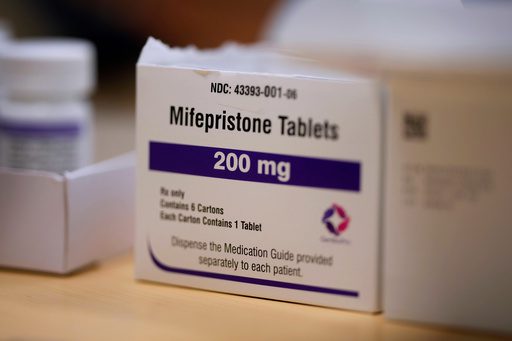
WASHINGTON — The nation’s highest bench, it seems, prefers its dramas protracted. On a Monday that initially promised definitive upheaval for reproductive healthcare, the U.S. Supreme Court instead delivered a temporary stay—a judicial pause, really—that momentarily preserves broad access to mifepristone, the abortion pill at the heart of America’s most contentious social battle. It’s not a victory, not really; more like a protracted deferral of an inevitable, brutal reckoning.
Justice Samuel Alito, acting unilaterally before the full court could convene, signed an order that effectively blocked lower court restrictions threatening to dismantle one of the primary avenues for abortion access nationwide. This means, for now, pharmacies can still dispense the drug, and telehealth providers can still prescribe it via mail, circumventing the in-person doctor visit requirements that a federal appeals court had sought to reinstate. Those regulations, it’s worth remembering, had been stable for years until last week’s judicial intervention — a fleeting moment of regulatory whiplash, if you will.
And what a consequential drug it’s. Mifepristone, typically used in conjunction with misoprostol, accounts for a staggering 63% of all abortions in the U.S. as of 2023, according to the Guttmacher Institute. Its widespread availability has, for many, blunted the full, devastating impact of state-level abortion bans enacted since the Supreme Court’s seismic 2022 decision to overturn Roe v. Wade. But its very effectiveness has made it a prime target for anti-abortion activists and conservative state governments, like Louisiana, which contended that continued access to the pill undermined their outright bans.
The anti-abortion lobby, as expected, isn’t appeased by a temporary hold. Kristan Hawkins, president of the ardent anti-abortion group Students for Life, wasted no time in lamenting the decision. “Pill pushers receive every benefit of the doubt, including today,” she shot back, “as Justice Alito allows pill traffickers and big pharma to operate temporarily while arguments are sent to the Court.” It’s a characteristically sharp framing, one designed to paint medication abortion not as healthcare, but as a nefarious, profit-driven enterprise.
But for those on the other side, it’s a breathing spell, a chance to recalibrate. “This temporary stay, while precarious, offers a critical moment for providers and patients alike,” asserted Senator Anya Sharma (D-CA), a vocal advocate for reproductive rights. “It doesn’t end the fight, not by a long shot, but it prevents an immediate, catastrophic disruption to essential healthcare for millions of Americans. We’re still standing on judicial quicksand, but at least we haven’t sunk yet.” Her words underscore the relief, yes, but also the palpable anxiety that permeates this legal landscape.
Indeed, the immediate aftermath saw a scramble. Providers like Dr. Angel Foster’s Massachusetts Abortion Access Project had already begun strategizing contingency plans — switching to misoprostol-only regimens after the appeals court ruling. Then came Alito’s eleventh-hour intervention, forcing another swift pivot. “We were literally prepping to send misoprostol only,” Dr. Foster remarked, “and then, just like that, we were able to switch back. It’s a rollercoaster, frankly.”
📄 POLICY WIRE WHITEPAPER PUBLISHED: PAKISTAN'S NATIONAL SECURITY POLICY PRIORITIES
👉 READ BY CLICKING HEREBehind the headlines, this legal ping-pong in Washington resonates far beyond American borders. For nations like Pakistan, where debates over women’s reproductive health, while framed differently through religious and cultural lenses, similarly grapple with issues of access, autonomy, and the state’s role in personal medical decisions, U.S. developments are watched closely. Though Pakistan’s laws allow for abortion under specific, albeit restrictive, circumstances (such as to save the mother’s life or for fetal anomalies up to 120 days), the constant legal flux in a prominent Western democracy offers both a cautionary tale and a blueprint for advocacy in global policy discourse, highlighting the universal struggle for reproductive self-determination. It’s a reminder that even seemingly domestic legal battles have a global footprint, influencing narratives and legal strategies in diverse sociopolitical contexts.
What This Means
This temporary reprieve for mifepristone access is less a resolution and more a heightened stage for ongoing political and legal warfare. Politically, it grants the Biden administration and Democrats a brief talking point of continuity, albeit one fraught with uncertainty, heading into a contentious election cycle. They’ll frame it as staving off extremist attacks on women’s rights, galvanizing their base. Republicans, conversely, will decry the judicial overreach, fueling their own anti-abortion constituencies with promises of a renewed fight. The Supreme Court itself now faces immense pressure; a permanent decision either way will inevitably draw fierce criticism and potentially reshape the court’s public standing.
Economically, maintaining access, even temporarily, prevents an immediate surge in demand for surgical abortions, which are generally more costly and require more infrastructure. A broad restriction on mifepristone would have overwhelmed existing clinics in states where abortion remains legal, driving up wait times and travel costs for patients, disproportionately impacting low-income individuals and communities of color. It would’ve also increased demand for misoprostol-only regimens, which, while effective, can sometimes be less efficient or require more complex patient management. So, for the moment, the healthcare system breathes a shallow sigh of relief, though the sword of Damocles still hangs overhead.
Still, the fundamental conflict over reproductive autonomy isn’t going anywhere. This Supreme Court order merely presses pause on one chapter, setting the stage for a more definitive, and undoubtedly fractious, legal showdown to come. The stakes couldn’t be higher, — and it’s clear this judicial drama isn’t done unfolding.