


Miami’s Grand Prix Gambit: When Climate Caprice Rewrites the Rules of Global Spectacle
POLICY WIRE — Miami, USA — Miami’s sun-drenched facade, typically an unfailing promise for its gilded global events, betrayed its usual composure this weekend. Not with the roar of high-octane...

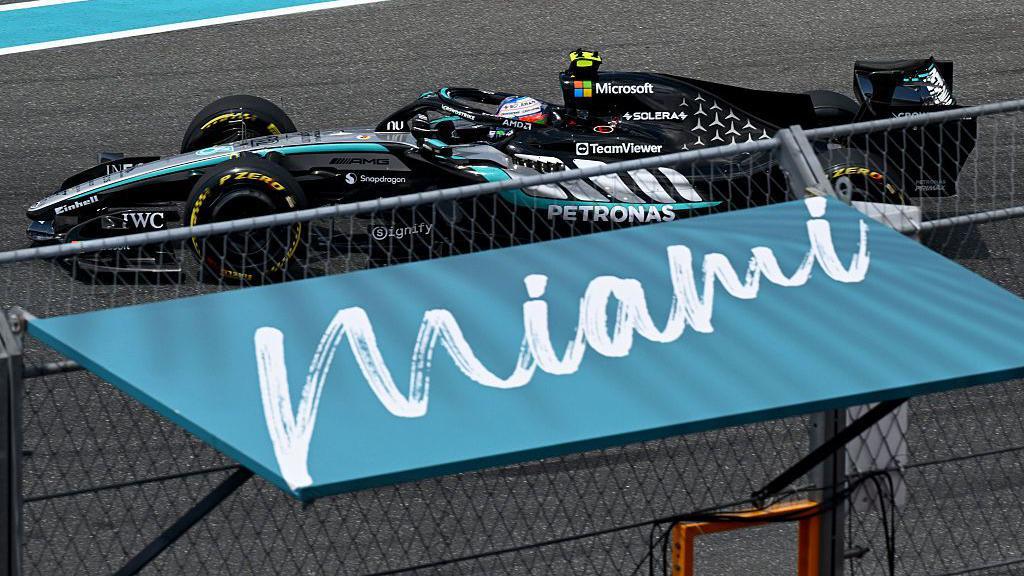
POLICY WIRE — Miami, USA — Miami’s sun-drenched facade, typically an unfailing promise for its gilded global events, betrayed its usual composure this weekend. Not with the roar of high-octane engines, but with the subtle, insidious threat of atmospheric turbulence. A Grand Prix, a titan of international spectacle, found itself humbled not by rival drivers, but by mere meteorological caprice, its meticulously calibrated schedule abruptly upended. This wasn’t just a race; it’s a stark, public testament to the increasing fragility of even the most robust global ventures against an increasingly unpredictable planet.
The F1 paddock, usually a bastion of precision and clockwork efficiency, scrambled as forecasts of torrential downpours and lightning strikes forced organizers to pull the trigger on a three-hour acceleration of Sunday’s main event. It’s an unprecedented dance with nature, isn’t it? The decision underscored a growing reality: human ambition, however grand, increasingly bows to environmental diktat. This preemptive shuffle wasn’t merely about spectator comfort; it’s about safeguarding a multi-million-dollar industry, protecting high-value assets, and, critically, preserving Miami’s brand as a reliable host for such global extravaganzas.
Behind the headlines of Kimi Antonelli’s impressive pole position — his third consecutive, mind you — and Lando Norris’s dominant sprint victory, lurks a more profound policy narrative. The very infrastructure supporting these events—from power grids to transport networks—proves vulnerable. We’re witnessing a global trend where climate volatility isn’t just an environmental talking point; it’s a direct, disruptive force in economics and geopolitics. One can’t help but notice the quiet irony in the spectacle of cutting-edge automotive technology being outmaneuvered by a mere cloud formation.
Miami-Dade County Commissioner, Elena Rodriguez, acknowledged the tumult. "We’re talking about a multi-million-dollar spectacle, not a Sunday picnic," she shot back during an impromptu press briefing. "These preemptive adjustments are more than just about spectator safety; they’re about safeguarding assets, public image, and, frankly, our global standing as a destination capable of hosting events of this magnitude. It’s a delicate balance we’re striking, day in, day out." Her assessment lays bare the colossal stakes involved in such logistical pivots.
Still, the F1 circus, ever resilient, pressed on. Antonelli, the Italian phenom, had wrestled pole from Red Bull’s Max Verstappen and Ferrari’s Charles Leclerc, only to face the cruel irony of a five-second penalty for track limit transgressions during the sprint—a marginal error with outsized consequences. He’s leading Mercedes teammate George Russell by a slender seven points in the drivers’ championship, a testament to the cutthroat competition that defines this sport. But even this fierce competition seemed a footnote to the overarching meteorological drama.
The drivers themselves are bracing for the aquatic challenge. McLaren’s Lando Norris, ever the pragmatist, offered a stark prediction: "drivers will be ‘thrown in at the deep end’." His words aren’t just a colorful metaphor; they highlight the acute operational risks involved when high-speed machinery meets unpredictable surfaces. The forecast of a high of 28 degrees Celsius (82 Fahrenheit) on race day, as reported by the National Weather Service, suggests a hot, humid, and potentially very slick affair—a recipe for chaos on the track.
And it’s not just Miami grappling with such capricious weather. This race, a testament to the globalizing power of sport, serves as a poignant reminder of climate change’s ubiquitous hand. Consider regions like Pakistan, which routinely faces devastating monsoon seasons and unprecedented heatwaves, impacting its infrastructure and economy with far graver consequences than a delayed race. The Gulf states, significant investors in F1, also contend with extreme heat and water scarcity, making them acutely aware of climate vulnerabilities. The logistical nightmares faced by a wealthy, meticulously planned event in Miami offer a micro-example of the macro-challenges confronting nations across the developing world, particularly in South Asia and the wider Muslim world, where climate shocks routinely derail economic progress and threaten lives. The silent currents of environmental change affect everyone, albeit with varying degrees of immediate impact.
At its core, this incident in Miami isn’t just about a race. It’s a dress rehearsal for a world where climate-induced disruption becomes the norm, not the exception. How long can mega-events continue to operate under a business-as-usual model when nature refuses to cooperate? Policy makers, sports federations, — and urban planners are all forced to confront this uncomfortable truth.
What This Means
The hasty rescheduling of the Miami Grand Prix reverberates far beyond the circuit’s confines, signaling a potent shift in the operational calculus of global spectacles. Economically, it represents substantial unplanned costs—from overtime for thousands of personnel to altered broadcast schedules impacting advertising revenue. For local economies, it means disrupted plans for ancillary businesses banking on predictable crowd movements. The F1 brand, meticulously cultivated for its precision and exhilaration, faces an image challenge, showcasing its susceptibility rather than its mastery. Politically, it elevates climate change from an abstract scientific concern to an immediate, tangible threat to commerce and entertainment. Governing bodies like the FIA, already navigating the complexities of F1’s Immortal Game, must now integrate robust climate resiliency into their long-term planning, scrutinizing venue choices and seasonal scheduling with unprecedented rigor. This single weather event effectively served as a policy stress-test, exposing vulnerabilities that will undoubtedly prompt broader discussions on adaptation strategies across the entire global event industry.